Monthly Archives: March 2014

Artist Feature: Laurel MacKenzie

A linguist by training and professor in Manchester, England by trade, Laurel MacKenzie uses the space of her Feature to look at the language people use and how we understand words. She presents thoughts on how instantaneous Reflection and Response occurs and doesn’t occur when we hear each other speak. As an educator Laurel utilizes large lecture classroom settings to provide an opportunity for data collection on language and has created various language maps of the United Kingdom with her students. She drops ill knowledge throughout this piece on how our brains practice Reflection and Response just as sounds reach us-before any creative mediums lead to expression.
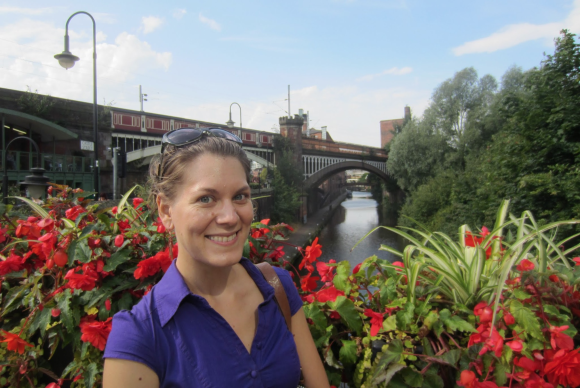
Laurel MacKenzie

I investigate the variation that is inherent to language: cases where our language gives us multiple ways of saying something, and we have to make a conscious, or just as often subconscious, choice of which one to use at any given time. We’re most familiar with this kind of linguistic choice where words are concerned…[however,] I study linguistic choices on an even more minute level, in the way we pronounce the words that we use.

– Laurel MacKenzie

Leading off with some basics, where are you from? And where are you at?

LM: I grew up in College Station, Texas, a small town with a big university, a lot of cows, a ton of wide open spaces, and not much else. I did undergrad degrees in French and Linguistics at UC Berkeley (woo go Bears!) and a PhD in Linguistics at the University of Pennsylvania before taking up my current job as a linguistics professor at the University of Manchester in Manchester, UK.

I feel very lucky to get to have a foot in two countries at once. I go back to the US frequently to visit family, and with only 5 hours’ time difference between the UK and the East Coast, I never feel like I’m very far away. At the same time, after a year and a half here, I’m starting to pick up on cultural knowledge and feel more integrated. The result is not that I’ve given up my American self, but rather that I’ve been able to augment it with a new body of knowledge that I’ve gained the UK. I see it as a gift to get to be able to coexist in two cultures. 

What does Reflection and Response mean to you?

LM: My first thought was that this sounds a lot like what we do in academic work. As a linguist, I study and analyze the patterns found in language. This can be as straightforward as listening to the way someone pronounces their vowel sounds and using that to identify where they come from, or more complicated, like studying a body of linguistic data, finding the patterns or relationships it displays, and then using those to generate theories about how language is stored in the brain. Everything I do in my research involves reflecting on data, and responding to what I find in that data.

But I also thought about how reflection and response are involved on a much more subconscious level every time we receive some sort of sensory input. I study language, but I’ve also been a musician since I was a child, playing piano, viola, and carillon (tower bells — another Go Bears! shoutout to the UC Berkeley Campanile), so I’ve always been interested in how we perceive and interpret sound. Whenever we receive an auditory stimulus, whether it be music, speech, or any other sound, split-second reflection and response processes occur, allowing us to make sense of what we’ve just heard. Our brains are amazingly good at this. When you think about it, speech is really messy and complicated: we talk fast, we omit sounds and syllables, different people pronounce words differently depending on where they come from, and even you yourself will pronounce a single word differently depending on where in a sentence it occurs, whether you’ve said it before, how long you’ve been talking, and how comfortable you feel with the person you’re talking to. Yet in the vast majority of cases, we understand exactly what’s been said to us, even if it wasn’t pronounced in the same way we would have pronounced it ourselves. Those reflection and response processes are always going on under the hood, picking apart the sounds that we hear and turning them into something meaningful.

Our brains are also really good at knowing when reflection and response are not necessary. Take the role of pitch in language. In some cases it’s essential to be attuned to the pitch of someone’s speech: imagine the difference in intonation between “That’s a GREAT idea!” said enthusiastically, and “That’s a GREAT idea” said sarcastically. The words are the same in each case, but the pitch patterns are different. Our brains need to be constantly reflecting and responding to these up-and-down pitch patterns that we hear in speech, in order to make sure that we get the right meaning in cases like this. But in other cases pitch differences are completely irrelevant. For instance, some people have high-pitched voices and some people have low-pitched voices, but when we hear a speaker with a low voice, we don’t immediately think “Wait, why is their voice so low? What do they mean by this? Is there something they’re trying to convey?” Our brains can filter that kind of variation out, without wasting time trying to look for any meaning in it. This kind of thing fascinates me, and makes me feel so lucky to get to have a job where I can engage with smart people who are thinking and talking about it.

How does your work fit in with that definition?

LM: I have to say that much of my academic work actually focuses on the aspects of language where reflection often isn’t involved at all — it’s all response, and it’s an impressively subconscious and automatic response, at that. I investigate the variation that is inherent to language: cases where our language gives us multiple ways of saying something, and we have to make a conscious, or just as often subconscious, choice of which one to use at any given time. We’re most familiar with this kind of linguistic choice where words are concerned: for instance, if your professor or your boss gave you some good news, you might say you were “delighted,” but if the good news came from your best friend, you might be “stoked.” I study linguistic choices on an even more minute level, in the way we pronounce the words that we use.

Recently I’ve been interested in the way we can contract verbs in English. If I wanted to prove to you that Manchester isn’t always the grim, gray, rainy place it’s made out to be, I might tell you “The weather’s beautiful right now, the sun’s shining, the forecast for Saturday’s showing 60°, and the tree outside my window’s finally in bloom.” (All true, by the way!) Or I might tell you “The weather is beautiful right now, the sun is shining, the forecast for Saturday is showing 60°, and the tree outside my window is finally in bloom.” The words are the same, but I’ve changed how I’ve pronounced the verb is. Every time we use the verb is in a sentence like this, we have a choice to make: do we lop off the initial vowel and turn it into the ‘s contraction, or do we pronounce the whole word? It sounds like a mundane question, but the cool thing is that, when you actually study people’s choices, you start finding eerily similar patterns.

One thing I’ve discovered is that people are less likely to use the ‘s contraction the longer the subject of their verb is. So if you lined up hundreds of people and got them all to describe the weather exactly as I just did, you’d discover that most of them would choose to say “The weather’s beautiful” and “the sun’s shining” — with contractions — but that most of them would also choose to say “the forecast for Saturday is showing 60°” and “the tree outside my window is finally in bloom” — without contractions. No one ever sits us down and teaches us that that’s the way English works, but somehow we all find ourselves converging on that particular pattern without any reflection at all. The fun and tricky part of my work now is to reflect on why we’re doing that, and where it came from.

What else have you been working on recently? What are you looking to work on next?

LM: One of the most fun parts of my job is that I have a captive audience of students who are ripe for collaborating with. I’ve been trying to use the large (100+ students) lecture classes that are the norm here at Manchester to my advantage, as a way of crowdsourcing data collection. Because our students come from all over the UK, I got them to help me carry out a study last year of regional dialect variation in the British isles: the UK equivalents of the famous “pop/soda/Coke” and “y’all/you guys” divides. My students passed out surveys of a “Do you say X or Y?” nature to their friends and families, and then one of my brilliant undergraduates compiled our findings into this awesome series of dialect maps, which got a great writeup in VICE Magazine’s Motherboard blog back in December (along with a lot of other attention in the UK media). We’ll be updating and improving these maps in the near future, and I just got some funding to start up an outreach program whereby undergraduate volunteers go into local high schools and use the maps to teach students about linguistic variation and dialect diversity.

Lexical Variation: Evening Meal | This map shows which words UK speakers use when referring to the evening meal.

Lexical Variation: Evening Meal | This map shows which words UK speakers use when referring to the evening meal.

Phonological Variation: Foot - Strut | This map shows which UK speakers rhyme the words 'foot' and 'strut.'

Phonological Variation: Foot – Strut | This map shows which UK speakers rhyme the words ‘foot’ and ‘strut.’

Who or what inspires you?
Continue reading

Tagged , , , , , , , , , , , , , , , ,

Artist Feature: David Boman

I first met David Boman during college in Seattle jamming out with him rocking the drum set. His Feature with the LIFESTYLE has been a long time coming and David goes in- setting up a unique journey through the physics of Reflection and Response and the “allure,” of Response as a self-exploratory medium that elicits emotions from within us. From discussing the biological phenomenon of our reactions as people to music, Dave goes on to explain how his music is currently focused on the image- he currently has several soundtrack projects finished and coming up. Be on the lookout for more on these ideas and an in-depth discussion of pieces Overture (Save the Wails), Lowflyer, and his score to Handmade in our discussion below!

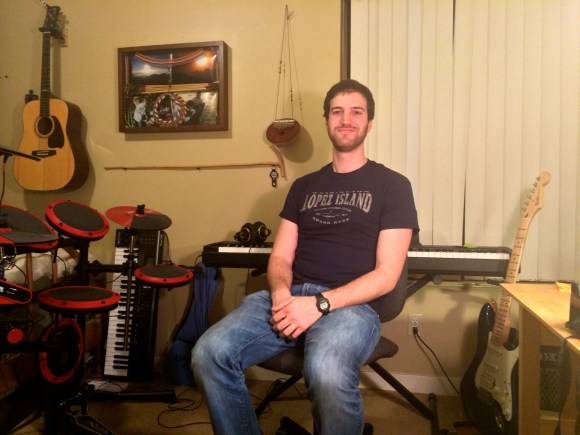
David Boman

Much like intermingling sound waves, personal reflection is constructive and destructive…The catch is that you don’t always walk away feeling good, the allure is that you always walk away feeling. Period.

– David Boman

Leading off with some basics, where are you from? And where are you at?

DB: I am from Seattle and I am at Seattle. I was born and raised here, went to school here and work in the city. Next year I expect to be elsewhere for some time, very possibly Southern California…

What does Reflection and Response mean to you?

DB: In physics, reflection is the propensity for sound or light to bounce off of a surface rather than to be absorbed by that surface. In audio production, we try to avoid this because sound waves that are reflected off of a wall, for example, can interfere with the sound waves coming from the original acoustic source destroying the quality of a recording. A technical (and pretentious) answer like that isn’t really relevant to the question, but it’s an interesting place to start; after all, when we put on headphones and hit play on our stereo, the surface of our eardrums rumble and vibrate, a signal to our brain is sent and processed. Consciously, something happens – it is absorbed and internalized, those of us who vibe with ‘The Metaphysical’ feel the melodies, harmonies, words and throbbing beats sink into our souls. Is that enough? Absolutely! Music is incredible, partly, if not mostly for exactly that reason. You don’t need to know a thing about it to feel its gravity, to be brought to tears or fits of erratic physical movement (shout out to the EDM guys) solely from the controlled vibration of some four-dollar ear buds.

Reflection is the optional step. It’s the part of the process that leads to response, which is the functional step. Much like intermingling sound waves, personal reflection is constructive and destructive – thinking deeply about what is being unearthed that is eliciting profound sensation; self-pity, inspiration, awakening, serenity. The catch is that you don’t always walk away feeling good, the allure is that you always walk away feeling. Period. It’s a product of all art, not just music – scratch that – it’s the product of being alive. Sometimes absorption and reflection happen simultaneously, but I don’t think the response part comes unless reflection has occurred. Response is reflection incarnate. It is the creation that spawns from pure or mixed up thoughts and emotions. It is the act of distilling those feelings through your medium; it is also the distillation itself.

How do ‘Overture (Save the Wails)’ and the score to ‘Handmade’ fit in with that definition?

DB: Beauty in everything. Overture (Save the Wails) is an ode to that sentiment; don’t make an item or experience trash until you’ve taken something from it. The idea was to take dissonant sounds, square synths, and harsh and heavy drums and set them to a pretty, bittersweet melody. It took a long time but ended up yielding one of my favorite tracks to date.

Another track, called Lowflyer, uses some familiar sounds to help set the atmosphere and encourage reflection.

I have been intrigued by film scoring since high school. The context given by a film clip provides reflective material that begs to be painted, or left silent, but in either case consciously sculpted. ‘Handmade’ is a two-minute short film with no dialogue, written and directed by Chris Winterbauer. No faces are seen, no words are spoken. Actions speak louder than words, especially when guided by music.

What else have you been working on recently?

Continue reading

Tagged , , , , , , , , ,

Artist Feature: Nick Nova

We welcome our friend Nick Nova (born Kwaku Boateng-Farrar) to the LIFESTYLE dialogue. Nova’s creative output operates on many different levels, including music/audio, design, and information distribution. The concept of power is one of the central themes in this artist’s piece as he touches on the re-appropriation of past experiences and memories. Nova provides a dope look at this empowering nature of Reflection and Response in addition to other aspects of his creative process. Check the interview below!

Nick Nova

The ability to reflect on personal experience, past innovations, and current affairs empowers one to respond to obstacles, criticisms and general stressors in a fashion that consciously assists their own progression, as well as that of culture and society at large.

– Nick Nova

Leading off with some basics, where are you from? And where are you at?

NN: I’m definitely a West Coast kid. I was born and raised in Northern California, the Bay Area specifically. After high school I stuck around for a bit before moving to London, England for college. I’m now back in the U.S.and have settled in Brooklyn, NY.

What does Reflection and Response mean to you?

NN: Reflection and Response to me represents the two important, synergistic aspects of creating and succeeding. People often lose sight of self-importance when attempting to achieve greatness in a public space, but the willingness to consider one’s own objectives and mapping out personal checkpoints is vital to the success of projects bigger than its creator. Building on that, the ability to reflect on personal experience, past innovations, and current affairs empowers one to respond to obstacles, criticisms and general stressors in a fashion that consciously assists their own progression, as well as that of culture and society at large.

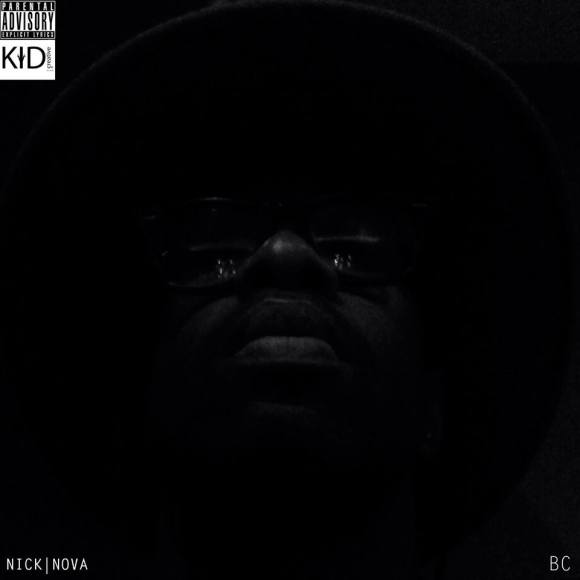
BC

How does your project BC fit in with that definition?

NN: My latest music project ‘BC’ represents this entirely because it is me reflecting on my past, both in the content, as well as the more technical aspect of the project. Recognizing my previous musical inhibitions and seeing how much it hindered my potential, ‘BC’ finds me embracing those flaws and making the appropriate changes to better position myself for achieving my musical goals.

From my observations, it’s common for creators to bury certain aspects of their lives as a defense mechanism, but one doesn’t have a true concept of power until you embrace the most difficult of memories and utilize past pain and/or frustration into something positive and empowering for others. A personal example would be on a record I have called “Tunnel” in which I mention my experience of being bullied. Up until this project I never wanted to share that vulnerability, but upon reflecting on the experience and seeing how much the experience aided my development, I recognized that it was imperative for me to share this so that younger listeners, or even people my age who may be bullied on the job or elsewhere and feel helpless, can recognize their own power through my story and they can stand up to their detractors and even if the results aren’t instantaneous, they’ll know it’s ok to fall down as long as you keep fighting to stand on your feet again, physically and or metaphorically depending on your situation.

What else have you been working on recently? What are you looking to work on next?

Continue reading

Tagged , , , , , , , , , , , , ,

Artist Feature: M’hammed Kilito

I first met M’hammed Kilito while we were both exchange students at the same university in Buenos Aires, Argentina a few years back. I knew “Moh” would often travel around the city with a camera in hand, and he continues to push this visual medium in new creative ways today. His photographs highlight interesting and seemingly ubiquitous mechanisms and ideas to tell stories of reality – for example, one series that caught our eye is grounded in reflecting on and responding to the prevalence of digital and mobile cameras in public space.

M’hammed’s feature is filled with inspiring and critical thought-provoking explorations from a perspective informed by a global experience. We’re excited to see what’s in store with his future projects, including a visual ethnographic analysis of traditional Moroccan garments and cultural globalization. Lets dig in!

M'hammed Kilito

I think that Reflection and Response are two interconnected words that can’t exist one without the other. It is a circular cause and effect relationship we go through all our life, because the response we have today isn’t necessarily right or suitable tomorrow.

– M’hammed Kilito

Leading off with some basics, where are you from? And where are you at?

MK: I’m from Morocco, but I was born in Lviv in Ukraine. My parents got scholarships to study dentistry there and it happened that I was conceived during that time. I’ve been raised in Morocco’s capital Rabat, an extremely beautiful city on the Atlantic coast that often people miss visiting while touring the country, going instead to Casablanca, the city made famous by the movie directed by Michael Curtiz, or Marrakech, the most touristic city in the country. Once I was 18, I moved to Spain for 2 years before moving to Canada. In 2009, I had the chance to go for a university exchange to Buenos Aires, Argentina and it was definitely the craziest trip I have done after Burning Man.

I was fortunate to live in different countries and to learn many languages, but it really makes answering the question where I’m from not an easy task at all.  All the cities where I lived have a special place in my heart. In each one of them, I had the chance to meet some wonderful people that had a huge impact on me and contributed immensely to shape the person I’m today. I really believe that we are, to some extent, the product of our socialization.

Roy

Tram

Old Woman

TriangleV

What does Reflection and Response mean to you?

MK: Those two words mean everything to me and to all of us actually, they are our everyday reality, there is nothing we can do without reflecting and finding responses. I think that Reflection and Response are two interconnected words that can’t exist one without the other. It is a circular cause and effect relationship we go through all our life, because the response we have today isn’t necessarily right or suitable tomorrow. The most intelligent and creative people I’ve met are constantly reflecting on who they are, what matters to them, what should they do next and how they should do it. It keeps us going further, improving and becoming better persons.

How does your work fit in with that definition?

MK: Reflection is a homograph, a word written the same but has two meanings. “… I am a reflection photographing other reflections within a reflection. To photograph reality is to photograph nothing.”  Those words are not mine, but those of the great American photographer Duane Michals. I think people often misunderstand the function of photography, they think they are photographing reality while the response in my opinion should be that the function of photography is to reflect reality and imitate it with authenticity.

Untitled


Untitled


Untitled


Untitled

If I push myself to define the kind of photography I do, I will say that the conceptual framework of my photographic series usually follows two distinct axes. The first, focuses on the boundaries that define reality and illusion, in which I create the moment by staging the photographs. The second axis, is more within the documentary tradition, I play with various contexts to tell stories and explore new ideas, and instead of creating the moment, I seize it.   

Chien

What else have you been working on recently?

MK: I just finished a project made of two series I called Homo photographicus. Through these two series, I explore the transformation photography is going through at this crucial moment in the history of images. I ponder over the role of digital and compact cameras’ proliferation, their incorporation into mobile telephones, and the influence of the internet and social networks on today’s photography practice.

Initially, this project wasn’t planned at all, the idea came to me the day I purchased a wide angle lens and decided to go to the Montreal botanical gardens to try it. Thinking to shoot the impressive living plant sculptures they have there during summertime, I ended up being more interested in the people taking the pictures of family and friends in front of the sculptures, so I turned my lens toward them and started working on the Homo photographicus project right away. A few weeks later, I went to The United States, France, Portugal, Spain and Morocco and I kept going to public spaces to photograph people taking pictures.

The first series is an illustration of how cameras are everywhere in public spaces. I’m not interested in saying it is good or it is bad, but I observe that it became increasingly difficult to photograph a scene that doesn’t include an individual who is also taking a photograph.

Untitled

Untitled

Untitled

Untitled

Untitled

Insectarium

The second series is a reflection on the influence of social networks on photography. Social networks focus on spreading their use by staging intimacy as well as providing the ability to see without being seen. These practices have contributed to the popularization of certain types of photographs, such as the selfies. So I decided to contact and photograph my friend Céline AKA the Selfies Queen who has more than 300 selfie pictures.

Selfie 2, Digital, 10x10

Selfie 3, Digital, 10x10

Selfie 5, Digital, 10x10

Selfie 7, Digital, 10x10

What are you looking to work on next?

Continue reading

Tagged , , , , , , , , , , , , , , ,