Tag Archives: Interview

Artist Feature: Kinan Azmeh

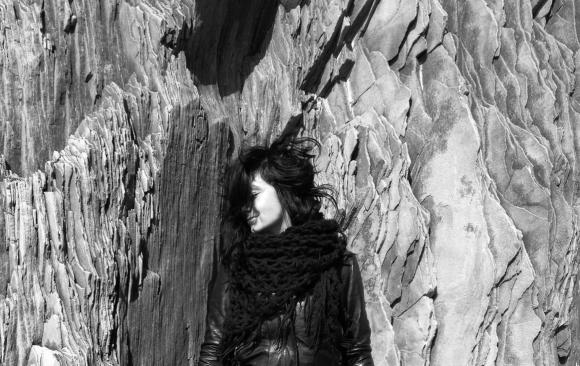
Kinan Azmeh is a clarinetist and composer we recently connected with through musician Timo Vollbrecht. Kinan grew up and studied music in Damascus, Syria, and has continued with his craft in New York City over the past 13 years. Throughout his interview, he discusses various strands of Reflection and Response, whereby artists sometimes reflect on their surroundings and on other occasions work to idealistically recreate realities. However, in Kinan’s opinion, art allows him to access another world of emotion not readily available in everyday life. Along with his words, this multifaceted artist showcases some incredible compositions that display his range and creative vision. He’s released three albums with his ensemble HEWAR, a duo album with pianist Dinuk Wijeratne, and an album with his New York-based Arabic/Jazz quartet, and the future is filled with some ill upcoming projects including a commissioned flute concerto, film scores, and tours in Europe, USA, and the Middle East. Peep the dialogue below along with some dope sonic landscapes from this dedicated craftsperson!

Kinan Azmeh | Photo by Jill Steinberg

Kinan Azmeh | Photo by Jill Steinberg

Making music is an act of freedom by default.

– Kinan Azmeh

Leading off with some basics, where are you from? And where are you at?

KA: I was born in Damascus, Syria, and have been living in New York for the last 13 years.

What does Reflection and Response mean to you?

KA: If we think about it on the most general level then we do realize that this is how nature works, cause and effect, action and reaction. In the arts, reflection and response are a little bit more complex. There are several schools of thought when it comes to the arts, one that says that the artist’s role is to reflect on the world around him/her, others say that the artist’s role is to recreate the world in the most idealistic way. I don’t subscribe to either camp; my personal philosophy is that we make art to experience emotions that we don’t have the luxury of experiencing in real life, some kind of fantasy world that is more complex than what is experienced in our daily lives.

What have you been working on recently? What are you looking to work on next?

KA: I grew up playing western-classical music in Damascus, a city that is very rich and diverse in its musical traditions, then moved to New York. That opened my eyes (and ears) to a variety of music that I enjoy performing today. I have been wearing different hats at different times, sometimes playing as a soloist with orchestras performing western classical repertoire, at other [times] you would find me playing with my Arab-Jazz quartet in New York, and other times playing with electronics and visual arts. I am now at the stage where I am trying to bring all these heads under one hat. I am working now on a concerto for improviser for soloist and orchestra. I do feel that music is a continuum and I would like to [replicate] that in my musical life as much as possible. I have a number of projects that are coming up including a commission to write a flute concerto, a couple film scores, and also a number of tours are coming up in the US, Europe and the Middle-East.

Who or what inspires you?

KA: I am inspired by what’s around me, my life, the lives of others and nature. However, the main idea that is occupying my brain for the last three years is home, Syria. Since the revolution began three years ago, I started to wonder about the role of art: can a piece of music feed a child, can it stop a bullet? Certainly not. But it inspires me to know that I have the power to inspire someone else, to reflect and to think. I am also inspired by the belief that making music is an act of freedom by default, which continues to provide me with the tools to keep creating. The piece “a sad morning, every morning” was written to commemorate one year of the Syrian revolution in March 2012. The title says it all, you get up in New York, first thing you do is you turn on your computer and you “put your hand on your heart” as the saying goes, waiting for the sad news to come from home (since Damascus is 7 hours ahead). The piece was written in very little time and it gave me the peace of mind i needed at that particular moment. It was also the first piece I wrote after almost a year of a silence.

Is there anything else you would like the Collective to know?
Continue reading

Tagged , , , , , , , , , , , , , , , , , , ,

Artist Feature: Ebru Yildiz

Ebru Yildiz is a New York-based music photographer that we met through Adela Laconte. Active in the New York music scene, she breaks down the role of Reflection and Response in music photography/portraiture into two concurrent yet distinct concepts: a photographer’s effort to capture the musician in his or her response to/through music, and the photographer’s own response to the performance. She showcases some of her recent music photography work, talks about the process of creating meaningful, expressive portraits, and discusses expanding her craft with an upcoming project using a photographic process developed in the 1850s called “wet collodion.” Check the dialogue and prints from this artist steeped deep in exploration and creation!

Ebru Yildiz | Photo by Mitchell King

Ebru Yildiz | Photo by Mitchell King

In order to make meaningful portraits, you really need to have interest in people other than yourself; you need to have a genuine interest what they have to say, what their story is…No two people’s stories are the same, no two people’s feelings could ever be the same when they are faced with similar situations.

– Ebru Yildiz

Ebru Yildiz - Shilpa Ray

Ebru Yildiz – Shilpa Ray

Leading off with some basics, where are you from? And where are you at?

EY: I was born and raised in Ankara, Turkey. I moved to New York-where I have always dreamed of living- the minute I finished college. And I started making photos few years after that. When I was in Turkey, I always preferred to go to live shows than any other club scene that was so popular back then. So when I moved here, it took me a minute but I eventually found “the” places to go and see music. I was always at shows, so making photos at the shows came as an extension of that lifestyle. After I developed a certain style that I was happy with, in order to keep things exciting for myself, I decided to take a little break from shooting live shows with exception of occasional shows here and there and focused on personal projects and making portraits. Right now, I think it is a healthy mix of all three.

And I am still in New York where I hope to live for the rest of my days if I am lucky!

Ebru Yildiz - Savages

Ebru Yildiz – Savages

Ebru Yildiz - Savages

Ebru Yildiz – Savages

Ebru Yildiz - Psychic Ills

Ebru Yildiz – Psychic Ills

What does Reflection and Response mean to you?

EY: When you say response, I can’t help but think the other end of the spectrum, which for me is reaction. I believe being able to respond to things happening to you rather than reacting to them is a difficult form of art to master. Not everybody can succeed in taking the time to think about what is actually happening, listen to how they really feel about it and/or put themselves in the shoes of the other person before they decide how to go about it. I always make a conscious effort to respond to things around me but having the hot Mediterranean blood in me definitely makes it a challenge at times. I only hope at some point in my life, it is going to come naturally.

Ebru Yildiz - Jason Pierce

Ebru Yildiz – Jason Pierce

To me, reflection means to take the time to look at what I have done so far and going forward questioning if I should change anything about them. During this process, being able to acknowledge good as well as bad with all honesty is super crucial. I never understood why people cannot be humble and are so afraid of admitting negative things about themselves. These only show you are a strong person and nothing else. Either ways, I believe even the acknowledgement of the need to change is a gigantic step in and of itself. Being able to make the changes you think you should is a completely other animal though. And it takes time.

Ebru Yildiz - Mitchell King

Ebru Yildiz – Mitchell King

How does your work fit in with that definition?

EY: Well, I have never thought about reflection and/or response in terms of my photography but now that I did, I can see that it comes out the most for portraits. The photographer and the subject respond to each other continuously. People feed off of each other. If you are in a good mood, it is going to rub off on people around you, if you are not in a good mood, that is going to rub off on people too. So it is a constant flow of emotions back and forth. I remember I used to try to get a certain emotion out of people, for that reason I liked making people uneasy, and uncomfortable by asking incredibly private questions during the shoot. But right now, I take joy in letting the people I photograph just be. I become mindful of what they allow me to see and try to focus on those. So I guess it is kind of reflecting what I think they project to me back into the photograph, if that makes any sense. But everything is so subjective. At the end it is collaboration. It is my interpretation of what my subjects let me see. Regardless, I personally think that in order to make meaningful portraits, you really need to have interest in people other than yourself; you need to have a genuine interest what they have to say, what their story is.

Ebru Yildiz - Frankie Rose

Ebru Yildiz – Frankie Rose

Ebru Yildiz - Tamaryn

Ebru Yildiz – Tamaryn

As for live photographs, I think in those, I am focused on catching musicians’ own response to their own creation, of course that combined with my own response to their music. And like everyone else I respond differently to different music. I heard my husband talking about my work to a friend once; he was saying that he thinks that most of my live photographs are like portraits of those people who happen to be playing a live show. I don’t think I have ever heard a bigger compliment than that.

Ebru Yildiz - Thee Oh Sees

Ebru Yildiz – Thee Oh Sees

What else have you been working on recently? What are you looking to work on next?

Continue reading

Tagged , , , , , , , , ,

Artist Feature: Ángel Rams

We’re excited to welcome Valencia-born and Leipzig-based comic book artist and illustrator Ángel Rams to the LIFESTYLE collective. Angel sheds light on the roles of Reflection during the process of interpreting an author’s scene and Response as the illustrator’s goal to tell the story through that interpretation. He goes in on the importance of telling a story without sacrificing the narrative for superfluous illustrations that only aim to impress readers. Ángel showcases these different features of the creative process using dope examples from his portfolio. He also sheds light on exciting future projects such as serving as the artist for  Alfred Ngubane‘s book Shaka Zulu, the upcoming release of a graphic novel set in post-WWII, and his participation in the 2014 Egmont Graphic Novel Contest with his graphic novel Cayuco. Check out the dialogue below accompanied by samples from Angel’s eclectic collection and links to various projects he’s got going on.

Ángel Rams


One of the main rules of sequential art is that you are here to entertain people, telling them a story throughout panels, not to gather a bunch of cool pin-ups on a page. A good comic book page can be understood without the dialogue on it, because it responds to the script.

– Ángel Rams

Leading off with some basics, where are you from? And where are you at?

AR: My name is Ángel Rams. I´m a comic book artist and illustrator born in Valencia, Spain. I currently reside in Leipzig, Germany.

What does Reflection and Response mean to you?

AR: I consider myself a comic book artist that takes occasional illustration commissions. The bulk of my artwork is what we call “sequential artwork”, in plain English: comic book pages. So I guess I should respond as a comic book artist. I believe Reflection and Response are a great part of a comic book artist’s work.

I would say Reflection describes my intention when I draw a scene, an object or a character. I try to capture on paper how I conceive that scene, object or that character. I try to reflect my perception of reality through my artistic skills. Of course that reality doesn’t really exist; it’s a reality the writer created. My task is to read, interprete and reflect. And that leads us to the next question: Response.

I understand Response as the artist’s level of commitment and efficiency toward the story. Rule number one is: tell the story. The closer my drawings are to the writer’s initial idea, the better Response I provided as a professional. In my opinion, a good comic book is the one where art and dialogues work along so well that it makes you wonder if it was made by a team or by one single creator. For this to happen you need a collaborative effort between writer and artist, or such a complete, well written script, that it gives the artist information enough to provide a good Response. Luckily I’ve been in both situations.

One of the main rules of sequential art is that you are here to entertain people, telling them a story throughout panels, not to gather a bunch of cool pin-ups on a page. Sadly, many artists focus their efforts on showcasing lots of boobs, muscle and plasma beams in cool postures rather than telling the story effectively. They adapt the story to the art and it should be the other way around, and that creates divergences. There’s nothing worse than divergences between artwork and dialogues. Seeing a character doing something or showing a body language that doesn’t match what they say, drives you out of the story and makes it less believable. A good comic book page can be understood without the dialogue on it, because it responds to the script. You don’t really know what they are saying but you know what’s going on.

Ángel Rams - Tunnel, page 9

Ángel Rams - Tunnel, page 10

How does your work fit in with that definition?

AR: When you look at the pages [from Tunnel] above, even with no lettering work on them, they convey the defenselessness and vulnerability the wounded character is feeling at that point of the story. His posture laying on bed, the martial mood of the military character that’s talking to him, the dark empty infirmary room, how the doctor approaches step by step with his apron stained with blood… All of this is telling you that wounded dude is in trouble. My task as an artist is to convey that idea throughout the page, to respond to the writer’s idea. Even the page layout imitates the shape of the window’s grid. All these elements subconsciously affect the reader, they create a mood and make the story believable. They all work together to tell the story.

At the same time, I have to reflect on the look of the room (it’s not a civil hospital, but a camp hospital), the ethnicities of the characters (the doc is Japanese) and every single object in an effective way. That means hours of documentation and study before even picking up the pencil. How many amateur comics did you see where cars look like shoe boxes? That happens because they don’t reflect real objects properly.

The next scene, below, [is] pretty much the same. The female character has the sensation of being observed, and so does the reader, because  the position of the statues, the deer head and the empty library convey that feeling.

Ángel Rams - Tunnel, page 23

What else have you been working on recently? What are you looking to work on next?

Continue reading

Tagged , , , , , , , , , , , , , , , , , , , , , , ,

Artist Feature: Perry Young

Perry Young has been a dope actor and performer since we met back in Berkeley during our high school years, and he continues to tear up the stage in NYC and around the country, having recently performed as part of the musical In The Heights. Perry talks with us about the consciousness of reflection that leads to awareness in the present, while he views response as one’s intuition to get where they want to be. The Coming World, another one of his recent works, locates its characters in deep Reflective dialogue and Responsive action as they traverse difficult circumstances. Moving forward, Perry is also looking to work on an original web series dealing with his reality of moving to NYC as an artist. Check out the interview for more insight and info!

Perry Young

Leading off with some basics, where are you from? And where are you at?

PY: Born and raised in Berkeley, CA. I’ve had the pleasure of living and performing in several cities and countries, as well as touring all over the US with the musical In The Heights. I’m currently growing my mustache in Brooklyn, NY.

In The Heights

What does Reflection and Response mean to you?

PY: Reflection to me has an inherent feeling of the past, a look back on where I was and where I am today. There’s an almost meditative quality to reflection, a consciousness that you are aware of where you’re at in the world and how you got there. Response is your own gut feeling to where you are, where you want to be, and the steps you’re taking to get there. They’re both equally important – reflection being the potential energy and response the kinetic.

How does your work in The Coming World fit in with that definition?

PY: I recently worked on a play entitled “The Coming World.” The play largely dealt with the in-between – the words on the tip of your tongue that you just can’t seem to utter, and the actions that we lay awake at night thinking about but never take. It followed three characters and how they responded to the weight of their circumstances when they were pushed to the edge of reason. What are they willing to fight for, what do they regret about what they’ve done and how do they cope with loss? In that sense, the show very much can be broken down into Reflection and Response. There was a very reflective quality to the play as the characters dealt with certain tragedies that arose and their own responses/feelings of responsibility for what has happened in their lives.

The Coming World

What else have you been working on recently? What are you looking to work on next?

Continue reading

Tagged , , , , , , , , , , , , ,

Artist Feature: Diane Ghogomu

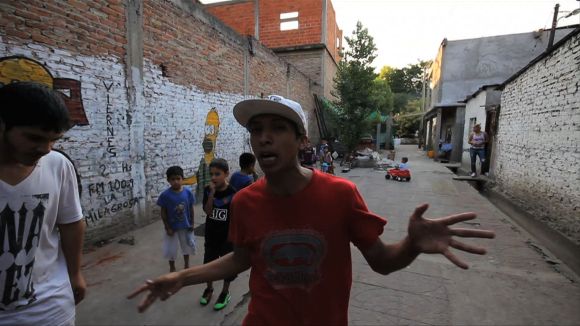
Recently I saw that someone had posted a preview of a documentary project on hip-hop in Buenos Aires, Argentina, on a friend’s Facebook wall. After researching the project a bit, we sent an email to one of the film’s three creators, Diane Ghogomu, who welcomed the idea of participating in the LIFESTYLE Artist Feature series. Originally from Pittsburgh, Pennsylvania, Diane has been living in Buenos Aires for some time, where she has worked along with Segundo Bercetche and Sebastian Muñoz to produce Buenos Aires Rap.

Diane discusses the Reflective and Responsive nature of hip-hop in the film, which follows the lives of various artists involved in this art form in the Argentine capital. Diane and her co-directors will be screening their project at the Buenos Aires Film Festival this year, and are currently fundraising in order to put finishing touches on the project and begin distribution. Check out the interview, trailer, and stills from the film below!

Segundo Bercetche | Diane Ghogomu | Sebastian Muñoz

Sebastian Muñoz | Diane Ghogomu | Segundo Bercetche

Leading off with some basics, where are you from? And where are you at?

DG: I am from Pittsburgh, Pennsylvania! Steeltown, represent! Right now I am living in Buenos Aires, Argentina.

What does Reflection and Response mean to you?

DG: Reflection and Response is the process of acting authentically to each situation that is presented to you. I always think of the Lion King. Simba had to follow his guide Rafiki to the water to see himself. Simba had to look in the water and reflect on his situation, speak with the ancestors, see his own image in the shore before he knew how he had to continue. His response was more powerful because it wasn’t reactionary, but to a powerful impulse backed by his spirits! That’s how he knocked evil’s block off!

Buenos Aires Rap

How does your project Buenos Aires Rap fit in with that definition?

DG: Buenos Aires Rap embodies Reflection and Response in various ways. First off, this project follows an incredible amount of artists whose music is a response to how they reflect on their own identities, their own existences, their own ways of life.

Lukas (Buenos Aires Rap)

Lukas (Buenos Aires Rap)

Those artists who truly respect and understand the history of hip-hop and rap see themselves reflected in that history and the present hip-hop culture. Many of the Bolivian immigrants who live here in Buenos Aires spoke about being able to relate with African Americans living in ghettos during Reaganism. One of my favorite quotes comes from a character named Anton who says, “Through hip-hop I’ve been able to comprehend a lot. I’ve thought a lot. I’ve learned a lot. Here people who have been here for less than 200 years are going to tell you that you are an immigrant when your ancestors have been here since Before Christ? That’s not right. Nationality is only a lack of identity!”

Milito (Buenos Aires Rap)

Milito (Buenos Aires Rap)

That is a beautiful thing to me. These characters are able to reflect, transform, and respond through hip-hop and rap.

Secondly, the job of the documentarian is to do just that: reflect and respond. Anyone who tells you that documentaries are objective are lying to you. Our job is to reflect on a social phenomenon, and respond by placing a camera where and how we see fit. In this project we tried to reflect an image of Buenos Aires that is oft-ignored. Even people who live in Buenos Aires will have a hard time naming all of the urban landscapes that pass by on their screen. We hope that the impact of our project will be a process of reflection and response. Buenos Aires is often painted as a white and European society, without leaving space for her true colors. We hope people can reflect on the truths of the black, the brown,the ghetto-dwellers, the hardworking, the crazy, and those that are just looking to have a little fun, and realize that all of these narratives make Buenos Aires what she is. The response should be an integration of these personalities into the imagery of Argentina. Buenos Aires, reflect! THIS IS YOU!! As one of the characters Rasek raps, “We know you won’t understand it if we rap it, so we’ll breathe it into you.”

Buenos Aires Rap

What else have you been working on recently? What are you looking to work on next?

Continue reading

Tagged , , , , , , , , , , , ,

Artist Feature: Shawn Speakman

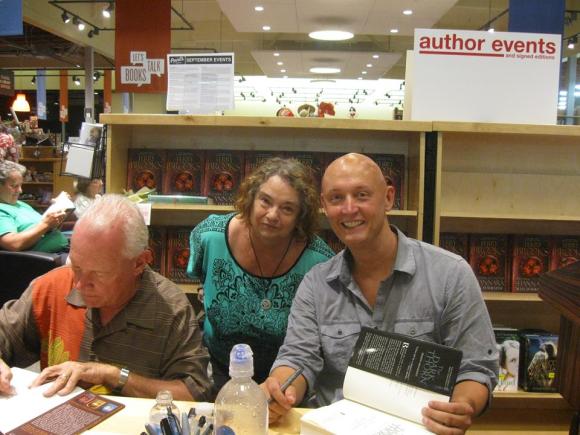
We met Shawn Speakman back in Seattle in 2010. At the time, I learned that he was a writer, and I’ve been eager to find out more about his work ever since. In our interview, Shawn discusses writing about subjects that are relevant to our surroundings, but placed in fantasy, and how that juxtaposition can lead to a better understanding of the present reality. In the past few years, he’s published his book THE DARK THORN and a fantasy anthology he edited, UNFETTERED – and has recently been busy responding to requests for more literary work. We’re excited to have Shawn Speakman’s voice contributing to the Collective!

Shawn Speakman

Every story that I write comes from a “what-if” seed that takes root and grows.

– Shawn Speakman

Leading off with some basics, where are you from? And where are you at?

SS: I grew up in the wilds of Washington State, near the southern base of the volcano Mt. St. Helens. It is a heavily conservative [area] and I fled, to Seattle, as soon as I was able. I have lived in the Emerald City ever since. Although I am just flippant to the second part of your question with, “I live in denial, as all writers do.”

What does Reflection and Response mean to you?

SS: I am a fiction writer. In order to write believable fiction, it takes reflection. It is important to write about subjects pertinent to our world — to put those subjects in a fantasy world, add a bit more pressure, and see what happens. In this way, I gain a better understanding of my world. It costs less than therapy, I assure you. And I hope when someone finishes one of my stories that it leaves them thinking.

How do THE DARK THORN and your other Annwn Cycle tales fit in with that definition?

SS: Every story that I write comes from a “what-if” seed that takes root and grows. For THE DARK THORN, I thought “What if the first Christian crusades were not against the Middle East but, instead, against very real Celtic fey creatures in Britain?” Most of my work is influenced by the dichotomy in my mind between religion and faith. They are very different, in my opinion, and I like to explore that in my writing. Answering the “what-if” question is my response. I took a look at the good and the evil inherent in the Catholic Church as well as the relationship between a broken man, his past, and the faith it requires to overcome such hardship.

The Dark Thorn - Shawn Speakman

What else have you been working on recently? What are you looking to work on next?

SS: Since the publication of THE DARK THORN and my fantasy anthology UNFETTERED, I’ve received a number of other short story anthology requests from other editors. I have written a short story and a novelette in the last month for those books. THE UNLOCKED TOME is the short story and its seed grew out of: “What lengths would a 10-year-old boy who has lost his family go to in order to assert some kind of power over his life?” It was a fun short story, featuring a character I will use again in a future novel. For the moment though, I am working on THE EVERWINTER WRAITH, the sequel to THE DARK THORN.

Who or what inspires you?

Continue reading

Tagged , , , , , , , , , , , , , , , ,

Artist Feature: Maryanne Ventrice

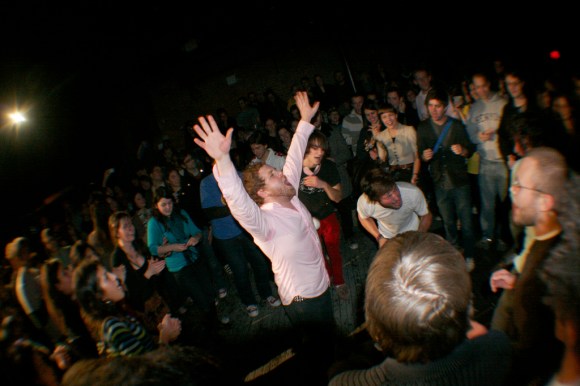
Maryanne Ventrice is a Brooklyn native and resident photographer. She focuses her work on live music events throughout the city featuring a range of styles and sounds. In our dialogue, she discusses goals of documenting and representing the world through the arts, along with how she uses her lens to capture the energetic and emotional feel of a live show. Her words are accompanied by many examples of her dope photos. Peep the entry below!

Maryanne Ventrice | Photo by Jessica Amaya

Maryanne Ventrice | Photo by Jessica Amaya

We strive to represent our world though an artistic medium – trying to give meaning to the world around us, interpreting what we see into what we feel.

– Maryanne Ventrice

Leading off with some basics, where are you from? And where are you at?

MV: I’m a photographer from New York City – born and raised in Brooklyn – still live there. New York is an amazing place. I have always been surrounded by the faces and voices of people from all over the world.  Sometimes it’s hard to be on top of all of these people but the pros outweigh the cons.

I shoot live music events, mostly. I began by photographing friends in bands and then moved on to shooting for various music blogs.

I never studied photography formally, I studied History. For me, documenting has a lot of potential. I hope that when someone looks back on [my] body of work they will be able to get a good feeling of the time and place of the NYC indie music scene.

In 2012, I curated my first show. It was a group show of 13 female concert photographers entitled 120dB. I’ve gone on to curate several more exhibits and look forward to continuing to showcase the work of other artists.

What does Reflection and Response mean to you?

MV: Reflection can be about anything — people, places, objects. We strive to represent our world though an artistic medium – trying to give meaning to the world around us, interpreting what we see into what we feel. Photography easily lends itself to this idea. The live music photos reflect the energy of the band and audience at a particular show. For my curatorial projects, I usually spend some time reflecting on images of artists’ work first and then develop a concept in response to join the work and title a show so that it represents that concept to the viewer.

How does your work fit in with that definition?

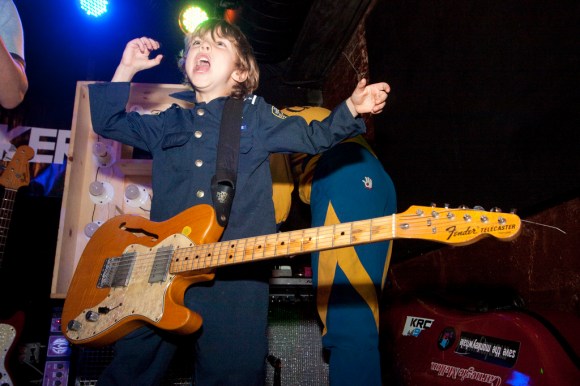
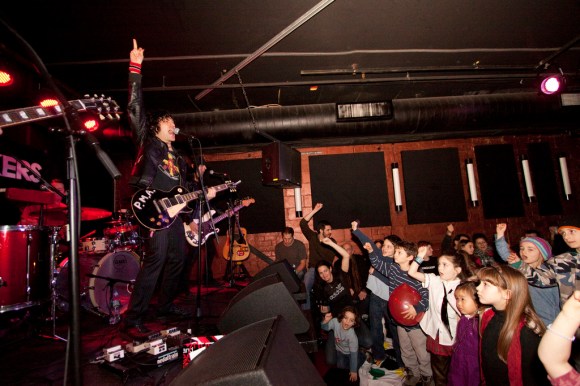
MV: I mainly photograph live music events. I’ve been shooting the Kidrockers music series since 2007. It’s my favorite live event. Bands come and play their regular set for children. My friends Beth and Morton founded this as a way for parents to have access to new bands since it’s hard to get out once you have kids. I believe that we are creating a future audience for live music. It’s a real labor of love and I hope we never stop.

Maryanne Ventrice - DIIV Kidrockers (Brooklyn Bowl)

Maryanne Ventrice – DIIV, Kidrockers (Brooklyn Bowl)

Maryanne Ventrice - Kidrockers (The Rock Shop)

Maryanne Ventrice – Kidrockers (The Rock Shop)

Maryanne Ventrice - Jesse Malin Kidrockers (The Rock Shop)

Maryanne Ventrice – Jesse Malin, Kidrockers (The Rock Shop)

Maryanne Ventrice - Twin Shadow, Kidrockers (Winter's Eve)

Maryanne Ventrice – Twin Shadow, Kidrockers (Winter’s Eve Festival)

The [following] images come from my first exhibit, More Guitar in the Monitor, which a friend of mine asked me to put together. I feel that these images capture the mood of the performances.

Maryanne Ventrice - The National (Bowery Ballroom)

Maryanne Ventrice – The National (Bowery Ballroom)

Maryanne Ventrice - Drink Up Buttercup (Music Hall of Williamsburg)

Maryanne Ventrice – Drink Up Buttercup (Music Hall of Williamsburg)

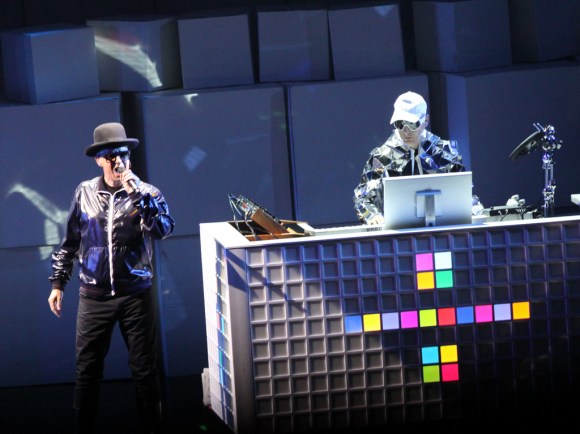
Maryanne Ventrice - Pet Shop Boys (Hammerstein Ballroom)

Maryanne Ventrice – Pet Shop Boys (Hammerstein Ballroom)

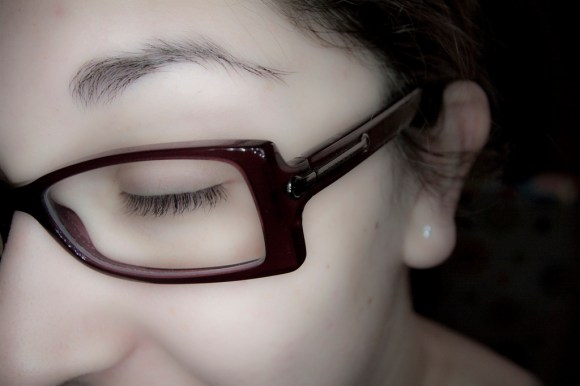
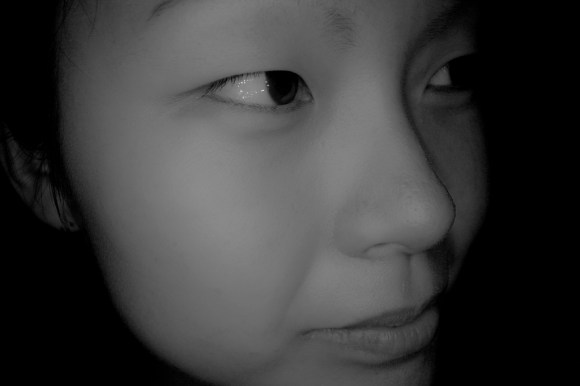
Delineate was a project that’s process based. I was testing some new equipment on myself and made a photo that I thought was pretty interesting. I convinced 11 others to let me shine a bright white light inches from their faces and make these portraits:

Maryanne Ventrice - Kristin Martinez (Delineate)

Maryanne Ventrice – Kristin Martinez (Daughter)

Maryanne Ventrice - Simon Henderson (Delineate)

Maryanne Ventrice – Simon Henderson (Music Industry Professional)

Maryanne Ventrice - Jen Hirano (Delineate)

Maryanne Ventrice – Jen Hirano (Friend)

Maryanne Ventrice - Elon James White (Delineate)

Maryanne Ventrice – Elon James White (Political Pundit, Entrepreneur)

What else have you been working on recently? What are you looking to work on next?

Continue reading

Tagged , , , , , , , , , , , , ,

Artist Feature: Liam McClair

Liam McClair is a singer-songwriter out of Wilmslow, Cheshire, England that we met through our homie Sobi Thurairatnam. For Liam, Reflection is about unbiased retrospection and balanced analysis of the past. His music provides a medium for reflection on lived experience. Liam discusses this process through a showcase of songs from his first EP, How. We’re excited to say that he’s soon to drop his second EP HONEY through HourGlass Productions, and he’s also looking to perform with a full band after its release. Check out the interview below, stay tuned for tour dates, and make sure to check out the new EP soon!

Liam McClair

Reflection to me is considering the positives and negatives in a previous situation, but trying to be as objective as you can to ensure that you are seeing the outcomes and effects as they are and not from a biased position.

– Liam McClair

Leading off with some basics, where are you from? And where are you at?

LM: I am from Wilmslow, Cheshire in the UK. I have been performing as a solo singer-songwriter for nearly a year. The highlights have been having my track played at Old Trafford twice, playing at Liverpool’s Sound City, being featured and interviewed on BBC Introducing Merseyside, and the continued support online from radio stations, fans and blogs.

What does Reflection and Response mean to you?

LM: Reflection to me is considering the positives and negatives in a previous situation, but trying to be as objective as you can to ensure that you are seeing the outcomes and effects as they are and not from a biased position. I reflect often with my music as my writing process is quite organic so upon reflection I can understand the theme of the song and subsequently direct the song towards that theme. Response is a person’s reaction to a stimulus, whether that be sensory or physical.

How does your work fit in with that definition?

LM: My song writing is predominately based on reflections. Most of the songs I have written have been based on personal experiences and personal emotions. Within my Debut EP, How, all of the songs are based on reflecting on a time and they are responses to things I have seen or experienced. The first track Roam The Globe acts as my travel journal from times I have spent abroad:

Rough Waters is a description of ending a relationship and the difficulties involved and experienced:

Somewhere Before is the story of a couple with dementia which I responded to initially, however I didn’t realise that was the topic of the song until I reflected on it:

How is a song I wrote about the feeling of pure desire you have when first encountering someone you really admire:

What else have you been working on recently? What are you looking to work on next?

Continue reading

Tagged , , , , , , , , , , , , , ,

Artist Feature: Max Nelson

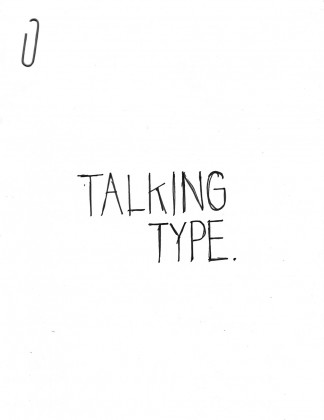
Max Nelson is a Bay Area based web designer and visual artist. He has worked with various aspects of design including illustration, logos, and image layout. Max discusses the interconnected nature of Reflection and Response as the feedback loop between the brain and the images we encounter. He discusses the role of Reflection and Response in his piece Talking Type, and showcases a handful of other works from his archives.

Max Nelson

Leading off with some basics, where are you from? And where are you at?

MN: Berkeley, CA is where I was born and raised. Still basically just crushing it in the city of B-town…I need to GTF outta here.

Max Nelson - "Watercolor Fingertips"

Max Nelson – “Watercolor Fingertips”

Max Nelson - "Turquoise Gemstone"

Max Nelson – “Turquoise Gemstone”


What does Reflection and Response mean to you?

MN: Well a reflection is an aspect or image of a thing, cast onto another thing. A response is essentially a directed reaction. The two combined remind me of  like, a brain with an image projected onto it from like, a projector. The image is like a volcano or something.

Max Nelson - "Swept" (Click the image to check out the piece in full)

Max Nelson – “Swept” (Click the image to check out the piece in full)

How does your piece “Talking Type” fit in with that definition?

MN: I’ll choose the typographic guide ‘Talking Type’ – I did the marker version one night in college. It was probably about 3am, I’d been studying a shitload of typography, and with all that in my system (reflection), I busted that out in sharpie in like 15 min. (response). Years later I found the pages and liked them and decided to type them out in Photoshop.

Max Nelson - "Talking Type" (Click the image to check out the piece in full)

Max Nelson – “Talking Type” (Click the image to check out the typographic guide in full)

What else have you been working on recently? What are you looking to work on next?

Continue reading

Tagged , , , , , , ,

Artist Feature: Zachary Baron

Our fam Zachary Baron is a pianist and accordion player straight out of Hyde Park, New York. Growing up around classic American showtunes and Broadway numbers, Zach continues to celebrate and play these tunes today with unique arrangements. He highlights the benefit and value of honest, unconscious response and warns against forced interference of the creative voice. He’s been working on original tunes and ill boogie-woogie piano stylings. Eclectic inspirations are a central part of Zach’s dialogue and he also reiterates the often-overlooked importance of simplicity. We’re grateful to break bread with a dedicated and informed creator. Peep the words and pics below!

Zach Baron

There is depth in simple things. It takes time and you have to dig in…

– Zach Baron

Leading off with some basics, where are you from? And where are you at?

ZB: I grew up in Upstate New York in the Hudson River Valley in the town of Hyde Park. The Hudson River is one of the most beautiful rivers I have ever seen and I miss it all the time. Now I live in the San Francisco Bay Area–East Bay where all the good stuff happens.

Musically I grew up on classic American Broadway showtunes. Rogers and Hammerstein, Lerner and Loewe etc. Since so many of those tunes became Big Band and jazz standards it was easy to follow them into those areas. I’m kind of an all-American sentimental, schmaltzy guy and I like all-American sentimental, schmaltzy music. I’ve never gotten too far away from that.

What does Reflection and Response mean to you?

ZB: I’m going to leave out ‘Response’ and just deal with ‘Reflection’. I think of reflection, from a creative standpoint, like the reflection of a mirror. A song, a painting, a performance is a reflection of the artist’s experience of the world. The hard part is to be an honest, spontaneous mirror–to get out of the way and not try to consciously influence the process. Keith Jarrett said, “Sometimes I play things I never heard before.” That’s the great place to be–creating in the moment and surprised at what’s coming out of you.

How does your work fit in with that definition?

ZB: I play a lot of old songs. I play a lot of music that I played when I was a kid. It doesn’t matter how many times I’ve played it, it matters how I play it right now. Your mirror doesn’t say, “You again? We’ve done that already!” It just reflects, faithfully, instantly and with no extras. I’m not saying I’m alway there in that space or that there aren’t technical aspects, but the thing that takes a performance to the next level, whether it’s for myself or a crowd of people, is that honesty and purity.

What else have you been working on recently? What are you looking to work on next?

ZB: I have slowly but surely been working on my boogie-woogie piano–it’s way harder than it sounds. I would like to find the time and the nerve to sing some of my own songs at an open mic somewhere.

Who or what inspires you?

Continue reading

Tagged , , , , , , , , , , , ,