Tag Archives: Music

Artist Feature: Adam Hopkins

Adam Hopkins is a composer and bassist living in the Ditmas Park area of Brooklyn by way of Baltimore, Maryland. As part of thriving music scenes in his hometown and his current city of residence, Adam tells an artistic tale of people coming together to create great music and community. Some of the groups he’s involved with, such as Signal Problems, have been around for years and thereby boast a unique group dynamic and musical language developed over time, which add intricacies to their exciting improvisations. Here, Reflection serves as the collective memory of the artist, while Response is a collective sharing and exploration of each participant’s story through sound. In our dialogue below, Adam delves specifically into two tracks, Pogo Stick and We Turn Around, and presents a video of the Adam Hopkins Quartet. He stays busy in New York and has various upcoming records with the several bands he participates in as leader and sideman. Peep the conversation below!

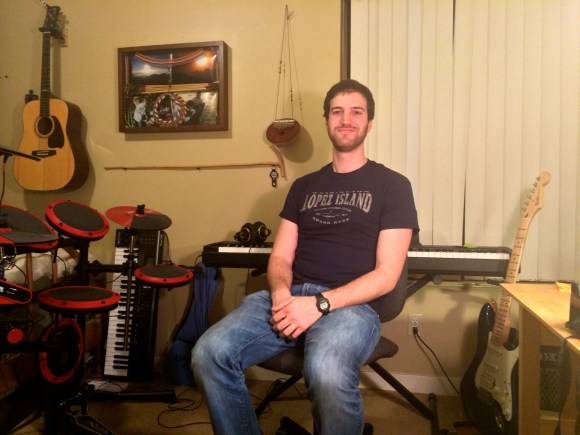
Adam Hopkins | Photo by Michael Yu (2014)

Adam Hopkins | Photo by Michael Yu (2014)

Playing music is all about relationships and communicating with other people, so I am constantly reacting to their ideas and embracing their musical identity as well as my own…it’s that concept of simultaneously reflecting on one’s own unique experiences and bringing them to a group environment, which creates something that is greater than each individual part combined.

– Adam Hopkins

Leading off with some basics, where are you from? And where are you at? 

AH: I currently live in Brooklyn, NY–Ditmas Park specifically. I don’t think I’d normally mention the neighborhood as part of a response to this question, but I really love where I live! A lot of my closest musical collaborators live within 3 blocks of me, and also there are trees. Lots and lots of trees, which is a bit different for Brooklyn.

I was born and raised in Baltimore, MD. I left for college and grad school, but found myself back there in 2005. I consider that time in Baltimore until I moved to NY in 2011 to be the most formative years artistically of my life to this point. The music scene in Baltimore, specifically the creative and improvised music scene, is very small but at the same time full of talented and inspiring people. We started a bunch of bands, wrote new music for them, rehearsed a LOT (something that is much more rare in NY currently), made records, and played shows. It was the best, now that I think of it. In 2011 four of us decided to move to NY from Baltimore, and settled into a house in Bushwick with a great rehearsal space in the basement. That group of people, who basically moved up on the same day, was already a band called Signal Problems led by my former-roommate-but-still-friend Danny Gouker. We continue to rehearse all of the time, and still play regularly. In fact we just released our debut album on pfMentum records which can be checked out right here: http://www.pfmentum.com/PFMCD080.html. There are no subs in the group ever, which has helped maintain it as an actual band and not just a rotating group of potential people. So, you know…Baltimore sticks together wherever we are. 

What does Reflection and Response mean to you?

AH: As an improviser, reflection and response are at the very center of what occurs any time I play music, be it solo or with a group.

Reflection to me is everything that has happened in my life, musically or not, that has gotten me to where I am in that very moment. At my absolute best I am able to look inwardly and draw on all of those experiences to present a statement or vision that is uniquely my own.  

The response can be looked at from a number of angles, but primarily a response is what comes out of my instrument as a result of those experiences. Playing music is all about relationships and communicating with other people, so I am constantly reacting to their ideas and embracing their musical identity as well as my own. It’s what makes improvised music like nothing else…we all bring our experiences from vastly different places to a performance, and as a group we find a way to make it work.

How does your work specifically fit in with that definition?

AH: This first track isn’t one of my own compositions, but I think it is a great example of this concept. It’s from Signal Problems, written by Danny Gouker who plays trumpet, with Eric Trudel on saxophone, Nathan Ellman-Bell on drums, and I’m playing bass. 

It is 30-seconds or so of written music and then we immediately launch into an improvisation. This band has been playing together for over five years, and we’ve developed our own sort of group language as a result. The entire improvised section is the band responding in the moment to everything going on around us. So again, it’s that concept of simultaneously reflecting on one’s own unique experiences and bringing them to a group environment, which creates something that is greater than each individual part combined. 

This second track is a little bit older, but it’s one of my own compositions from 2011. It is a band that was started in Baltimore called Turn Around Norman, with Cam Collins on saxophone, JJ Wright on keyboards, Nathan Ellman-Bell (again) on drums, and myself on bass. 

There was a time when this entire band lived in New York as well, but life choices spread us out a bit and we don’t get to play together nearly as often as we’d like. It is a good example of my compositional approach, so I figured why not include it!? There is improvising in the track, but I think it is mostly influenced by the grunge rock of my high school years and my earliest musical experiences playing in dive clubs and wearing funny hats. There’s maybe a little disco at the end as well, and I’m not sure where that came from. It seeped into my musical being somewhere along the line. 

What else have you been working on recently? What are you looking to work on next?

Continue reading

Tagged , , , , , , , , , , , , , , , , , , ,

Artist Feature: Ebonie Smith

In November of 2013, I was lucky enough to be in the audience for a panel discussion at the Hip Hop Think Tank III that featured New York-based music producer and composer Ebonie Smith. She dropped important information about the relevance of remixing and technology in sound production, and we’ve connected since the event to have her share some of her inspiring work with the LIFESTYLE Collective. Ebonie brings us ideas on how the power of sound can be used to reflect on and respond to the past, evident in her sampling voicemail messages from her late grandmother on her track “Circles of Robbie.” This track and appears on the melodic and impressive production beat tape Carnelian, one of Ebonie’s many dope projects. Between producing for Atlantic Records, running her own boutique music production and publishing company Eudora House, and founding Gender Amplified, a movement that supports female music producers, Ebonie holds it down on multiple fronts.

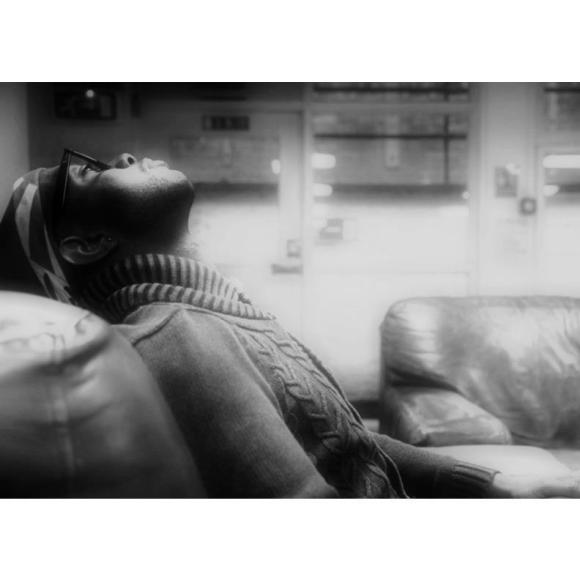
Ebonie Smith

Reflection and Response refers to one’s ability to adapt aspects of the past to impact the present. As a music producer and engineer, my work attempts to translate the past through sound and music technology.

– Ebonie Smith

Leading off with some basics, where are you from? And where are you at? 

ES: I currently reside in New York City. I am originally from Memphis, Tennessee.

What does Reflection and Response mean to you?

ES: Reflection and Response refers to one’s ability to adapt aspects of the past to impact the present. As a music producer and engineer, my work attempts to translate the past through sound and music technology.
How does Carnelian fit in with that definition?
ES: Carnelian is a production beat tape that exemplifies this definition in many ways. For example, the track “Circles of Robbie” is an ode to my grandmother, who unexpectedly died late last year. The track features samples from her voicemails to me. It also features samples of the music that helped me through that time. The track is a means of preserving her voice and elements of our special relationship. I use music technology and production skills to reference the past in an attempt to move forward.

What else have you been working on recently? What are you looking to work on next?

Continue reading

Tagged , , , , , , , , , ,

Artist Feature: Billy Buss

I first saw Billy Buss playing onstage with the Berkeley High Jazz Ensemble a number of years ago, ripping the trumpet during a jazz solo, using a mic that was hooked up to a distortion pedal that I had thought could only be used for rock music. It’s stuck with me all this time as an incredible example of the interconnectedness of musical genres. Billy went on to study at Berklee College of Music and Loyola University in New Orleans, and now lives between Boston and NYC. In our interview, he talks about utilizing the medium of music to explore deep within ourselves as people and peers and practices this exploration through his debut album of original material, Scenes From A Dream. Billy hustles on the daily organizing and performing shows while also teaching trumpet and piano. Peep the dialogue below!

Billy Buss

Reflection is the time we take to ponder, analyze and justify the past. Response is how we utilize the present to bring meaning and potential to the future.

– Billy Buss

Leading off with some basics, where are you from? And where are you at?

BB: I grew up in Berkeley, CA. Currently, I split my time between NYC and Boston, MA.

What does Reflection and Response mean to you?

BB: Reflection is the time we take to ponder, analyze and justify the past. Response is how we utilize the present to bring meaning and potential to the future. For me, the artistic process serves as an introspective microcosm of this system.

How does your work fit in with that definition?

BB: Any musical composition of mine that makes it to paper embodies this approach. Most start either with a melodic idea, concept, feeling, or emotional or spiritual observation and are developed and thusly titled from there. The title track from my debut album, “Scenes From A Dream,” encompasses the over-arching theme explored throughout the CD as a whole. Dreams are projections of our subconscious and often explore, without prejudice, the deepest, darkest (and brightest) corners of our mind. Much like the composers of Romantic Classical music such as Wagner, Beethoven or Debussy, I strive to create music that can elicit a whole spectrum of emotion or thought from the listener. And much like dreams, my music can (and should) be open to many interpretations.

What else have you been working on recently? What are you looking to work on next?

Continue reading

Tagged , , , , , , , , , ,

Artist Feature: Michael Summer

Michael Summer, one of our fellow Berkeley High School alumni, is a saxophonist whose journey has taken him through Santa Cruz , Berklee College of Music in Boston, and now New York City. Highlighting the importance and strength of Reflection and Response listening, Michael stresses the centrality of using his ears in his creative process. He also brings up the beauty that can result from artists who learn the difficult task of stripping away desires to participate in creative dialogue. A recent New York transplant, he’s been working in various local musical spaces, including playing with Tiger Speak , The Love Experiment, and MoRuf. We look forward to hearing more from these bands along with Mike’s plans to record solo material later on this year!

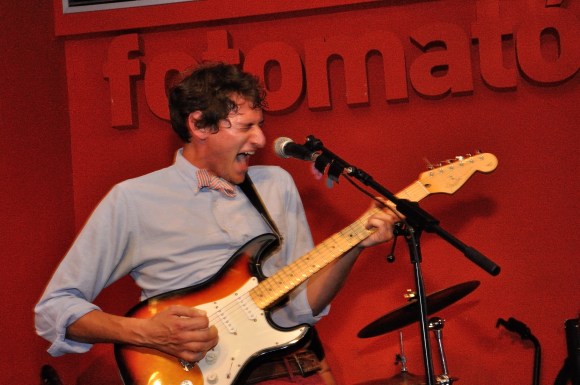
Michael Summer

Reflection and Response really is about listening for me. It’s a hard art, and seems to be a creative tool that is being less and less stressed these days. Whether it be in music, physical or digital art, dance, poetry, or day to day conversation and interaction, truly listening and being aware of what’s out there can be a very difficult thing to do.

– Michael Summer

Leading off with some basics, where are you from? And where are you at?
MS: Born in Oakland, CA and spent my high school years in Berkeley. Moved on to Santa Cruz for three years where I studied physics and later got involved in music and studying the saxophone. After living in a beach paradise, scooted off to frigid Boston where I went to Berklee College of Music and did jazz studies. Moved to Harlem in November of 2013 and moved to Brooklyn 2 weeks ago. I’m finally feeling settled into this glorious madness of a city.

What does Reflection and Response mean to you?

MS: Reflection and Response really is about listening for me. It’s a hard art, and seems to be a creative tool that is being less and less stressed these days. Whether it be in music, physical or digital art, dance, poetry, or day to day conversation and interaction, truly listening and being aware of what’s out there can be a very difficult thing to do. The world of facebook statuses and twitter posts has made it easy to broadcast and yell out to the ethersphere with a minimum amount of dialogue and discourse at times. Honest interaction can be tough to come by. So whenever I’m playing with a group of musicians, or trying to help run a rehearsal, I really try to do my absolute best to listen for what the music needs and where everyone is falling into place in the moment that is being created. I love to make improvised music with friends and really create a conversation. If you can remove ego, the need to be self-satisfied, and put aside the hunger for validation, you can make some amazing things happen. It’s one of the hardest things to do in my opinion. And most people, myself included, are scared at times to open up in that honest way without letting your human desires get in the way of honest expression. It’s amazing to witness when it happens though, and an incredible thing to be a part of. This dude Thundercat gave one of the best performances I’ve ever witnessed about a month ago that left me on cloud nine.

One of my favorite interviews is with Bruce Lee where he discusses honest expression.

How does your work fit in with that definition?

MS: I’m in a hip hop group called Tiger Speak that I’m very excited about. We’ve been together for a bit now, and I think the concept of listening is really coming together for us. I can be a pain in the ass sometimes during rehearsals, trying to get the “mix” just right be it dynamics, fills, intonation, form, flow, or improvisation. Of course, micro-managing a piece of music or a group of musicians can be mighty dangerous artistically, so you really have to have a balance of letting people go and doing their thing and reining in the group as a whole. It’s really the collision of the technical and the artistic, the age old battle (or harmony) of the classical versus the romantic approach.

What else have you been working on recently? What are you looking to work on next?
Continue reading

Tagged , , , , , , , , , , , , ,

Artist Feature: Jeremy Flax

I first met my dude Jeremy Flax stompin’ away at the Open Mic at Triskel Tavern beating out some dope sounding electric guitar blues tune on a Thursday night at 1:30 AM. Jeremy is from Virginia and lived in Madrid from 2011-2013 and is now back in the United States working with his group J Flax and The Heart Attacks. Below, Jeremy discusses the self-reflective nature of Reflection and Response, and how conclusions drawn from this practice can help us better ourselves. Jeremy also presents his dope practice of listening to his old groups and selecting elements that he is currently using with his group today. Be on the lookout for shows throughout the Virginia and Washington DC area from this powerful performer, composer, and vocalist!

Jeremy Flax

Reflection means really looking back at the actions you’ve taken and the things you’ve said and thinking about how they have affected others…Response entails what you decide to do with the conclusions you’ve drawn.

– Jeremy Flax

Leading off with some basics, where are you from? And where are you at?

JF: I’m from Virginia Beach, Virginia originally. I’ve lived in Virginia my whole life except for two years that I spent in Madrid from 2011 to 2013. Right now I’m actually back living in Virginia Beach for the first time in several years, but I’m hoping to relocate to Washington, DC in the near future.

What does Reflection and Response mean to you?

JF: To me reflection means really looking back at the actions you’ve taken and the things you’ve said and thinking about how they have affected others. Did they have a positive impact or a negative impact? Did they help me to better myself or am I the same person now as I was then? Response to me entails what you decide to do with the conclusions you’ve drawn. What have I learned about myself and how can I justify the actions I’ve taken? Response is picking a road to go down after having examined the road you’ve already taken.

How does your band J.Flax & The Heart Attacks fit in with that definition?

JF: The music that I’m making now is in a way a response to conclusions I’ve reached having analyzed the music I was making with my former band, The Vermilions. Listening to both you can hear that the influences come from the same place but I feel like having gone back and listened to my previous record several years after making it I can pick out elements of those songs that I still enjoy and phase out the elements that looking back I find didn’t work. The result is a collection of songs that are far more streamlined and are a lot of fun to listen to as well as perform.

What else have you been working on recently? What are you looking to work on next?

Continue reading

Tagged , , , , , , , , , , , , ,

Artist Feature: Zoë Owen

Zoë Owen is a musician and singer-songwriter straight out of Canterbury, England and now resides in Madrid, Spain. While living in Madrid, Zoë has become involved in the city’s vibrant music scene recording solo work while also participating in the 7-piece band “Waiting For Eva,” that includes members from around the world, and a collaboration with a Belgian electronic producer. Our dialogue comments on the power of Reflection against a dangerous current of “distraction,” that can inhibit self-expression, and how Reflection and Response build on each other as symbiotic processes that are continuously happening. Zoë also brings us the interesting stories behind her original works Too Terrified and White Noise. We’re excited to watch as this artist looks to keep building while studying the craft of the ukulele and bringing her music and message to wider audiences.

Zoë Owen

If we do not reflect on our own behavior, and our own experiences or environment, then we are powerless to improve the quality of both our lives and the lives of those around us…If I am honest, I sometimes feel quite scared about how “Distraction” has usurped “Reflection” in modern society.

– Zoë Owen

Leading off with some basics, where are you from? And where are you at?

ZO: Pleasure to meet you, I’m Zoë and at this present moment in time I am 28 years of age and residing in Madrid, the capital of Spain. I am a musician, singer and songwriter, living with my folding bicycle and ukulele in an unapologetically cute and colourful apartment in “barrio Malasaña”, the Hipster-heart of Madrid, a city which has been my adoptive home for about 6 years now. Why Madrid? I’m not really sure to be honest… it was a bit of a gamble to leave my somewhat institutionalized English life behind me, but as far as creativity is concerned, I feel like I really hit the jackpot! I came here with the sole intention of learning Spanish, and what I inadvertently found here was a key that unlocked a deeper chamber inside me, one where art and music had been cowering away. That key is the right mixture of people, places and circumstance.

Madrid is quite a far-cry from the places I grew up in. I hail from the leafy suburbs of Canterbury, a picturesque medieval city in England, home to Chaucer’s famous tales and, arguably, the world’s sexiest elf, Orlando Bloom. Aged 18, I swapped Canterbury for Cambridge, where I spent 3 incredibly enchanted years immersed in Latin & Greek literature, dining with Stephen Hawking and living in a spiral tower. Cambridge was the parent that taught me to work hard and aim high, because there is always something better that you can achieve. By contrast, Madrid has been the cheeky devil on my shoulder, testing me, and showing me that sometimes, it’s absolutely ok, if not essential to break the mould and to stop taking everything so damned seriously. And have a mojito. That part is non-negotiable.

What does Reflection and Response mean to you?

ZO: Nowadays, I would say reflection is the cornerstone of my life, and the principal agent of change. Without reflection we cannot achieve awareness of ourselves and the world around us. If we are not aware then we are not truly in control of our lives and we are resigned to being like the driftwood that Fran Healy sings about. “Floating underwater. Breaking into pieces. Hollow and of no use.” If we do not reflect on our own behavior, and our own experiences or environment, then we are powerless to improve the quality of both our lives and the lives of those around us. I don’t have bread in my house, or a television. I do have a quiet corner and a vase of flowers. If I am honest, I sometimes feel quite scared about how “Distraction” has usurped “Reflection” in modern society.

Response is a little harder for me to define. I think response can come about as a result of reflection or it can prompt reflection. Songwriting for me often begins with response, rather than reflection. I am often inspired to write music as a means of responding to a stimulus (something I have seen or heard). The idea is born in order to respond, but in order to decide what form my response takes, reflection is necessary. I would interpret response as a more subconscious process. We can respond to things quite thoughtlessly sometimes. So I suppose my conclusion is that Reflection & Response is akin to the “Chicken & The Egg” conundrum…

How does your work fit in with that definition?

ZO: I have written a couple of songs, which were essentially responses to feeling powerless. The first, “Too Terrified”, was conceived when I was standing on a balcony in Tuscany. I had just finished university and I honestly had no idea what to do next with my life. The feeling was suffocating and terrifying, and I remember making the connection between the vertigo that I felt being so high on that balcony, and the fact that, metaphorically I felt like I was teetering on the edge of a precipitous cliff and about to jump into the unknown. I used the balcony metaphor in the lyrics of Too Terrified” to reflect on my new situation and the lack of control I felt over where my future was going.

The same feelings are re-evoked in “White Noise”, although this song responds to the feeling of being on a path towards the wrong future, and knowing where the right path is, but ignoring this knowledge. I felt like there was a voice inside me telling me exactly what I really wanted in life, but that I had been ignoring it so strongly that the voice had become a drone, in essence, just white noise. My solo stuff is a lot more depressing than my collaborative work that’s actually more upbeat.

What else have you been working on recently? What are you looking to work on next?

Continue reading

Tagged , , , , , , , , , , , , , ,

Artist Feature: Kate Phillips

We met up with Kate Phillips through LIFESTYLE Collective member Steve Laciak. The two have been performing together for some time and it was dope to hear more about Kate’s creative story. Originally from upstate New York, Kate has lived all over the United States performing as a singer and dancer and in musical theater. Kate brings up various dope fresh ideas to the Collective touching on creative reflection and response and growth within artistic communities, the important role of the performer as a provider of solace for an audience, and other themes from the perspective of a creator that has always stayed true to the craft. Kate Phillips continues to forge a creative path filled with new and exciting projects  in her current home of Tennessee and we are lucky to feature encouraging words of wisdom from an experienced and invigorating creator.

Kate Phillips

 An entertainer provides a moving sound, a fresh look, and quite often a new perspective. That role is essential in our society, allowing imaginations & expressions to cultivate change and growth.

– Kate Phillips

Leading off with some basics, where are you from? And where are you at?

KP: I lived in upstate New York as a child, riding my bike to the village library and along the Erie Canal, through a lovely town called Fairport. Growing up there was a wonderful experience, but since I couldn’t wait to live in a big city, I moved to Manhattan on my 18th birthday. After spending 6 years in “the big apple” because of a couple of dance scholarships, I was fortunate enough to begin a career that involved travel. For 2 years I sailed around North America, while performing on cruise ships as a singer and showgirl. I have lived in 8 different states and toured the country as a “triple threat” in musical theatre. The latest adventure I took a leap for has led me to a beautiful place, nestled in The Great Smoky Mountains, as I’m thrilled to now call Tennessee my new home.

Kate Phillips

What does Reflection and Response mean to you?

KP: Recognizing that all of this is a true gift that I was meant to share and ultimately ‘giving back’ to people in my community. First, I give credit to the creative education I received; understanding how I have been influenced by such amazing teachers. Then, I recall moments of excellence I’ve witnessed, gathering inspiration from other talented artists and friends… always studying their methods. I was, and still am, surrounded by people who dedicate their life to their art, and I believe we are all reflections of each other. 

Listen to more of Kate’s music here: http://www.reverbnation.com/KatePhillips

How do your performances fit in with that definition?

KP: All of the extensive training and sacrificing a singer-dancer goes through can be difficult at times, but I have a personal theory about this. For the duration of the show, each member of the audience is given a chance to escape. They are encouraged to sit back and relax since someone else is “on” for the moment. Whatever may be causing them grief, sadness or pain, just disappears for that short amount of time.  An entertainer provides a moving sound, a fresh look, and quite often a new perspective. That role is essential in our society, allowing imaginations & expressions to cultivate change and growth. That person on stage is what I call “Brasilient” (brave and resilient). Considering numerous auditions, disappointing rejections, painful injuries, missed holidays with family, and ongoing challenges, we continue developing as a seasoned professional, because it is our purpose.

What else have you been working on recently? What are you looking to work on next?
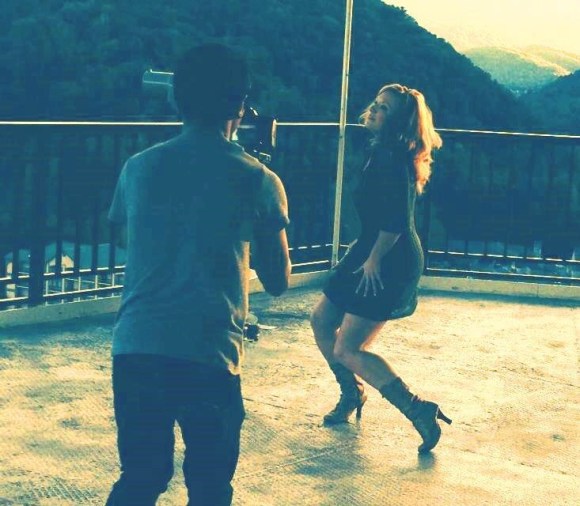
KP: This has been a pretty exciting journey! Last year, I performed at The Grand Ole Opry in Nashville. A holiday song I recorded played on the radio for 2 years in a row. Recently I reunited with the love of my life after several years apart, and together we have fulfilled a life-long dream by combining our musical talents as a duo. This year I began volunteering again with at-risk children & teens in my community by teaching workshops in the evenings. Next, I look forward to announcing a few new projects that are still in the works, including a music video and more collaborations with local songwriters.

Kate Phillips

Who or what inspires you?

Continue reading

Tagged , , , , , , , , , , , , , , ,

Artist Feature: Achilles Kallergis

Just a couple of months ago we connected with Achilles Kallergis at El Born, a dope Spanish restaurant down the street from us. This multi-faceted Brooklyn-based artist by way of Athens, Greece, and Switzerland utilizes his guitar to reflect on and respond to the various sets of stimuli that comprise the reality we live in. Achilles has recently dove into the art of Flamenco music and he celebrates the power and continuity of this folk art form that has handed down generations of style, melody, and story. Drawing on his global presence, his future projects involve recording albums with connected artists from around the world. In a piece that locates the power of song as a common denominator around the globe, Achilles breaks down the collaborative and improvisational possibilities of music.

Achilles Kallergis

Art is very esoteric and personal but it is also an attempt to connect and communicate with people, the need to feel part of the world, of a place, of a community. And that is a contradiction: the secret or mystic world of the artist crying out for contact and connection with the rest of the world.

– Achilles Kallergis

Leading off with some basics, where are you from? And where are you at?

AK: I am from Athens, Greece and currently living in Brooklyn NYC for the past five years. I’m a musician, guitarist, and composer interested in both written and improvised music forms.

What does Reflection and Response mean to you?

AK: Any artistic expression is a response or in response to something experienced. Art reflects life, lived or even un-lived experiences so reflection and response is always at the center of any piece of art.

How does your work fit in with that definition?

AK: Especially in improvised music (whatever the style) I think everything is response and reflection. It can be a response to a musical phrase, to one note or texture (even to the sound of the cash register at the bar). At the same time though it reflects the mood, personality and experiences of the performer. It is responding to and “being at the moment” while reflecting who you are. 

What else have you been working on recently? What are you looking to work on next?

AK: Recently I’ve been getting obsessed with flamenco. It’s definitely a new art form for me which I started getting deeper into more recently. Definitely challenging in every aspect but also extremely deep in a unique way. It is really heavy and powerful music. Also, at a time where everything is about the next “new thing” or new sound it is very refreshing to go back to a folk music form, that does not claim to be innovative but strongly rooted in the history of its people. One that has been orally transmitted from generation to generation and that brings with it the tumultuous history of Gitanos, perhaps the most misunderstood and persecuted group in history. I feel this connection to the past is something that is missing from many new music idioms. Maybe flamenco showcases the importance of response and reflection – a response and reflection on the history of Gitanos by Gitanos.

In terms of new works, I’m looking forward to record two albums. The first one will be based entirely on my compositions and will document my working jazz quartet featuring Timo Vollbrecht on saxophone, Adam Hopkins on bass and Nathan Ellman-Bell on drums. I’ve been playing with these guys for a while now and I’m grateful cause they are all amazing musicians who manage to add a new dimensions to my music.

Another exciting future project is a collaboration with some musicians from Switzerland featuring Ganesh Geymeier, great saxophone player and improvisor, Michael Gabriele and Marc Olivier Savoy who are both members of Ouizzz one of my favorite bands (make sure that you check them out!). I will be joining them for a recording in Switzerland next summer and I am really happy to reconnect and play with these guys. 

Who or what inspires you?

Continue reading

Tagged , , , , , , , , , , , , , , ,

Artist Feature: David Boman

I first met David Boman during college in Seattle jamming out with him rocking the drum set. His Feature with the LIFESTYLE has been a long time coming and David goes in- setting up a unique journey through the physics of Reflection and Response and the “allure,” of Response as a self-exploratory medium that elicits emotions from within us. From discussing the biological phenomenon of our reactions as people to music, Dave goes on to explain how his music is currently focused on the image- he currently has several soundtrack projects finished and coming up. Be on the lookout for more on these ideas and an in-depth discussion of pieces Overture (Save the Wails), Lowflyer, and his score to Handmade in our discussion below!

David Boman

Much like intermingling sound waves, personal reflection is constructive and destructive…The catch is that you don’t always walk away feeling good, the allure is that you always walk away feeling. Period.

– David Boman

Leading off with some basics, where are you from? And where are you at?

DB: I am from Seattle and I am at Seattle. I was born and raised here, went to school here and work in the city. Next year I expect to be elsewhere for some time, very possibly Southern California…

What does Reflection and Response mean to you?

DB: In physics, reflection is the propensity for sound or light to bounce off of a surface rather than to be absorbed by that surface. In audio production, we try to avoid this because sound waves that are reflected off of a wall, for example, can interfere with the sound waves coming from the original acoustic source destroying the quality of a recording. A technical (and pretentious) answer like that isn’t really relevant to the question, but it’s an interesting place to start; after all, when we put on headphones and hit play on our stereo, the surface of our eardrums rumble and vibrate, a signal to our brain is sent and processed. Consciously, something happens – it is absorbed and internalized, those of us who vibe with ‘The Metaphysical’ feel the melodies, harmonies, words and throbbing beats sink into our souls. Is that enough? Absolutely! Music is incredible, partly, if not mostly for exactly that reason. You don’t need to know a thing about it to feel its gravity, to be brought to tears or fits of erratic physical movement (shout out to the EDM guys) solely from the controlled vibration of some four-dollar ear buds.

Reflection is the optional step. It’s the part of the process that leads to response, which is the functional step. Much like intermingling sound waves, personal reflection is constructive and destructive – thinking deeply about what is being unearthed that is eliciting profound sensation; self-pity, inspiration, awakening, serenity. The catch is that you don’t always walk away feeling good, the allure is that you always walk away feeling. Period. It’s a product of all art, not just music – scratch that – it’s the product of being alive. Sometimes absorption and reflection happen simultaneously, but I don’t think the response part comes unless reflection has occurred. Response is reflection incarnate. It is the creation that spawns from pure or mixed up thoughts and emotions. It is the act of distilling those feelings through your medium; it is also the distillation itself.

How do ‘Overture (Save the Wails)’ and the score to ‘Handmade’ fit in with that definition?

DB: Beauty in everything. Overture (Save the Wails) is an ode to that sentiment; don’t make an item or experience trash until you’ve taken something from it. The idea was to take dissonant sounds, square synths, and harsh and heavy drums and set them to a pretty, bittersweet melody. It took a long time but ended up yielding one of my favorite tracks to date.

Another track, called Lowflyer, uses some familiar sounds to help set the atmosphere and encourage reflection.

I have been intrigued by film scoring since high school. The context given by a film clip provides reflective material that begs to be painted, or left silent, but in either case consciously sculpted. ‘Handmade’ is a two-minute short film with no dialogue, written and directed by Chris Winterbauer. No faces are seen, no words are spoken. Actions speak louder than words, especially when guided by music.

What else have you been working on recently?

Continue reading

Tagged , , , , , , , , ,

Artist Feature: Nick Nova

We welcome our friend Nick Nova (born Kwaku Boateng-Farrar) to the LIFESTYLE dialogue. Nova’s creative output operates on many different levels, including music/audio, design, and information distribution. The concept of power is one of the central themes in this artist’s piece as he touches on the re-appropriation of past experiences and memories. Nova provides a dope look at this empowering nature of Reflection and Response in addition to other aspects of his creative process. Check the interview below!

Nick Nova

The ability to reflect on personal experience, past innovations, and current affairs empowers one to respond to obstacles, criticisms and general stressors in a fashion that consciously assists their own progression, as well as that of culture and society at large.

– Nick Nova

Leading off with some basics, where are you from? And where are you at?

NN: I’m definitely a West Coast kid. I was born and raised in Northern California, the Bay Area specifically. After high school I stuck around for a bit before moving to London, England for college. I’m now back in the U.S.and have settled in Brooklyn, NY.

What does Reflection and Response mean to you?

NN: Reflection and Response to me represents the two important, synergistic aspects of creating and succeeding. People often lose sight of self-importance when attempting to achieve greatness in a public space, but the willingness to consider one’s own objectives and mapping out personal checkpoints is vital to the success of projects bigger than its creator. Building on that, the ability to reflect on personal experience, past innovations, and current affairs empowers one to respond to obstacles, criticisms and general stressors in a fashion that consciously assists their own progression, as well as that of culture and society at large.

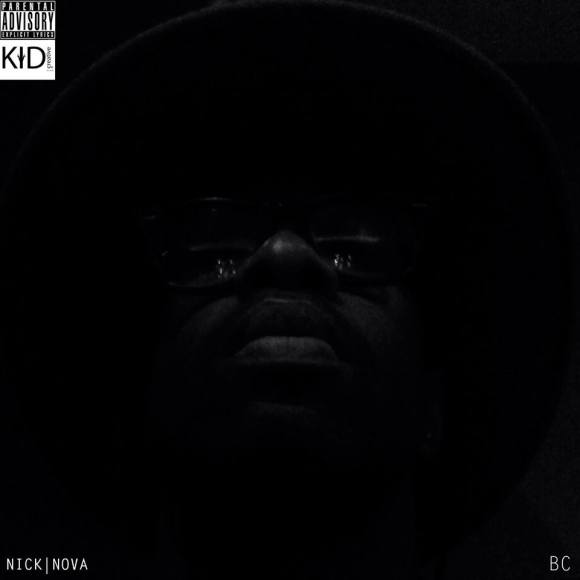
BC

How does your project BC fit in with that definition?

NN: My latest music project ‘BC’ represents this entirely because it is me reflecting on my past, both in the content, as well as the more technical aspect of the project. Recognizing my previous musical inhibitions and seeing how much it hindered my potential, ‘BC’ finds me embracing those flaws and making the appropriate changes to better position myself for achieving my musical goals.

From my observations, it’s common for creators to bury certain aspects of their lives as a defense mechanism, but one doesn’t have a true concept of power until you embrace the most difficult of memories and utilize past pain and/or frustration into something positive and empowering for others. A personal example would be on a record I have called “Tunnel” in which I mention my experience of being bullied. Up until this project I never wanted to share that vulnerability, but upon reflecting on the experience and seeing how much the experience aided my development, I recognized that it was imperative for me to share this so that younger listeners, or even people my age who may be bullied on the job or elsewhere and feel helpless, can recognize their own power through my story and they can stand up to their detractors and even if the results aren’t instantaneous, they’ll know it’s ok to fall down as long as you keep fighting to stand on your feet again, physically and or metaphorically depending on your situation.

What else have you been working on recently? What are you looking to work on next?

Continue reading

Tagged , , , , , , , , , , , , ,