Tag Archives: Interview

Artist Feature: Kate Phillips

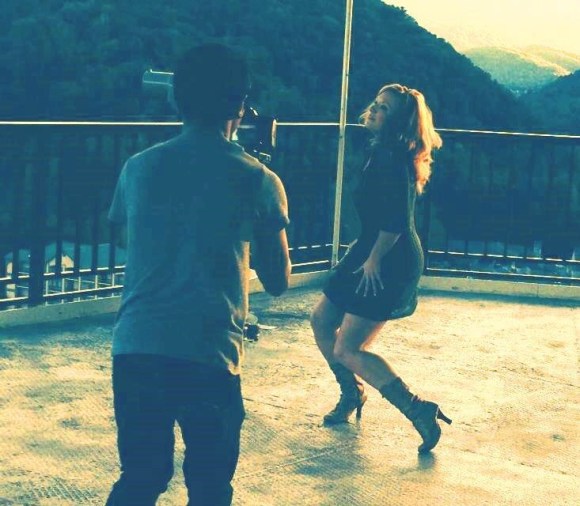
We met up with Kate Phillips through LIFESTYLE Collective member Steve Laciak. The two have been performing together for some time and it was dope to hear more about Kate’s creative story. Originally from upstate New York, Kate has lived all over the United States performing as a singer and dancer and in musical theater. Kate brings up various dope fresh ideas to the Collective touching on creative reflection and response and growth within artistic communities, the important role of the performer as a provider of solace for an audience, and other themes from the perspective of a creator that has always stayed true to the craft. Kate Phillips continues to forge a creative path filled with new and exciting projects  in her current home of Tennessee and we are lucky to feature encouraging words of wisdom from an experienced and invigorating creator.

Kate Phillips

 An entertainer provides a moving sound, a fresh look, and quite often a new perspective. That role is essential in our society, allowing imaginations & expressions to cultivate change and growth.

– Kate Phillips

Leading off with some basics, where are you from? And where are you at?

KP: I lived in upstate New York as a child, riding my bike to the village library and along the Erie Canal, through a lovely town called Fairport. Growing up there was a wonderful experience, but since I couldn’t wait to live in a big city, I moved to Manhattan on my 18th birthday. After spending 6 years in “the big apple” because of a couple of dance scholarships, I was fortunate enough to begin a career that involved travel. For 2 years I sailed around North America, while performing on cruise ships as a singer and showgirl. I have lived in 8 different states and toured the country as a “triple threat” in musical theatre. The latest adventure I took a leap for has led me to a beautiful place, nestled in The Great Smoky Mountains, as I’m thrilled to now call Tennessee my new home.

Kate Phillips

What does Reflection and Response mean to you?

KP: Recognizing that all of this is a true gift that I was meant to share and ultimately ‘giving back’ to people in my community. First, I give credit to the creative education I received; understanding how I have been influenced by such amazing teachers. Then, I recall moments of excellence I’ve witnessed, gathering inspiration from other talented artists and friends… always studying their methods. I was, and still am, surrounded by people who dedicate their life to their art, and I believe we are all reflections of each other. 

Listen to more of Kate’s music here: http://www.reverbnation.com/KatePhillips

How do your performances fit in with that definition?

KP: All of the extensive training and sacrificing a singer-dancer goes through can be difficult at times, but I have a personal theory about this. For the duration of the show, each member of the audience is given a chance to escape. They are encouraged to sit back and relax since someone else is “on” for the moment. Whatever may be causing them grief, sadness or pain, just disappears for that short amount of time.  An entertainer provides a moving sound, a fresh look, and quite often a new perspective. That role is essential in our society, allowing imaginations & expressions to cultivate change and growth. That person on stage is what I call “Brasilient” (brave and resilient). Considering numerous auditions, disappointing rejections, painful injuries, missed holidays with family, and ongoing challenges, we continue developing as a seasoned professional, because it is our purpose.

What else have you been working on recently? What are you looking to work on next?

KP: This has been a pretty exciting journey! Last year, I performed at The Grand Ole Opry in Nashville. A holiday song I recorded played on the radio for 2 years in a row. Recently I reunited with the love of my life after several years apart, and together we have fulfilled a life-long dream by combining our musical talents as a duo. This year I began volunteering again with at-risk children & teens in my community by teaching workshops in the evenings. Next, I look forward to announcing a few new projects that are still in the works, including a music video and more collaborations with local songwriters.

Kate Phillips

Who or what inspires you?

Continue reading

Tagged , , , , , , , , , , , , , , ,

Artist Feature: Achilles Kallergis

Just a couple of months ago we connected with Achilles Kallergis at El Born, a dope Spanish restaurant down the street from us. This multi-faceted Brooklyn-based artist by way of Athens, Greece, and Switzerland utilizes his guitar to reflect on and respond to the various sets of stimuli that comprise the reality we live in. Achilles has recently dove into the art of Flamenco music and he celebrates the power and continuity of this folk art form that has handed down generations of style, melody, and story. Drawing on his global presence, his future projects involve recording albums with connected artists from around the world. In a piece that locates the power of song as a common denominator around the globe, Achilles breaks down the collaborative and improvisational possibilities of music.

Achilles Kallergis

Art is very esoteric and personal but it is also an attempt to connect and communicate with people, the need to feel part of the world, of a place, of a community. And that is a contradiction: the secret or mystic world of the artist crying out for contact and connection with the rest of the world.

– Achilles Kallergis

Leading off with some basics, where are you from? And where are you at?

AK: I am from Athens, Greece and currently living in Brooklyn NYC for the past five years. I’m a musician, guitarist, and composer interested in both written and improvised music forms.

What does Reflection and Response mean to you?

AK: Any artistic expression is a response or in response to something experienced. Art reflects life, lived or even un-lived experiences so reflection and response is always at the center of any piece of art.

How does your work fit in with that definition?

AK: Especially in improvised music (whatever the style) I think everything is response and reflection. It can be a response to a musical phrase, to one note or texture (even to the sound of the cash register at the bar). At the same time though it reflects the mood, personality and experiences of the performer. It is responding to and “being at the moment” while reflecting who you are. 

What else have you been working on recently? What are you looking to work on next?

AK: Recently I’ve been getting obsessed with flamenco. It’s definitely a new art form for me which I started getting deeper into more recently. Definitely challenging in every aspect but also extremely deep in a unique way. It is really heavy and powerful music. Also, at a time where everything is about the next “new thing” or new sound it is very refreshing to go back to a folk music form, that does not claim to be innovative but strongly rooted in the history of its people. One that has been orally transmitted from generation to generation and that brings with it the tumultuous history of Gitanos, perhaps the most misunderstood and persecuted group in history. I feel this connection to the past is something that is missing from many new music idioms. Maybe flamenco showcases the importance of response and reflection – a response and reflection on the history of Gitanos by Gitanos.

In terms of new works, I’m looking forward to record two albums. The first one will be based entirely on my compositions and will document my working jazz quartet featuring Timo Vollbrecht on saxophone, Adam Hopkins on bass and Nathan Ellman-Bell on drums. I’ve been playing with these guys for a while now and I’m grateful cause they are all amazing musicians who manage to add a new dimensions to my music.

Another exciting future project is a collaboration with some musicians from Switzerland featuring Ganesh Geymeier, great saxophone player and improvisor, Michael Gabriele and Marc Olivier Savoy who are both members of Ouizzz one of my favorite bands (make sure that you check them out!). I will be joining them for a recording in Switzerland next summer and I am really happy to reconnect and play with these guys. 

Who or what inspires you?

Continue reading

Tagged , , , , , , , , , , , , , , ,

Artist Feature: Laurel MacKenzie

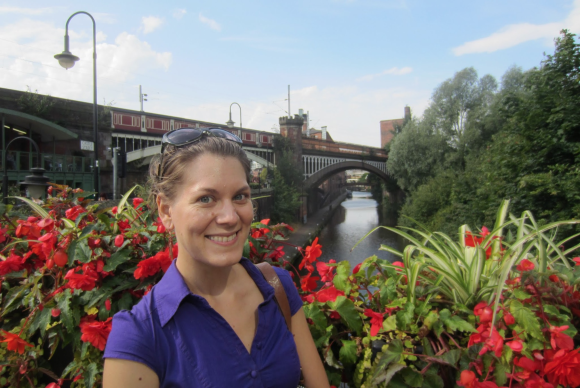
A linguist by training and professor in Manchester, England by trade, Laurel MacKenzie uses the space of her Feature to look at the language people use and how we understand words. She presents thoughts on how instantaneous Reflection and Response occurs and doesn’t occur when we hear each other speak. As an educator Laurel utilizes large lecture classroom settings to provide an opportunity for data collection on language and has created various language maps of the United Kingdom with her students. She drops ill knowledge throughout this piece on how our brains practice Reflection and Response just as sounds reach us-before any creative mediums lead to expression.
Laurel MacKenzie

I investigate the variation that is inherent to language: cases where our language gives us multiple ways of saying something, and we have to make a conscious, or just as often subconscious, choice of which one to use at any given time. We’re most familiar with this kind of linguistic choice where words are concerned…[however,] I study linguistic choices on an even more minute level, in the way we pronounce the words that we use.

– Laurel MacKenzie

Leading off with some basics, where are you from? And where are you at?

LM: I grew up in College Station, Texas, a small town with a big university, a lot of cows, a ton of wide open spaces, and not much else. I did undergrad degrees in French and Linguistics at UC Berkeley (woo go Bears!) and a PhD in Linguistics at the University of Pennsylvania before taking up my current job as a linguistics professor at the University of Manchester in Manchester, UK.

I feel very lucky to get to have a foot in two countries at once. I go back to the US frequently to visit family, and with only 5 hours’ time difference between the UK and the East Coast, I never feel like I’m very far away. At the same time, after a year and a half here, I’m starting to pick up on cultural knowledge and feel more integrated. The result is not that I’ve given up my American self, but rather that I’ve been able to augment it with a new body of knowledge that I’ve gained the UK. I see it as a gift to get to be able to coexist in two cultures. 

What does Reflection and Response mean to you?

LM: My first thought was that this sounds a lot like what we do in academic work. As a linguist, I study and analyze the patterns found in language. This can be as straightforward as listening to the way someone pronounces their vowel sounds and using that to identify where they come from, or more complicated, like studying a body of linguistic data, finding the patterns or relationships it displays, and then using those to generate theories about how language is stored in the brain. Everything I do in my research involves reflecting on data, and responding to what I find in that data.

But I also thought about how reflection and response are involved on a much more subconscious level every time we receive some sort of sensory input. I study language, but I’ve also been a musician since I was a child, playing piano, viola, and carillon (tower bells — another Go Bears! shoutout to the UC Berkeley Campanile), so I’ve always been interested in how we perceive and interpret sound. Whenever we receive an auditory stimulus, whether it be music, speech, or any other sound, split-second reflection and response processes occur, allowing us to make sense of what we’ve just heard. Our brains are amazingly good at this. When you think about it, speech is really messy and complicated: we talk fast, we omit sounds and syllables, different people pronounce words differently depending on where they come from, and even you yourself will pronounce a single word differently depending on where in a sentence it occurs, whether you’ve said it before, how long you’ve been talking, and how comfortable you feel with the person you’re talking to. Yet in the vast majority of cases, we understand exactly what’s been said to us, even if it wasn’t pronounced in the same way we would have pronounced it ourselves. Those reflection and response processes are always going on under the hood, picking apart the sounds that we hear and turning them into something meaningful.

Our brains are also really good at knowing when reflection and response are not necessary. Take the role of pitch in language. In some cases it’s essential to be attuned to the pitch of someone’s speech: imagine the difference in intonation between “That’s a GREAT idea!” said enthusiastically, and “That’s a GREAT idea” said sarcastically. The words are the same in each case, but the pitch patterns are different. Our brains need to be constantly reflecting and responding to these up-and-down pitch patterns that we hear in speech, in order to make sure that we get the right meaning in cases like this. But in other cases pitch differences are completely irrelevant. For instance, some people have high-pitched voices and some people have low-pitched voices, but when we hear a speaker with a low voice, we don’t immediately think “Wait, why is their voice so low? What do they mean by this? Is there something they’re trying to convey?” Our brains can filter that kind of variation out, without wasting time trying to look for any meaning in it. This kind of thing fascinates me, and makes me feel so lucky to get to have a job where I can engage with smart people who are thinking and talking about it.

How does your work fit in with that definition?

LM: I have to say that much of my academic work actually focuses on the aspects of language where reflection often isn’t involved at all — it’s all response, and it’s an impressively subconscious and automatic response, at that. I investigate the variation that is inherent to language: cases where our language gives us multiple ways of saying something, and we have to make a conscious, or just as often subconscious, choice of which one to use at any given time. We’re most familiar with this kind of linguistic choice where words are concerned: for instance, if your professor or your boss gave you some good news, you might say you were “delighted,” but if the good news came from your best friend, you might be “stoked.” I study linguistic choices on an even more minute level, in the way we pronounce the words that we use.

Recently I’ve been interested in the way we can contract verbs in English. If I wanted to prove to you that Manchester isn’t always the grim, gray, rainy place it’s made out to be, I might tell you “The weather’s beautiful right now, the sun’s shining, the forecast for Saturday’s showing 60°, and the tree outside my window’s finally in bloom.” (All true, by the way!) Or I might tell you “The weather is beautiful right now, the sun is shining, the forecast for Saturday is showing 60°, and the tree outside my window is finally in bloom.” The words are the same, but I’ve changed how I’ve pronounced the verb is. Every time we use the verb is in a sentence like this, we have a choice to make: do we lop off the initial vowel and turn it into the ‘s contraction, or do we pronounce the whole word? It sounds like a mundane question, but the cool thing is that, when you actually study people’s choices, you start finding eerily similar patterns.

One thing I’ve discovered is that people are less likely to use the ‘s contraction the longer the subject of their verb is. So if you lined up hundreds of people and got them all to describe the weather exactly as I just did, you’d discover that most of them would choose to say “The weather’s beautiful” and “the sun’s shining” — with contractions — but that most of them would also choose to say “the forecast for Saturday is showing 60°” and “the tree outside my window is finally in bloom” — without contractions. No one ever sits us down and teaches us that that’s the way English works, but somehow we all find ourselves converging on that particular pattern without any reflection at all. The fun and tricky part of my work now is to reflect on why we’re doing that, and where it came from.

What else have you been working on recently? What are you looking to work on next?

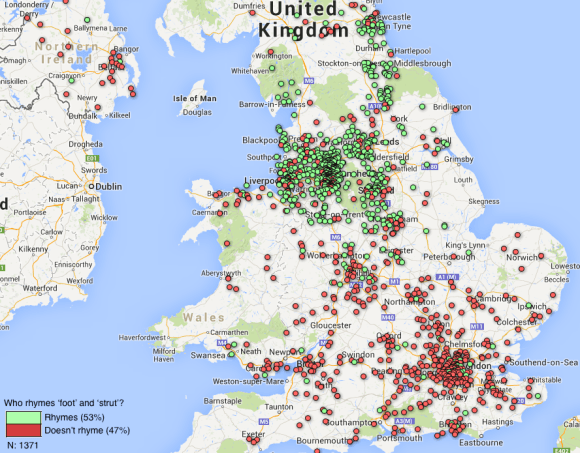
LM: One of the most fun parts of my job is that I have a captive audience of students who are ripe for collaborating with. I’ve been trying to use the large (100+ students) lecture classes that are the norm here at Manchester to my advantage, as a way of crowdsourcing data collection. Because our students come from all over the UK, I got them to help me carry out a study last year of regional dialect variation in the British isles: the UK equivalents of the famous “pop/soda/Coke” and “y’all/you guys” divides. My students passed out surveys of a “Do you say X or Y?” nature to their friends and families, and then one of my brilliant undergraduates compiled our findings into this awesome series of dialect maps, which got a great writeup in VICE Magazine’s Motherboard blog back in December (along with a lot of other attention in the UK media). We’ll be updating and improving these maps in the near future, and I just got some funding to start up an outreach program whereby undergraduate volunteers go into local high schools and use the maps to teach students about linguistic variation and dialect diversity.

Lexical Variation: Evening Meal | This map shows which words UK speakers use when referring to the evening meal.
Lexical Variation: Evening Meal | This map shows which words UK speakers use when referring to the evening meal.

Phonological Variation: Foot - Strut | This map shows which UK speakers rhyme the words 'foot' and 'strut.'

Phonological Variation: Foot – Strut | This map shows which UK speakers rhyme the words ‘foot’ and ‘strut.’

Who or what inspires you?

Continue reading

Tagged , , , , , , , , , , , , , , , ,

Artist Feature: David Boman

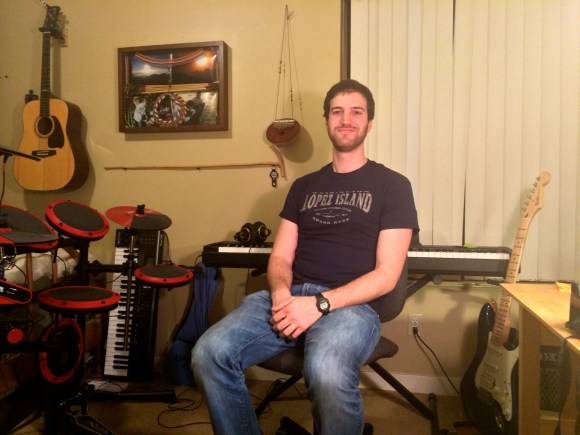
I first met David Boman during college in Seattle jamming out with him rocking the drum set. His Feature with the LIFESTYLE has been a long time coming and David goes in- setting up a unique journey through the physics of Reflection and Response and the “allure,” of Response as a self-exploratory medium that elicits emotions from within us. From discussing the biological phenomenon of our reactions as people to music, Dave goes on to explain how his music is currently focused on the image- he currently has several soundtrack projects finished and coming up. Be on the lookout for more on these ideas and an in-depth discussion of pieces Overture (Save the Wails), Lowflyer, and his score to Handmade in our discussion below!

David Boman

Much like intermingling sound waves, personal reflection is constructive and destructive…The catch is that you don’t always walk away feeling good, the allure is that you always walk away feeling. Period.

– David Boman

Leading off with some basics, where are you from? And where are you at?

DB: I am from Seattle and I am at Seattle. I was born and raised here, went to school here and work in the city. Next year I expect to be elsewhere for some time, very possibly Southern California…

What does Reflection and Response mean to you?

DB: In physics, reflection is the propensity for sound or light to bounce off of a surface rather than to be absorbed by that surface. In audio production, we try to avoid this because sound waves that are reflected off of a wall, for example, can interfere with the sound waves coming from the original acoustic source destroying the quality of a recording. A technical (and pretentious) answer like that isn’t really relevant to the question, but it’s an interesting place to start; after all, when we put on headphones and hit play on our stereo, the surface of our eardrums rumble and vibrate, a signal to our brain is sent and processed. Consciously, something happens – it is absorbed and internalized, those of us who vibe with ‘The Metaphysical’ feel the melodies, harmonies, words and throbbing beats sink into our souls. Is that enough? Absolutely! Music is incredible, partly, if not mostly for exactly that reason. You don’t need to know a thing about it to feel its gravity, to be brought to tears or fits of erratic physical movement (shout out to the EDM guys) solely from the controlled vibration of some four-dollar ear buds.

Reflection is the optional step. It’s the part of the process that leads to response, which is the functional step. Much like intermingling sound waves, personal reflection is constructive and destructive – thinking deeply about what is being unearthed that is eliciting profound sensation; self-pity, inspiration, awakening, serenity. The catch is that you don’t always walk away feeling good, the allure is that you always walk away feeling. Period. It’s a product of all art, not just music – scratch that – it’s the product of being alive. Sometimes absorption and reflection happen simultaneously, but I don’t think the response part comes unless reflection has occurred. Response is reflection incarnate. It is the creation that spawns from pure or mixed up thoughts and emotions. It is the act of distilling those feelings through your medium; it is also the distillation itself.

How do ‘Overture (Save the Wails)’ and the score to ‘Handmade’ fit in with that definition?

DB: Beauty in everything. Overture (Save the Wails) is an ode to that sentiment; don’t make an item or experience trash until you’ve taken something from it. The idea was to take dissonant sounds, square synths, and harsh and heavy drums and set them to a pretty, bittersweet melody. It took a long time but ended up yielding one of my favorite tracks to date.

Another track, called Lowflyer, uses some familiar sounds to help set the atmosphere and encourage reflection.

I have been intrigued by film scoring since high school. The context given by a film clip provides reflective material that begs to be painted, or left silent, but in either case consciously sculpted. ‘Handmade’ is a two-minute short film with no dialogue, written and directed by Chris Winterbauer. No faces are seen, no words are spoken. Actions speak louder than words, especially when guided by music.

What else have you been working on recently?

Continue reading

Tagged , , , , , , , , ,

Artist Feature: Nick Nova

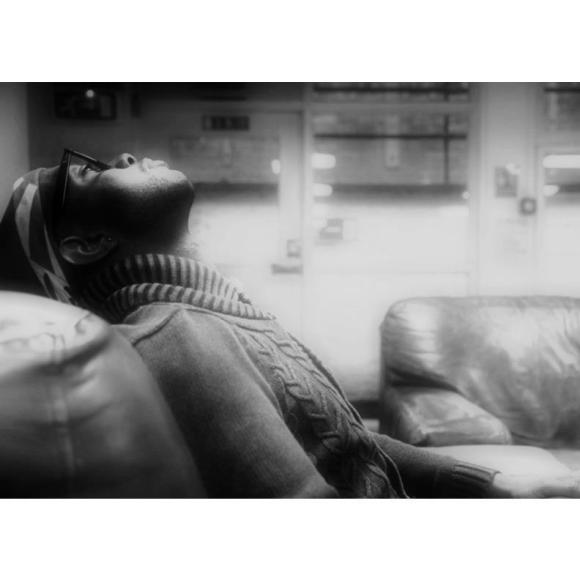
We welcome our friend Nick Nova (born Kwaku Boateng-Farrar) to the LIFESTYLE dialogue. Nova’s creative output operates on many different levels, including music/audio, design, and information distribution. The concept of power is one of the central themes in this artist’s piece as he touches on the re-appropriation of past experiences and memories. Nova provides a dope look at this empowering nature of Reflection and Response in addition to other aspects of his creative process. Check the interview below!

Nick Nova

The ability to reflect on personal experience, past innovations, and current affairs empowers one to respond to obstacles, criticisms and general stressors in a fashion that consciously assists their own progression, as well as that of culture and society at large.

– Nick Nova

Leading off with some basics, where are you from? And where are you at?

NN: I’m definitely a West Coast kid. I was born and raised in Northern California, the Bay Area specifically. After high school I stuck around for a bit before moving to London, England for college. I’m now back in the U.S.and have settled in Brooklyn, NY.

What does Reflection and Response mean to you?

NN: Reflection and Response to me represents the two important, synergistic aspects of creating and succeeding. People often lose sight of self-importance when attempting to achieve greatness in a public space, but the willingness to consider one’s own objectives and mapping out personal checkpoints is vital to the success of projects bigger than its creator. Building on that, the ability to reflect on personal experience, past innovations, and current affairs empowers one to respond to obstacles, criticisms and general stressors in a fashion that consciously assists their own progression, as well as that of culture and society at large.

BC

How does your project BC fit in with that definition?

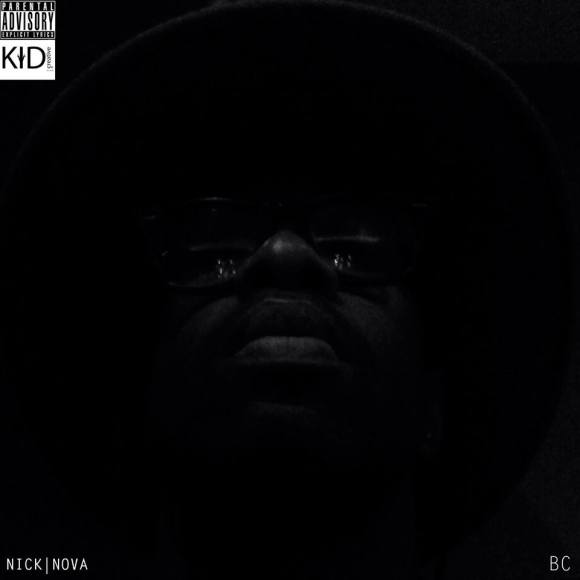
NN: My latest music project ‘BC’ represents this entirely because it is me reflecting on my past, both in the content, as well as the more technical aspect of the project. Recognizing my previous musical inhibitions and seeing how much it hindered my potential, ‘BC’ finds me embracing those flaws and making the appropriate changes to better position myself for achieving my musical goals.

From my observations, it’s common for creators to bury certain aspects of their lives as a defense mechanism, but one doesn’t have a true concept of power until you embrace the most difficult of memories and utilize past pain and/or frustration into something positive and empowering for others. A personal example would be on a record I have called “Tunnel” in which I mention my experience of being bullied. Up until this project I never wanted to share that vulnerability, but upon reflecting on the experience and seeing how much the experience aided my development, I recognized that it was imperative for me to share this so that younger listeners, or even people my age who may be bullied on the job or elsewhere and feel helpless, can recognize their own power through my story and they can stand up to their detractors and even if the results aren’t instantaneous, they’ll know it’s ok to fall down as long as you keep fighting to stand on your feet again, physically and or metaphorically depending on your situation.

What else have you been working on recently? What are you looking to work on next?

Continue reading

Tagged , , , , , , , , , , , , ,

Artist Feature: M’hammed Kilito

I first met M’hammed Kilito while we were both exchange students at the same university in Buenos Aires, Argentina a few years back. I knew “Moh” would often travel around the city with a camera in hand, and he continues to push this visual medium in new creative ways today. His photographs highlight interesting and seemingly ubiquitous mechanisms and ideas to tell stories of reality – for example, one series that caught our eye is grounded in reflecting on and responding to the prevalence of digital and mobile cameras in public space.

M’hammed’s feature is filled with inspiring and critical thought-provoking explorations from a perspective informed by a global experience. We’re excited to see what’s in store with his future projects, including a visual ethnographic analysis of traditional Moroccan garments and cultural globalization. Lets dig in!

M'hammed Kilito

I think that Reflection and Response are two interconnected words that can’t exist one without the other. It is a circular cause and effect relationship we go through all our life, because the response we have today isn’t necessarily right or suitable tomorrow.

– M’hammed Kilito

Leading off with some basics, where are you from? And where are you at?

MK: I’m from Morocco, but I was born in Lviv in Ukraine. My parents got scholarships to study dentistry there and it happened that I was conceived during that time. I’ve been raised in Morocco’s capital Rabat, an extremely beautiful city on the Atlantic coast that often people miss visiting while touring the country, going instead to Casablanca, the city made famous by the movie directed by Michael Curtiz, or Marrakech, the most touristic city in the country. Once I was 18, I moved to Spain for 2 years before moving to Canada. In 2009, I had the chance to go for a university exchange to Buenos Aires, Argentina and it was definitely the craziest trip I have done after Burning Man.

I was fortunate to live in different countries and to learn many languages, but it really makes answering the question where I’m from not an easy task at all.  All the cities where I lived have a special place in my heart. In each one of them, I had the chance to meet some wonderful people that had a huge impact on me and contributed immensely to shape the person I’m today. I really believe that we are, to some extent, the product of our socialization.

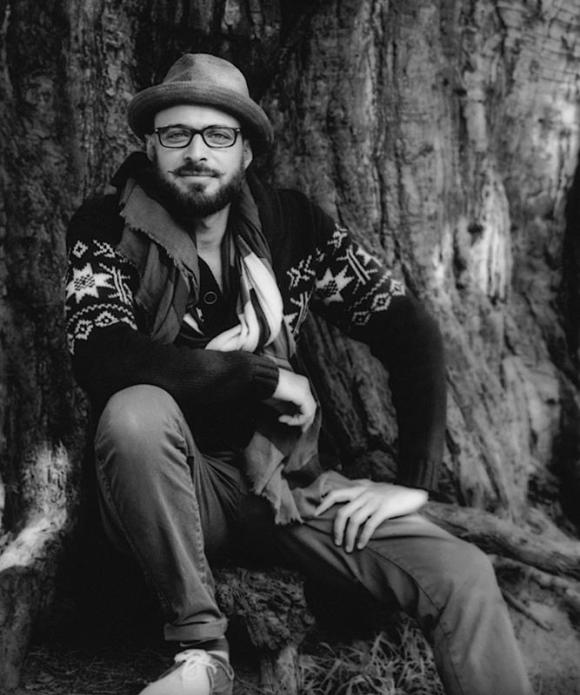
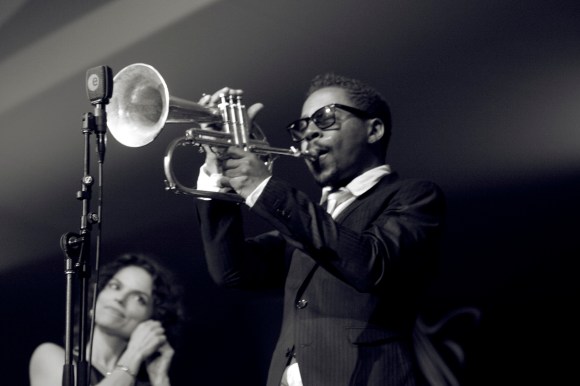
Roy

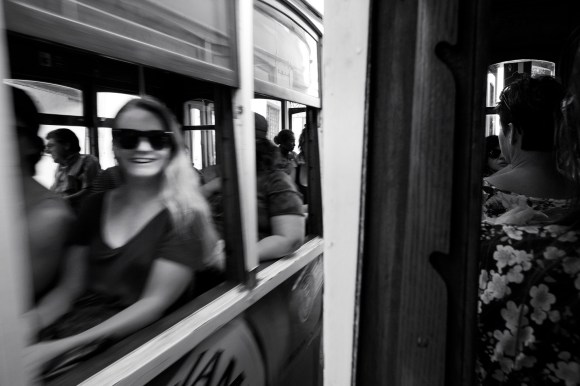
Tram

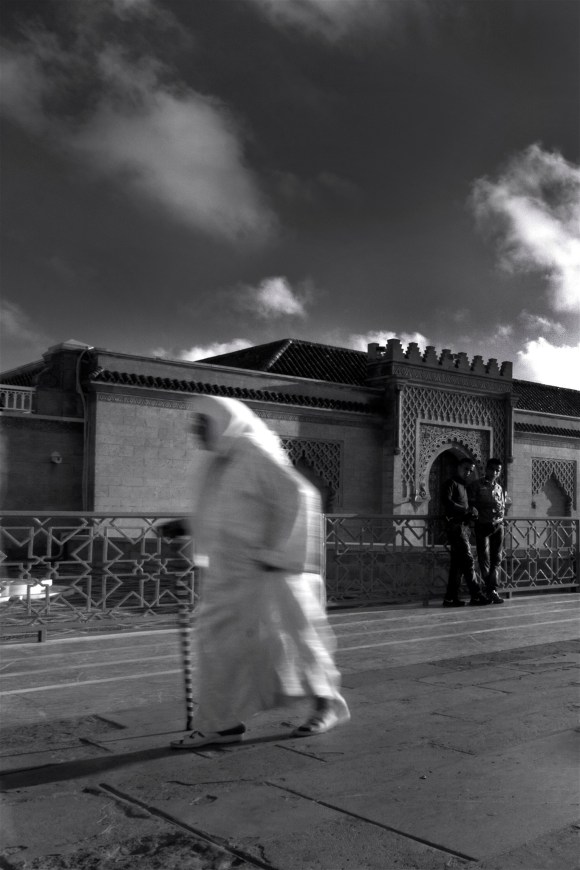
Old Woman

TriangleV

What does Reflection and Response mean to you?

MK: Those two words mean everything to me and to all of us actually, they are our everyday reality, there is nothing we can do without reflecting and finding responses. I think that Reflection and Response are two interconnected words that can’t exist one without the other. It is a circular cause and effect relationship we go through all our life, because the response we have today isn’t necessarily right or suitable tomorrow. The most intelligent and creative people I’ve met are constantly reflecting on who they are, what matters to them, what should they do next and how they should do it. It keeps us going further, improving and becoming better persons.

How does your work fit in with that definition?

MK: Reflection is a homograph, a word written the same but has two meanings. “… I am a reflection photographing other reflections within a reflection. To photograph reality is to photograph nothing.”  Those words are not mine, but those of the great American photographer Duane Michals. I think people often misunderstand the function of photography, they think they are photographing reality while the response in my opinion should be that the function of photography is to reflect reality and imitate it with authenticity.

Untitled


Untitled


Untitled


Untitled

If I push myself to define the kind of photography I do, I will say that the conceptual framework of my photographic series usually follows two distinct axes. The first, focuses on the boundaries that define reality and illusion, in which I create the moment by staging the photographs. The second axis, is more within the documentary tradition, I play with various contexts to tell stories and explore new ideas, and instead of creating the moment, I seize it.   

Chien

What else have you been working on recently?

MK: I just finished a project made of two series I called Homo photographicus. Through these two series, I explore the transformation photography is going through at this crucial moment in the history of images. I ponder over the role of digital and compact cameras’ proliferation, their incorporation into mobile telephones, and the influence of the internet and social networks on today’s photography practice.

Initially, this project wasn’t planned at all, the idea came to me the day I purchased a wide angle lens and decided to go to the Montreal botanical gardens to try it. Thinking to shoot the impressive living plant sculptures they have there during summertime, I ended up being more interested in the people taking the pictures of family and friends in front of the sculptures, so I turned my lens toward them and started working on the Homo photographicus project right away. A few weeks later, I went to The United States, France, Portugal, Spain and Morocco and I kept going to public spaces to photograph people taking pictures.

The first series is an illustration of how cameras are everywhere in public spaces. I’m not interested in saying it is good or it is bad, but I observe that it became increasingly difficult to photograph a scene that doesn’t include an individual who is also taking a photograph.

Untitled

Untitled

Untitled

Untitled

Untitled

Insectarium

The second series is a reflection on the influence of social networks on photography. Social networks focus on spreading their use by staging intimacy as well as providing the ability to see without being seen. These practices have contributed to the popularization of certain types of photographs, such as the selfies. So I decided to contact and photograph my friend Céline AKA the Selfies Queen who has more than 300 selfie pictures.

Selfie 2, Digital, 10x10

Selfie 3, Digital, 10x10

Selfie 5, Digital, 10x10

Selfie 7, Digital, 10x10

What are you looking to work on next?

Continue reading

Tagged , , , , , , , , , , , , , , ,

Artist Feature: Noah Garabedian

Bassist and composer Noah Garabedian is originally from Berkeley, has lived in Los Angeles, and now resides in Brooklyn. It was a long time coming, but we were able to catch up with Noah recently at Hank’s Saloon in Brooklyn, where he played with his group The Slim Tones – a flat-out incredible set featuring their signature honking-tenor rhythm and blues. A hardworking craftsman, Noah plays with multiple groups spanning an eclectic range of sound and genre, including – along with The Slim Tones – Big Butter and the Egg Men, The Amigos Band, and the Rebirth Project. In the following dialogue, Noah breaks down his approach to music and discusses his current and future projects. Keep an eye out for a couple New York engagements this weekend and The Amigos Band’s upcoming tour in Southeast Asia in March. Check it!

Noah Garabedian

Everyone experiences countless provocations of the senses everyday, and reflection is the moment one takes to acknowledge its occurrence. Response is the way one acts after that experience.

– Noah Garabedian

Leading off with some basics, where are you from? And where are you at?

NG: I’m from Berkeley, CA, and I currently live in Brooklyn, NY after 5 years in Los Angeles.

What does Reflection and Response mean to you?

NG: Reflection is the process of digesting material that has penetrated one’s exterior and provoked a reaction; whether it be within or out for all to see. Everyone experiences countless provocations of the senses everyday, and reflection is the moment one takes to acknowledge its occurrence. Response is the way one acts after that experience.

How does your work fit in with that definition?

NG: My current ensemble that I compose for is called Big Butter And The Egg Men. It is a sextet comprised of bass, drums, two tenor saxophones, alto sax, and trumpet. The compositions and sound of the group combine several influences of mine. I cannot help being influenced by experiences of my past, not only musical, and those inevitably show themselves in my writing and improvising.

As a music student, you are constantly told to understand and respect the history, the tradition, and the rules. Then you are told to throw it all out and to be creative and original. I suppose my own compositional process and my own approach to making music on the bandstand, is a response to my reflections of the past or just old habits I developed by rote.

What else have you been working on recently? What are you looking to work on next?

NG: I am currently excited to be working on two other projects. The first is The Amigos Band. We play all types of American music – country, Cajun, blues, and jazz. We just released our first full length album, Diner In The Sky, and on March 10 we will be representing the US State Department as musical ambassadors on a 5 week tour throughout Southeast Asia. The second project I am working on is called the Rebirth Project. The music I am currently writing for this project is traditional Armenian folk music, mixed with improvisation, and combined with a contemporary compositional aesthetic.

Who or what inspires you?

Continue reading

Tagged , , , , , , , , , , , , , , , , , , ,

Artist Feature: Naïmah

I had the good pleasure of meeting Naïmah at a local coffeehouse in Greenpoint, Brooklyn a couple weeks ago. A Washington D.C.-based singer-songwriter, Naïmah is currently working on her own EP, writing songs for a handful of other artists, and playing shows in the DC and New York areas. We’re happy to welcome her to the Collective as she discusses her understanding and application of Reflection and Response, the creative process behind her song Wolf and I, and various other topics. We’re looking forward to a lot more dope work from Naïmah in the months and years ahead! Check out the dialogue below.

Naimah

Support each other. I’ve witnessed too much animosity in the art world, especially jealousy-driven. Everyone has their own gift, their own individual way of looking at something, and at the end of the day, no one can replicate that.

– Naïmah

Leading off with some basics, where are you from? And where are you at?

N: I’m from Washington, D.C., and after going to boarding school in Boston, and college at USC in Los Angeles, I’ve made my way back to the District. A bit surprising to some, as I’m emanating those California vibes “for sure”, but it’s nice to be home and planting my roots and growing where I first got started.

What does Reflection and Response mean to you?

N: Within the harmony of those two actions I find the creative process at its best.  The thing about art as I see it, or at least how I approach my music, is that it is always a response to a reflection on a moment, a person, a feeling, and so on.

Whether I realize something is on my mind or not, songwriting helps me navigate through that process of reflection, and to figure out just how much that subject meant—or means—to me.  Each song is me saying, “This is my response about X. This is how I feel.”

And the incredible part is when that individual reflection and response, my response, captures the way someone else might also feel in their own reflection, or to allow them to see their feelings in a new light.

It’s hard to make this intangible transaction into a tangible explanation, but I hope that all makes sense.

How does ‘Wolf and I’ fit in with that definition? 

N: It doesn’t get more “reflection and response” than in Wolf and I. Well, it does, but prior to writing the song I’d been in a phase of day-dreaming and imagining and writing songs based on these scenes I made up when, after a trip to New York, I was headed back home on the bus, feverishly free-writing in my notes on my iPhone (let me say how restrictive auto-correct and that little screen is) as I attempted to capture how I felt about the events that had just occurred, and all the moments and experiences making up my relationship with this particular person and situation.

Wolf and I is a love song in its most basic interpretation, but I think the fact that it’s really so much more than that below the surface is why people have been able to connect with it. It’s about perception, the way you look at something, the good and the bad all at once.

Wolf is a simile I used to describe someone and something both close and distant, endearing, and in the process of change; and Wolf and I was my reflection, my attempt to articulate, all these thoughts in some kind of compact organization that I could store them in.

Since writing the song, I’ve opened back up to the realization of how important reflection and response is, and how my songs come to life when they are created in this frame of mind.

Photo by Alexandra Howland

Photo by Alexandra Howland

What else have you been working on recently? What are you looking to work on next?

Continue reading

Tagged , , , , , , , , , , , , , , , ,

Artist Feature: Ken Grand-Pierre

Ken Grand-Pierre is a New York-based music photographer whose lens captures images that recall specific moments and feelings. His love of concerts and live music help fuel his work in this epicenter of creativity. Ken’s photography spans shots of shows as well as his unique “Day in the Life” series which captures images of musicians the day leading up to a performance. Ken has been his on grind and has had the opportunity to photograph the music and performance activities of many dope artists. Throughout his piece Ken touches on his diverse influences, the idea of eschewing perfection in the creation of art, ideas of Reflection and Response, and stories of capturing music through images.

Ken Grand-Pierre

Photo by Nicole Mago

Fuck the idea of perfection and resources. Perfectionists are important in our lives but never allow perfection to be the reason you hold back from doing something; make mistakes and learn from them…

– Ken Grand-Pierre

Leading off with some basics, where are you from? And where are you at?

KGP: Hello, my name is Ken Grand-Pierre! I’m originally from a small town called Rockland County, which is forty minutes outside of NYC. I am now based in NYC and have been for about six years on and off (more on then off though). Rockland is an area that I always felt I had to get out of, especially from a very small age. There’s good people there but it’s not a place where creativity can thrive, at least not to it’s full potential, so while growing up I’d always see NYC as the epic centre of everything and being able to be here now, being part of it all is still something that’s wild to me.

What does Reflection and Response mean to you?

KGP: Both of those words are strong to me, especially because I find them to be both cohesive and universal with how humans are in general. I think the smartest people I’ve ever come across are the ones who are constantly reflecting on the experiences and decisions in their lives and responding to those reflections in a willful manner. You can’t get anywhere in life unless you have the will to do things, to take risks with your life in any size and variety, and I believe the most important choices you can make in life come from reflection and response.

Ken Grand-Pierre - The 1975

Ken Grand-Pierre – The 1975

How does your work fit in with that definition?

KGP: The pieces I chose to accompany this interview are photos that just take me back to a moment instantly. When it comes to covering shows I love working with artists I know close to little about just as much as artists I already admire. I also believe that no one should ever limit themselves to just one genre. It blows my mind how many music fans (even fellow photographers) I’ve come across who are so closed-minded. People who say things like ‘Oh Indie music? Gross!’ or ‘I wouldn’t be caught dead at a Rap show!’ things like that make me immensely dumbfounded, especially if you’re a music photographer you should aim to do as many different things as possible. The shot I specifically picked for this question is of Rónán (AKA Ro) from Irish band Delorentos.

Ken Grand-Pierre - Rónán of Delorentos

Ken Grand-Pierre – Rónán of Delorentos

They’re one of my favorite bands and have been for years, and I never thought I’d get the opportunity to see them live. Last year they released a new album and came to NYC to play a show to promote it. I jumped at the chance to do it but I also aimed to spend the day with them for a ‘Day In The Life’ type of photo feature. I had never done one before and I had no idea how to prepare or anything haha but I just went about it naturally and tried my best. This photo was taken right after the show. The band came off stage and I went backstage (well technically downstairs since it was at Mercury Lounge and the green room is a cellar) and Ro was about to grab a towel when I propped up my camera and said ‘Ro! Have a scream!’ and he did hahaha it was absolutely random and the thought occurred in seconds but it’s one of my favorite shots haha. I picked this shot because when I think of reflection/response I think of things that accumulate, as well as things that happen quickly yet seamlessly. My passion for Delorentos brought me to that show and the fact I love what I do allowed me to spend the day with them, so it all kind of comes together in a cause/effect sort of way.

What else have you been working on recently? What are you looking to work on next?

KGP: I’ve mostly been photographing musicians like always but also doing ‘Day In The Life’ photo features with bands. That’s when I’ll spend a day with a band and photograph the day as it leads up to the show. It’s what I enjoy doing the most and I’m hoping to expand on that. My biggest goals now are to eventually tour with a band and photograph a European music festival. I think when it comes to aspirations those are the two clearest ones I have that’d make me feel complete in some way, shape, or form. I mean people always go on about buying a house or getting good credit but things like that seem so boring to me. You should naturally get good credit and a house in your life so why not aspire for something bigger? For something more? Something I love is when I do something like shoot a festival or an arena show and there’s a moment where I’ll look about and wonder ‘….wow….how the fuck did I get here?’ so I think my ultimate goal is chasing that beautiful feeling.

Ken Grand-Pierre - Glasvegas

Ken Grand-Pierre – Glasvegas

Who or what inspires you?

Continue reading

Tagged , , , , , , , , ,

Artist Feature: Óscar Sánchez Lozano

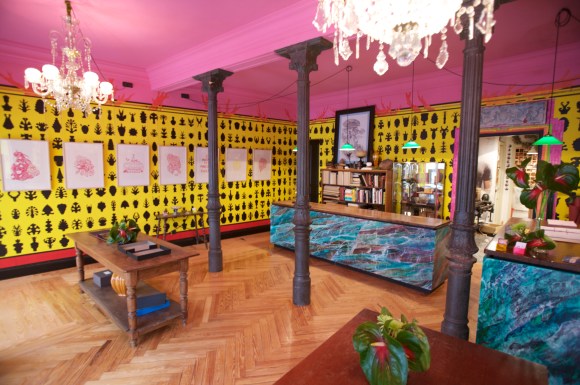
Óscar Sánchez Lozano es el dueño de La Eriza, un taller de encuadernación ubicado en Malasaña, Madrid, España. Decidió entrar en el mercado de la encuadernación en Madrid después de unos años fuera viviendo en Londres. Cuando volvió a la ciudad quería crear su propio espacio y abrió su taller La Eriza. Mezclando el oficio de encuadernar con exposiciones de varios tipos de arte gráfico en el espacio del lugar, La Eriza representa un simbiosis de galería y taller. Le damos la bienvenida a Óscar que nos cuenta la historia interesante e original detrás de su taller único, La Eriza.

Óscar Sánchez Lozano is the owner and operator of La Eriza, a bookbinding workshop located in Malasaña, Madrid, Spain. Óscar decided to enter the market of bookbinding after living abroad in London for several years. Upon returning to Madrid he opted to establish his own space and opened his workshop La Eriza. Mixing the trade of bookbinding with expositions of different arts on the walls of his space, La Eriza represents a symbiosis between gallery and workshop. We welcome Óscar as he provides the interesting and unique story behind La Eriza.

Óscar Sánchez Lozano

Nosotros lo hemos planteado en términos de consolidación y calidad, lo que hace que nuestra fórmula parezca más estanca sin realmente serlo, pues cada encargo, cada pedido en sí, es un paso hacia delante en creatividad, experiencia laboral y atención al cliente.

We decided to focus on consolidation and quality – a formula that can make it seem like the business is more at a standstill than it really is. [Part of this formula is that] we consider each bookbinding order a step forward in creativity, work experience, and customer service.

– Óscar Sánchez Lozano

Para empezar con algunos puntos básicas, de dónde vienes? Dónde estás?

Leading off with some basics, where are you from? And where are you at?

OSL: Vivo en Madrid, y aunque nací en esta ciudad pasé unos años en londres (que fue) algo decisivo para el nacimiento de La Eriza.

OSL: I live in Madrid, and although I was born here I spent some years in London, which was a formative experience for the creation of La Eriza.

La Eriza

La Eriza

Que quieren decir “reflexión,” y “respuesta,” para ti y cómo se mete tu arte y la Encuadernación La Eriza en esta definición? 

What does Reflection and Response mean to you, and how do you locate those ideas in your artwork and your bookbinding workshop Encuadernación La Eriza?

OSL: La reflexión es el proceso por el que se generan respuestas a un planteamiento. El planteamiento en este caso, como muchas decisiones vitales, es la conjunción de varias circunstancias. Por un lado la creación del taller surgió como respuesta a mi decisión de venirme a vivir a Madrid por unas razones totalmente ajenas a mi situación laboral o creativa. Podría haber buscado trabajo en talleres que ya existían, pero mi visión de la profesión y mi planteamiento de vida no iban a casar con la estructura gremial de este oficio en esta ciudad. Así que decidí crear mi propio espacio.

La reflexión me dio la oportunidad de dar forma al proyecto. Ubicación en el mercado, concepto, imagen, estrategia…la respuesta fue lo que hoy es La Eriza: un conjunto de muchos matices interconectados.

OSL: Reflection is the process through which you create responses to your plans. The plan, in this case, like many important decisions, came from a combination of several circumstances. On one hand, my plan for creating a [bookbinding] workshop emerged as a response to my decision to move to Madrid (for reasons completely unrelated to my work situation or my creative state). I could have looked for work in the various workshops that already existed in Madrid, but my vision and life plan did not fit in with the structure of the trade association in the city. Because of this disconnect, I decided to create my own space.

Reflection gave me the opportunity to form the project: a presence in the market, a concept, an image, a strategy…the response became what La Eriza is today: a combination of a bunch of different interconnected parts.

La Eriza

La Eriza

Que más estás haciendo actualmente o tienes planeado para La Eriza? Que proyectos estás pensando trabajar próximamente? 

What else are you working on currently, and what plans do you have for La Eriza? What projects are you thinking about working on next? 

Continue reading

Tagged , , , , , , , , , , , , , , , , ,