Tag Archives: Reflection and Response

Artist Feature: Lou Rouse

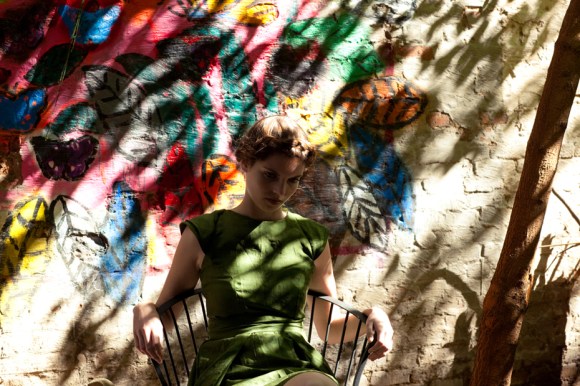
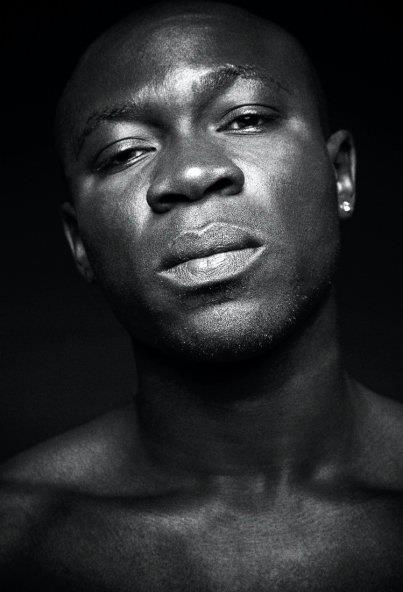
Lou Rouse is a Baltimore-bred / New York-based photographer who has been working on his craft since moving to the city at 20 years old. Lou brings up the bountiful opportunities that inspire response in the city – from the various active creative venues to the uniquely diverse and energetic character of the city. He strives to depict and describe the intangible in his work, eschewing more obvious images for interesting emotions of environments and specific passing moments in time. In our dialogue below, Lou breaks down some powerful aspects and responsibilities of art in relation to surrounding social environments. We’ve been fortunate enough to have collaborated with Lou before, and we’re looking forward to more opportunities to do so in the future. Check the word!

Lou Rouse

People get uncomfortable around art and artists because of [the power of art], and because art is not empirical. But because art succeeds where politics and policy fail, art plays a critical role in the survival of humanity. So artists must take care of themselves and other artists. Artists must learn how to survive in the current system while making the good work that will change it.

– Lou Rouse

Leading off with some basics, where are you from? And where are you at?

LR: I am from Baltimore, Maryland. Grew up in the city until I was 17. Went to college in Michigan for a year and then moved to NYC at age 20 and have pretty much been here ever since. Worked on films and other odd jobs, then I started assisting fashion photographers. Being a visual person, I really got in to how photographers brought a vision to a set and carried it out with the help of other talented visual people. Eventually people began to ask me for my vision on creative projects, and that is where I happily am now.

Lou Rouse - Untitled

Lou Rouse – Untitled

What does Reflection and Response mean to you?

LR: Reflection and response are crucial elements of art, of being an artist. For me, and I’m sure many other artists, the desire is to balance intake and output. In New York City you can consume a lot of great theater, museum and gallery shows, fashion, music, food, or just walk around and be inspired by the fantastic diversity and energy. It’s enjoyable just to witness…but if you are a creative type you begin to feel frustrated if you are not responding in some form. I’m always challenging myself to respond more and to better articulate my observations. But to survive as an artist you have to make the process enjoyable. It’s a tricky balance.

Lou Rouse - Habanero

Lou Rouse – Habanero

How does your work fit in with that definition?

LR: An important part of my work is capturing the emotion of an environment, form and moment. I’m really fascinated when there is this intense feeling in the light, facial expression, lines, movements or gestures, but I can’t fully explain where that emotion is coming from. If a photo is obvious to me I delete it. All the pieces you see here are me trying to describe things that are intangible and moving to me.

Lou Rouse - Untitled

Lou Rouse – Untitled

What else have you been working on recently? What are you looking to work on next?


Continue reading

Tagged , , , , , , , , , , ,

Artist Feature: Andréa Harris

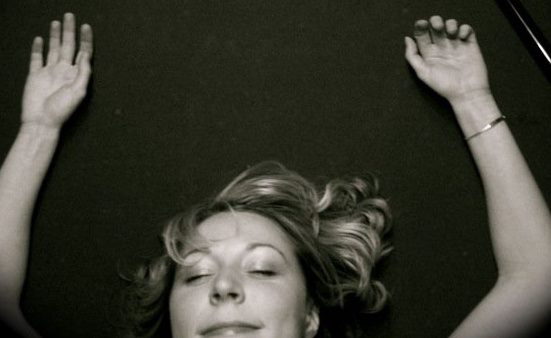
Andréa Harris is a visual artist based in Seattle, Washington, who has also spent time in Washington State, Boston, Florida, and France – each of which has naturally impacted her artistic practice in different ways. Andrea describes Reflection and Response as an interaction between the artist and their work — with each entity active in the dialogue. Her work is a result of this ongoing conversation and she uses various mediums such as painting, photography, collage, digital video, and sculpture. Along with her words, Andréa presents specific pieces from her incredible collage and sculpture projects EXPERIENCING THE CENTURY and OUR EYES THAT ARE EVER MORE MY OWN. Peep the dialogue below and stay tuned for more exciting projects from her workshop!

Andréa Harris

Making work turns into a conversation between reflection and response — sometimes the artist is the one responding in the work, but other times the work talks back and makes its own demands to be heard.

– Andréa Harris

Leading off with some basics, where are you from? And where are you at?

AH: I am from the Pacific Northwest, and grew up in several towns near Tacoma, WA.

There is something to be said of place and creative work. Everywhere I’ve lived has had a specific head-space to it. It’s been easy to make work in some places, but nearly impossible in others. Having lived in Seattle, Boston, Sarasota (Florida), and three summers in South-West France, I have experienced a variety. However, I have yet to find the place I work best with.

Right now I’m in Seattle, WA. It’s the city I consider home. I have a feeling there are some explorations ahead of me though.

Andréa Harris - Experiencing Century 12

Andréa Harris – Experiencing The Century 12

What does Reflection and Response mean to you?

AH: As an artist and general introvert, the majority of my time is spent in reflection. Reflection isn’t a place of comfort. It is a place of unstable ground and a catalyst for change. Reflection is the foundation of Response, but the creation of work contains both. Making work turns into a conversation between reflection and response — sometimes the artist is the one responding in the work, but other times the work talks back and makes its own demands to be heard.

Andréa Harris - Experiencing Century 10

Andréa Harris – Experiencing The Century 10

How does your work fit in with that definition?

AH: The overarching concept I find myself fixated on is the idea that reality is malleable, fluid, and constantly created. I explore the flexibility of reality through: the relational boundaries between the body, consciousness, psychological states, ideologies, and perceptions of the self, the other, and the transcendental. My work operates in a space of questioning experiences and concepts. It is the product of reflection and response, the push and pull between the two. I enjoy working across disciplines, letting the concepts I’m working through dictate or have influence on whether I use painting, photography, collage, digital video, sculpture, etc.

Andréa Harris - Experiencing Century 01

Andréa Harris – Experiencing The Century 01

What else have you been working on recently? What are you looking to work on next?


Continue reading

Tagged , , , , , , , , , , , , , ,

Artist Feature: Ayo Dot

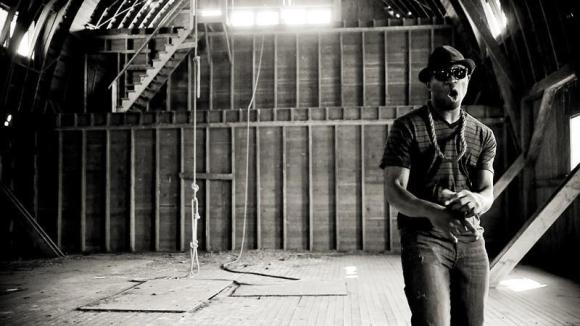
Ayo Dot is a rapper and songwriter who was born and raised in Lagos, Nigeria and currently lives in Seattle. A seasoned artist, he now performers throughout the Northwest with his group Ayo Dot & The Uppercuts, featuring keys, drums, guitar, bass, and backup vocals. In his Feature piece, Ayo breaks down the importance of silence and mental Reflection leading to positive, organic Response. He also comments on the constant improvement in our Responses as we continually get to know ourselves better as people. Check out the dialogue below to read about his tracks My Dreams, Thinking About You, and Mo Ti So, along with an upcoming EP from the band!

Ayo Dot

Response is how I react to everything I’ve internalized or reflected upon. It should be organic and natural. The more you know who you are as a person, the better your response.

– Ayo Dot

Leading off with some basics, where are you from? And where are you at?

AD: Born and raised in Lagos, Nigeria – West Africa. Now a resident of the great Northwest. Seattle. I represent the West 2x.

What does Reflection and Response mean to you? 

AD: Reflection to me is a time out. Silence. It’s when I get to take a mental stock of things. I break things down. Good or bad. Determine how to take the good and build on it or take the bad and make it better. I’m in my head a lot. That’s my happy place.

Response is how I react to everything I’ve internalized or reflected upon. It should be organic and natural. The more you know who you are as a person, the better your response. I’m getting there.

Ayo Dot

How do your songs My Dreams, Thinking About You, and Mo Ti So fit in with that definition? 

AD: The song My Dreams really just latches on to the idea that you should never really let people dictate what you can or can’t do. Build your own ship and sail it.

With Thinking About You, I wanted to do something that was borderline dark. If you check out the video, you’ll know what i mean.

Mo Ti So is my Ode to smack talking and also recognition of my Nigerian roots. I opted to keep part of the chorus in Yoruba, one of the languages spoken in Nigeria.

What else have you been working on recently? What are you looking to work on next? 

Continue reading

Tagged , , , , , , , , , , , , , ,

Artist Feature: Sobi

I first met Sobi performing as part of the Café La Palma Open Mic series in Madrid, Spain. Sobi had her EP up for download and quickly established herself as a dope songwriter, guitarist, and vocalist throughout the city. Originally from London and currently living in the musical center of Manchester, Sobi stays active playing shows throughout England. Music provides Sobi a way to reflect on and recast past experiences into positive expressions moving forward. The deeper the Reflection, the more honest her songs become. Sobi put out her first EP Betty La Guapa in 2012 and is ready to drop her second EP Creatures in my Mind with Hourglass Productions on April 5th on Itunes. Peep the dialogue below and be sure to cop the new record coming soon!

Sobi

Reflection is taking time to remember and ponder the past. Response is using the past as inspiration to create something meaningful and positive. Depending on how we respond our past can always have a positive effect on our future.

– Sobi

Leading off with some basics, where are you from? And where are you at?

S: Hi I’m Sobi and I’m a Britain-based singer/songwriter. My family are originally from Sri Lanka but I was born in Madrid and have spent most of my life living in England. I grew up in London and at the ripe old age of 18 decided to move to Manchester to study where I very quickly fell in love with the city that I now call home. As a musician and a huge fan of music Manchester has provided me with some of my favorite musical experiences! From watching bands like the Flaming Lips to performing myself with some incredibly talented local artists.

Sobi

What does Reflection and Response mean to you?

S: To me reflection is taking time to remember and ponder the past. Response is using the past as inspiration to create something meaningful and positive. Depending on how we respond our past can always have a positive effect on our future.

How does your music fit in with that definition?

S: Writing songs has always been an emotional outlet for me and a way of reflecting and responding to various situations that I have been in. When I’ve had a stressful day or am feeling anxious about something my natural response is to pick up a guitar and turn my bad feelings into something good. The more I reflect on how the past has affected me and made me feel, the more honest and real my songs become.

What else have you been working on recently? What are you looking to work on next?

Continue reading

Tagged , , , , , , , , , , , , , ,

Artist Feature: Adam Hopkins

Adam Hopkins is a composer and bassist living in the Ditmas Park area of Brooklyn by way of Baltimore, Maryland. As part of thriving music scenes in his hometown and his current city of residence, Adam tells an artistic tale of people coming together to create great music and community. Some of the groups he’s involved with, such as Signal Problems, have been around for years and thereby boast a unique group dynamic and musical language developed over time, which add intricacies to their exciting improvisations. Here, Reflection serves as the collective memory of the artist, while Response is a collective sharing and exploration of each participant’s story through sound. In our dialogue below, Adam delves specifically into two tracks, Pogo Stick and We Turn Around, and presents a video of the Adam Hopkins Quartet. He stays busy in New York and has various upcoming records with the several bands he participates in as leader and sideman. Peep the conversation below!

Adam Hopkins | Photo by Michael Yu (2014)

Adam Hopkins | Photo by Michael Yu (2014)

Playing music is all about relationships and communicating with other people, so I am constantly reacting to their ideas and embracing their musical identity as well as my own…it’s that concept of simultaneously reflecting on one’s own unique experiences and bringing them to a group environment, which creates something that is greater than each individual part combined.

– Adam Hopkins

Leading off with some basics, where are you from? And where are you at? 

AH: I currently live in Brooklyn, NY–Ditmas Park specifically. I don’t think I’d normally mention the neighborhood as part of a response to this question, but I really love where I live! A lot of my closest musical collaborators live within 3 blocks of me, and also there are trees. Lots and lots of trees, which is a bit different for Brooklyn.

I was born and raised in Baltimore, MD. I left for college and grad school, but found myself back there in 2005. I consider that time in Baltimore until I moved to NY in 2011 to be the most formative years artistically of my life to this point. The music scene in Baltimore, specifically the creative and improvised music scene, is very small but at the same time full of talented and inspiring people. We started a bunch of bands, wrote new music for them, rehearsed a LOT (something that is much more rare in NY currently), made records, and played shows. It was the best, now that I think of it. In 2011 four of us decided to move to NY from Baltimore, and settled into a house in Bushwick with a great rehearsal space in the basement. That group of people, who basically moved up on the same day, was already a band called Signal Problems led by my former-roommate-but-still-friend Danny Gouker. We continue to rehearse all of the time, and still play regularly. In fact we just released our debut album on pfMentum records which can be checked out right here: http://www.pfmentum.com/PFMCD080.html. There are no subs in the group ever, which has helped maintain it as an actual band and not just a rotating group of potential people. So, you know…Baltimore sticks together wherever we are. 

What does Reflection and Response mean to you?

AH: As an improviser, reflection and response are at the very center of what occurs any time I play music, be it solo or with a group.

Reflection to me is everything that has happened in my life, musically or not, that has gotten me to where I am in that very moment. At my absolute best I am able to look inwardly and draw on all of those experiences to present a statement or vision that is uniquely my own.  

The response can be looked at from a number of angles, but primarily a response is what comes out of my instrument as a result of those experiences. Playing music is all about relationships and communicating with other people, so I am constantly reacting to their ideas and embracing their musical identity as well as my own. It’s what makes improvised music like nothing else…we all bring our experiences from vastly different places to a performance, and as a group we find a way to make it work.

How does your work specifically fit in with that definition?

AH: This first track isn’t one of my own compositions, but I think it is a great example of this concept. It’s from Signal Problems, written by Danny Gouker who plays trumpet, with Eric Trudel on saxophone, Nathan Ellman-Bell on drums, and I’m playing bass. 

It is 30-seconds or so of written music and then we immediately launch into an improvisation. This band has been playing together for over five years, and we’ve developed our own sort of group language as a result. The entire improvised section is the band responding in the moment to everything going on around us. So again, it’s that concept of simultaneously reflecting on one’s own unique experiences and bringing them to a group environment, which creates something that is greater than each individual part combined. 

This second track is a little bit older, but it’s one of my own compositions from 2011. It is a band that was started in Baltimore called Turn Around Norman, with Cam Collins on saxophone, JJ Wright on keyboards, Nathan Ellman-Bell (again) on drums, and myself on bass. 

There was a time when this entire band lived in New York as well, but life choices spread us out a bit and we don’t get to play together nearly as often as we’d like. It is a good example of my compositional approach, so I figured why not include it!? There is improvising in the track, but I think it is mostly influenced by the grunge rock of my high school years and my earliest musical experiences playing in dive clubs and wearing funny hats. There’s maybe a little disco at the end as well, and I’m not sure where that came from. It seeped into my musical being somewhere along the line. 

What else have you been working on recently? What are you looking to work on next?

Continue reading

Tagged , , , , , , , , , , , , , , , , , , ,

Artist Feature: Adela Loconte

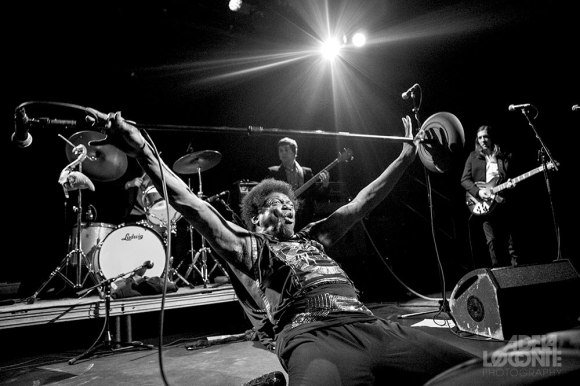
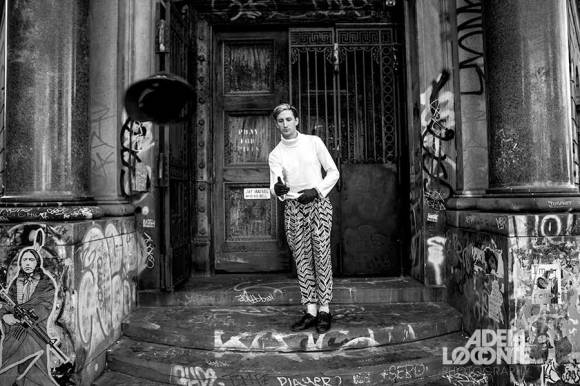
We first met music photographer Adela Loconte at the same Charles Bradley show where we met fellow photographer Ken-Grand Pierre. Born in Caracas, Venezuela, Adela started her own production and photography company while completing her masters’ degree in advertising. She then lived in London and Barcelona and worked as a producer for the CMYK Independent Magazine Cultural Festival while also shooting/producing at the Sonár Music Festival. She then moved to Williamsburg, Brooklyn, where she’s been shooting concerts and musicians nonstop. Adela links reflection to introspection and learning about the self, which can lead to meaningful response through actions.  For Adela, a photograph represents a reflection of a moment, a “register of time.” Peep the interview and some of her awesome images below!

Adela Loconte | Photo by Ebru Yildiz

Adela Loconte | Photo by Ebru Yildiz

Through the camera I get to reflect the moment, atmosphere, action, and feeling of the subject. My intention through the photograph is basically making people feel that moment in case they weren’t there or, in case they were, bring them back to it.

– Adela Loconte

Leading off with some basics, where are you from? And where are you at?

AL: Hola! My name is Adela and I was born and raised in Caracas, Venezuela but my roots are Italian.

I finished high school when I was 16 years old and started to study advertising in Caracas. During my second semester, I started to take photography classes, and became interested in it. I went on to get my masters degree in advertising at Santa María University, and while studying, I interned at Saatchi & Saatchi Caracas. After interning, I decided to open my own company with a friend and focus on production, photography, and design. Saatchi & Saatchi became our client, along with Leo Burnett, Venevision TV, Planeta Urbe and Loquesea.com, amongst others.

Adela Loconte - Charles Bradley (Music Hall of Williamsburg)

Adela Loconte – Charles Bradley (Music Hall of Williamsburg)

While I was in school for my masters degree and running my company, I decided to enroll in a photography school called “Imagomundi.” I really got into it and I spent two years there taking different types of analog camera courses.

After I finished my masters degree and my photography courses in Caracas, I decided to close my company in 2001, and head to the UK to continue my photography studies.

I chose London, because it’s where all of my favorite music was from, and I enjoyed the English sense of humor.  I started a Postgraduate degree in Photography at University of the Arts London, and was so excited that I sometimes even went to school on Saturdays!

I enjoyed London so much for 3 years. I studied a lot. I met incredible people there. I enjoyed cultural exchanges. I enjoyed amazing shows and festivals and it was time to leave, because the weather was not helping my tropical side. So, I flew to Barcelona, Spain where the weather was better and I could go to the beach as much as I wanted. I spend almost 4 years [there]. I worked there for CMYK Independent Magazine Cultural Festival, and Sonár Music Festival. I learned so much and had a blast, working as a producer for both festivals.

Adela Loconte - Courtney Barnett

Adela Loconte – Courtney Barnett

The last Sonár Music Festival I worked. I got the opportunity to do two different jobs at the time, one for Barcelona and the other one for Venezuela. Apart of working on the production side at Sonár, I got to shoot the festival for the main newspaper in Venezuela called “El Nacional”, when all of the sudden my camera got stolen in the middle of the festival. At that moment, I only had on my mind how many months of hard work were gone, instead of the camera and the films the thief took.

When I was living in London I put my self into the craziest schedule someone could have lived in. I was sleeping about 5 hours a day. Finishing my Photography Master, having a daytime job during the week at a company and during weekends at nighttime a job as a bartender, and I was also studying on Saturdays. My goal at that time was buying this amazing camera I was dreaming with, it was a Nikon F5 (film camera) and some lenses and new flash. I worked for 6 months nonstop. I was falling asleep everywhere, at the university, in the train, at the bus, and at the office. I aimed for the Nikon camera, 5 Nikon lenses and a Nikon flash and finished everything I put myself into it. All those months on nonstop work just got stolen at a festival.

I feel so much frustration after that episode that I went into different life phases. I did produce photographers. I did assistant photographers. I quit for some time photography and then I came back. Barcelona at that time was starting to go into their economical crisis; companies where paying really bad and I couldn’t get a new camera as fast as I did in London.

Adela Loconte - Kirin J Callinan

Adela Loconte – Kirin J Callinan

So, time to start again! Let’s leave Barcelona for New York!

First, I came to New York to visit for a month and out of the blue, the most hardcore city open its arms and super welcoming me! I never thought I was going to live here, honestly. Basically, I have been based in Williamsburg for the past 7 years. I been working for CMJ Online, CMJ Music Marathon Festival, Brooklyn Vegan, SPIN, and IMPOSE magazine.

I also worked for Vme Media/Channel Thirteen, Sheik ‘n’ Beik, and Metal Magazine as a Producer.

What does Reflection and Response mean to you?

AL: Reflection is our own introspection and the willingness to learn more about our own nature, purpose in life and essence. Through introspection we find responses, those that make us create a plan to develop our own path and to aim our goals.

There is a wonderful quote by W.T. Yeats, that I really like, and it says “It takes more courage to examine the dark corners of your own soul than is does for a soldier to fight on a battlefield.”

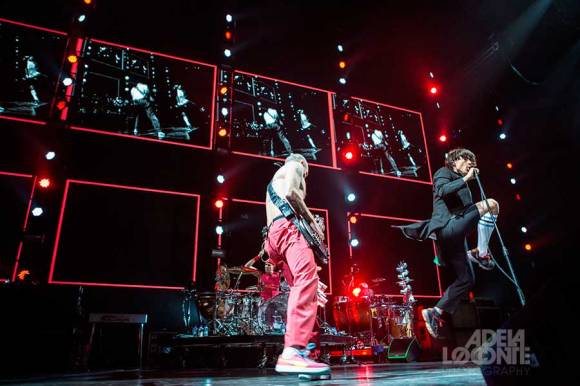
Adela Loconte - Red Hot Chili Peppers (Barclays Center)

Adela Loconte – Red Hot Chili Peppers (Barclays Center)

How do music photography and portrait photography fit in with that definition?

AL: Through the camera I get to reflect the moment, atmosphere, action, and feeling of the subject. My intention through the photograph is basically making people feel that moment in case they weren’t there or, in case they were, bring them back to it. [With] portraits I’m all about people’s essence and their anatomy.

The response will be my introspection towards music. Music is a worldwide language and Photography is the register of the time.

Adela Loconte - Franz Ferdinand (Hammerstein Ballroom)

Adela Loconte – Franz Ferdinand (Hammerstein Ballroom)

What else have you been working on recently? What are you looking to work on next?

Continue reading

Tagged , , , , , , , , , , ,

Artist Feature: Matthew Potter

Matt Potter is a creative writer who grew up in Kentucky and Virginia before settling into San Diego, California. He reminds us that, as artists, we should try to avoid forcing our messages, and instead try to communicate our perspectives in clear ways. Matt also argues that reflection on both positive and negative responses is beneficial to artistic growth, and that past artistic pieces can serve as snapshots of captured Reflection and Response. Woven in throughout the interview below, Matt provides dope perspectives, scenes, and imagery in his poems ColleteCasey’s Last Bat, Night NoisesThe Day Timothy Died, and Three Thoughts on New Orleans. Check it!

Matthew Potter

It is important to reflect on both the negative and the positive responses. Both are going to drive you and hone your craft.

– Matthew Potter

Leading off with some basics, where are you from? And where are you at?

MP: Well, I am an Army Brat, so I bounced around a little. Not as much as some, though. I was born in Fort Knox, Kentucky, but spent my formative years in Newport News, Virginia. I’ve been in San Diego, California for the last thirteen years. I was only supposed to be here a year, but California has a way of dilating time.

What does Reflection and Response mean to you?

MP: In writing, I take it to mean reflection in your own work, or the reflection of others on your work. Often, it takes someone else’s reflection and response to initiate your own. I think as a young writer, it is extremely hard to self-edit (for an old writer too), because you try to put a piece of yourself in that work, and when it doesn’t sync with someone then you want to dismiss them.  When I read my own, or others’ work I ask myself, “What is this trying to tell me?” Not just on the surface but on a deeper level. The point of all art forms is to communicate, so you want the message to be clear. When a poem or story doesn’t work, often the writer’s message is muddled, and the same when my work doesn’t work for others. The best advice I received was from a Creative Writing professor in college. She told us “You can’t jump out of the page and tell your reader, ‘No, you’re not getting it! I meant you to read it this way!’” So, I try to approach everything in that manner, even work e-mails. Granted, there are going to be times where you and your reader are just on different trips, and that same piece will resonate with so many others.

I think it is important to reflect on both the negative and the positive responses. Both responses are going to drive you and hone your craft. Also, I think it is important to go back to old pieces. I have come across pieces I have written years ago, that I thought were great, and came away thinking, “God, did I write this existential piece of crap?” But I won’t throw them away. It is like having a time capsule of your very specific thoughts at that moment.

On a personal level, I probably spend too much time reflecting. It is easy to get caught up in the past and believe you should have done something different. As Jack Kerouac said, “Accept loss forever.” But having said that, I think it is important to take a little time to reflect on your mistakes so you learn from them.

Collete

Oh how I long for a thin-legged French girl named Collete. She would take long drags of her cigarette. Shoot a stream of smoke pushing it through the air, as she rolled her cold black eyes toward a paint-chipped ceiling–exhaling all the stupid things I just breathed into her.

And when she was mad she would huff and stammer in French as she kicked my empty wine bottles across cold wooden floors. She would always be in bed before me, and I would lie on top of the sheets beside her–staring up at our paint-chipped universe alone. Watching Paris spin around me.

And in the morning the sun would breath through pale wind-rustled curtains as shafts of light pry our eyelids open. She would roll over and bury her head in my chest, and we would lie there for an eternity as I engulfed her long dark hair.

How does your work fit in with that definition?

MP: Probably one of the hardest things I find in writing is to have a title that fits your piece, but doesn’t give so much away to your reader. This is probably why I title my pieces after I have written them. It is reflection during the creative process. Occasionally, a title will come to me and I’ll build on it, but it is not the norm. I want to set the tone or a mood with the title, without telling the reader exactly what [the piece] is about. Some of the best poems I have read, Charles Bukowski immediately comes to mind, are ones that have me go back to the title after I have finished reading the poem, and find that the titles are one-line poems themselves. The good ones always make you have that first sip of coffee reaction (the “mmmm. . .” effect). I would love it if my titles could have that response on my readers. I think it is a bit of a cop-out to have too many of your works untitled or have the title be the first line of the poem. Not only for your readers, but for yourself in not reflecting on your piece before you send it off.

Casey’s Last Bat

Every spring, in Havana, when the sugar cane stalks became thick and green

and America still held such promise,

the Dodgers would knock the red clay dust from metal spikes.

Hemingway would breath in the salt soaked air and

run rumrunners down a thick bearded sun burnt throat.

He and Casey would decide who the

Heavy Weight Champion of the World was that night.

Maniacal roar of the home team crowd,

pleading of a Hemingway’s wife,

“Life should be different than this.”

Genius soaked in alcohol and pain,

but he held her tight on warm spring nights

and told her that life was beautiful and worth fighting for.

Shared drinks would bleed into morning,

day’s tomorrow would begin again.

And when October winds had whipped

the baseballs clear of the diamond fields,

Casey’s glove, beaten and worn‐‐sad with the past,

lay stored in an unmarked box in the dark closet.

Casey gathered his strength and lifted not a bat,

but a shotgun and calmly put the barrel to his throat.

Hemingway said, “He did it like a man.”

What else have you been working on recently? What are you looking to work on next?

MP: I have several poems that have been published here and there. I would like to get a collection published. Either a chap book or a complete collection. I’ve found it difficult to gather the ones I wish to see published in a collection and come up with a title for that collection. I would say the majority of it is making the time to make it happen. I certainly use the excuse of life’s minutia getting in the way.

Night Noises

You start to hear everything after midnight

in the middle of the week maybe,

when the summer air is thick and heavy.

The buildings are still.

Breeze pushes trees-rustle of leaves,

loud whispers in the night.

Lonely birds that sing at 2 am,

just when you thought everything was asleep.

The hurried scatter of gravel as the cat rushes through,

chasing a cricket or the moon.


I focus on my breathing, as if hearing it for the first time.

Thinking about every molecule rushing in and out of my mouth.

Squeaking protest of the bed as I try to get comfortable.

The refrigerator suddenly awakened-hums itself back to sleep.

The faucet that rains tepid drops–pling, pling, plop.

A stray car’s tires rolls across cool asphalt.

And somewhere in the dead streets and abandoned beaches

a barbaric yawp tears through the night,

as morning starts to awaken the rest of the world.

Continue reading

Tagged , , , , , , , , , , , ,

Artist Feature: Ebonie Smith

In November of 2013, I was lucky enough to be in the audience for a panel discussion at the Hip Hop Think Tank III that featured New York-based music producer and composer Ebonie Smith. She dropped important information about the relevance of remixing and technology in sound production, and we’ve connected since the event to have her share some of her inspiring work with the LIFESTYLE Collective. Ebonie brings us ideas on how the power of sound can be used to reflect on and respond to the past, evident in her sampling voicemail messages from her late grandmother on her track “Circles of Robbie.” This track and appears on the melodic and impressive production beat tape Carnelian, one of Ebonie’s many dope projects. Between producing for Atlantic Records, running her own boutique music production and publishing company Eudora House, and founding Gender Amplified, a movement that supports female music producers, Ebonie holds it down on multiple fronts.

Ebonie Smith

Reflection and Response refers to one’s ability to adapt aspects of the past to impact the present. As a music producer and engineer, my work attempts to translate the past through sound and music technology.

– Ebonie Smith

Leading off with some basics, where are you from? And where are you at? 

ES: I currently reside in New York City. I am originally from Memphis, Tennessee.

What does Reflection and Response mean to you?

ES: Reflection and Response refers to one’s ability to adapt aspects of the past to impact the present. As a music producer and engineer, my work attempts to translate the past through sound and music technology.
How does Carnelian fit in with that definition?
ES: Carnelian is a production beat tape that exemplifies this definition in many ways. For example, the track “Circles of Robbie” is an ode to my grandmother, who unexpectedly died late last year. The track features samples from her voicemails to me. It also features samples of the music that helped me through that time. The track is a means of preserving her voice and elements of our special relationship. I use music technology and production skills to reference the past in an attempt to move forward.

What else have you been working on recently? What are you looking to work on next?

Continue reading

Tagged , , , , , , , , , ,

Artist Feature: Billy Buss

I first saw Billy Buss playing onstage with the Berkeley High Jazz Ensemble a number of years ago, ripping the trumpet during a jazz solo, using a mic that was hooked up to a distortion pedal that I had thought could only be used for rock music. It’s stuck with me all this time as an incredible example of the interconnectedness of musical genres. Billy went on to study at Berklee College of Music and Loyola University in New Orleans, and now lives between Boston and NYC. In our interview, he talks about utilizing the medium of music to explore deep within ourselves as people and peers and practices this exploration through his debut album of original material, Scenes From A Dream. Billy hustles on the daily organizing and performing shows while also teaching trumpet and piano. Peep the dialogue below!

Billy Buss

Reflection is the time we take to ponder, analyze and justify the past. Response is how we utilize the present to bring meaning and potential to the future.

– Billy Buss

Leading off with some basics, where are you from? And where are you at?

BB: I grew up in Berkeley, CA. Currently, I split my time between NYC and Boston, MA.

What does Reflection and Response mean to you?

BB: Reflection is the time we take to ponder, analyze and justify the past. Response is how we utilize the present to bring meaning and potential to the future. For me, the artistic process serves as an introspective microcosm of this system.

How does your work fit in with that definition?

BB: Any musical composition of mine that makes it to paper embodies this approach. Most start either with a melodic idea, concept, feeling, or emotional or spiritual observation and are developed and thusly titled from there. The title track from my debut album, “Scenes From A Dream,” encompasses the over-arching theme explored throughout the CD as a whole. Dreams are projections of our subconscious and often explore, without prejudice, the deepest, darkest (and brightest) corners of our mind. Much like the composers of Romantic Classical music such as Wagner, Beethoven or Debussy, I strive to create music that can elicit a whole spectrum of emotion or thought from the listener. And much like dreams, my music can (and should) be open to many interpretations.

What else have you been working on recently? What are you looking to work on next?

Continue reading

Tagged , , , , , , , , , ,

Artist Feature: Michael Summer

Michael Summer, one of our fellow Berkeley High School alumni, is a saxophonist whose journey has taken him through Santa Cruz , Berklee College of Music in Boston, and now New York City. Highlighting the importance and strength of Reflection and Response listening, Michael stresses the centrality of using his ears in his creative process. He also brings up the beauty that can result from artists who learn the difficult task of stripping away desires to participate in creative dialogue. A recent New York transplant, he’s been working in various local musical spaces, including playing with Tiger Speak , The Love Experiment, and MoRuf. We look forward to hearing more from these bands along with Mike’s plans to record solo material later on this year!

Michael Summer

Reflection and Response really is about listening for me. It’s a hard art, and seems to be a creative tool that is being less and less stressed these days. Whether it be in music, physical or digital art, dance, poetry, or day to day conversation and interaction, truly listening and being aware of what’s out there can be a very difficult thing to do.

– Michael Summer

Leading off with some basics, where are you from? And where are you at?
MS: Born in Oakland, CA and spent my high school years in Berkeley. Moved on to Santa Cruz for three years where I studied physics and later got involved in music and studying the saxophone. After living in a beach paradise, scooted off to frigid Boston where I went to Berklee College of Music and did jazz studies. Moved to Harlem in November of 2013 and moved to Brooklyn 2 weeks ago. I’m finally feeling settled into this glorious madness of a city.

What does Reflection and Response mean to you?

MS: Reflection and Response really is about listening for me. It’s a hard art, and seems to be a creative tool that is being less and less stressed these days. Whether it be in music, physical or digital art, dance, poetry, or day to day conversation and interaction, truly listening and being aware of what’s out there can be a very difficult thing to do. The world of facebook statuses and twitter posts has made it easy to broadcast and yell out to the ethersphere with a minimum amount of dialogue and discourse at times. Honest interaction can be tough to come by. So whenever I’m playing with a group of musicians, or trying to help run a rehearsal, I really try to do my absolute best to listen for what the music needs and where everyone is falling into place in the moment that is being created. I love to make improvised music with friends and really create a conversation. If you can remove ego, the need to be self-satisfied, and put aside the hunger for validation, you can make some amazing things happen. It’s one of the hardest things to do in my opinion. And most people, myself included, are scared at times to open up in that honest way without letting your human desires get in the way of honest expression. It’s amazing to witness when it happens though, and an incredible thing to be a part of. This dude Thundercat gave one of the best performances I’ve ever witnessed about a month ago that left me on cloud nine.

One of my favorite interviews is with Bruce Lee where he discusses honest expression.

How does your work fit in with that definition?

MS: I’m in a hip hop group called Tiger Speak that I’m very excited about. We’ve been together for a bit now, and I think the concept of listening is really coming together for us. I can be a pain in the ass sometimes during rehearsals, trying to get the “mix” just right be it dynamics, fills, intonation, form, flow, or improvisation. Of course, micro-managing a piece of music or a group of musicians can be mighty dangerous artistically, so you really have to have a balance of letting people go and doing their thing and reining in the group as a whole. It’s really the collision of the technical and the artistic, the age old battle (or harmony) of the classical versus the romantic approach.

What else have you been working on recently? What are you looking to work on next?

Continue reading

Tagged , , , , , , , , , , , , ,