Category Archives: Music

Artist Feature: Nick Nova

We welcome our friend Nick Nova (born Kwaku Boateng-Farrar) to the LIFESTYLE dialogue. Nova’s creative output operates on many different levels, including music/audio, design, and information distribution. The concept of power is one of the central themes in this artist’s piece as he touches on the re-appropriation of past experiences and memories. Nova provides a dope look at this empowering nature of Reflection and Response in addition to other aspects of his creative process. Check the interview below!
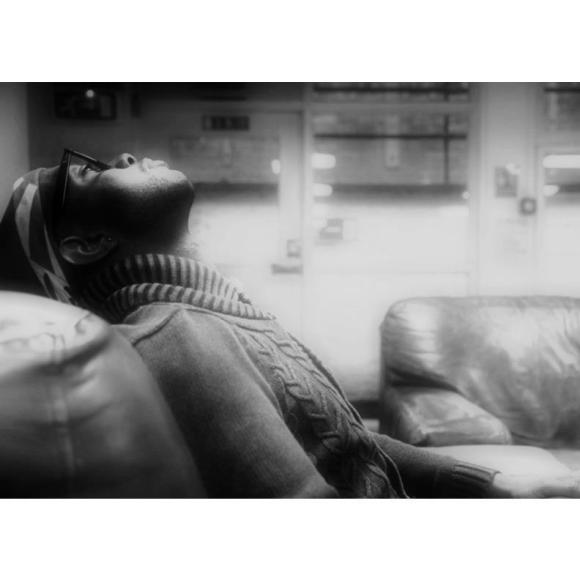
Nick Nova

The ability to reflect on personal experience, past innovations, and current affairs empowers one to respond to obstacles, criticisms and general stressors in a fashion that consciously assists their own progression, as well as that of culture and society at large.
– Nick Nova

Leading off with some basics, where are you from? And where are you at?

NN: I’m definitely a West Coast kid. I was born and raised in Northern California, the Bay Area specifically. After high school I stuck around for a bit before moving to London, England for college. I’m now back in the U.S.and have settled in Brooklyn, NY.

What does Reflection and Response mean to you?

NN: Reflection and Response to me represents the two important, synergistic aspects of creating and succeeding. People often lose sight of self-importance when attempting to achieve greatness in a public space, but the willingness to consider one’s own objectives and mapping out personal checkpoints is vital to the success of projects bigger than its creator. Building on that, the ability to reflect on personal experience, past innovations, and current affairs empowers one to respond to obstacles, criticisms and general stressors in a fashion that consciously assists their own progression, as well as that of culture and society at large.

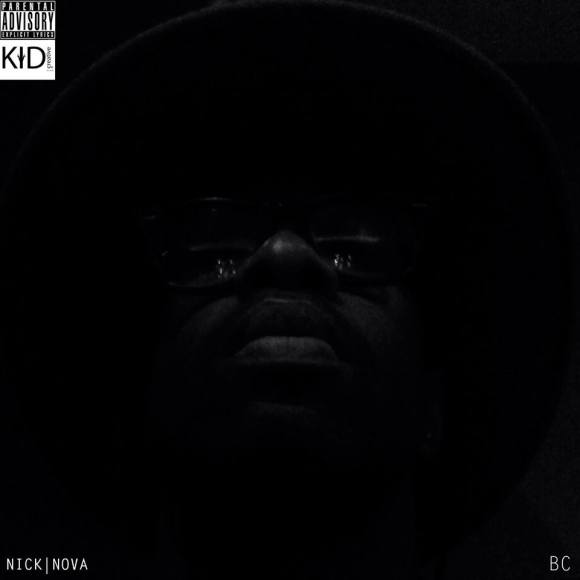
BC

How does your project BC fit in with that definition?

NN: My latest music project ‘BC’ represents this entirely because it is me reflecting on my past, both in the content, as well as the more technical aspect of the project. Recognizing my previous musical inhibitions and seeing how much it hindered my potential, ‘BC’ finds me embracing those flaws and making the appropriate changes to better position myself for achieving my musical goals.

From my observations, it’s common for creators to bury certain aspects of their lives as a defense mechanism, but one doesn’t have a true concept of power until you embrace the most difficult of memories and utilize past pain and/or frustration into something positive and empowering for others. A personal example would be on a record I have called “Tunnel” in which I mention my experience of being bullied. Up until this project I never wanted to share that vulnerability, but upon reflecting on the experience and seeing how much the experience aided my development, I recognized that it was imperative for me to share this so that younger listeners, or even people my age who may be bullied on the job or elsewhere and feel helpless, can recognize their own power through my story and they can stand up to their detractors and even if the results aren’t instantaneous, they’ll know it’s ok to fall down as long as you keep fighting to stand on your feet again, physically and or metaphorically depending on your situation.

What else have you been working on recently? What are you looking to work on next?
Continue reading

Tagged , , , , , , , , , , , , ,

Artist Feature: Noah Garabedian

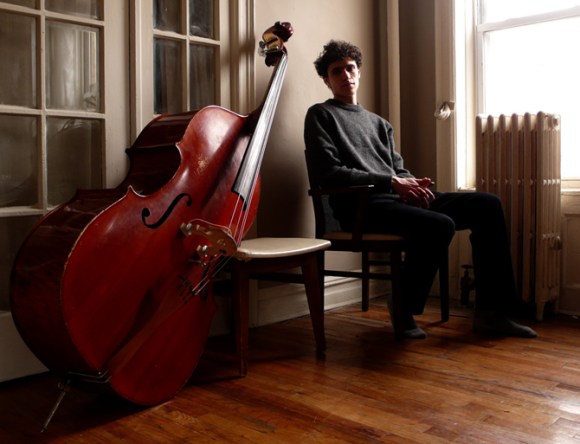
Bassist and composer Noah Garabedian is originally from Berkeley, has lived in Los Angeles, and now resides in Brooklyn. It was a long time coming, but we were able to catch up with Noah recently at Hank’s Saloon in Brooklyn, where he played with his group The Slim Tones – a flat-out incredible set featuring their signature honking-tenor rhythm and blues. A hardworking craftsman, Noah plays with multiple groups spanning an eclectic range of sound and genre, including – along with The Slim Tones – Big Butter and the Egg Men, The Amigos Band, and the Rebirth Project. In the following dialogue, Noah breaks down his approach to music and discusses his current and future projects. Keep an eye out for a couple New York engagements this weekend and The Amigos Band’s upcoming tour in Southeast Asia in March. Check it!

Noah Garabedian

Everyone experiences countless provocations of the senses everyday, and reflection is the moment one takes to acknowledge its occurrence. Response is the way one acts after that experience.

– Noah Garabedian

Leading off with some basics, where are you from? And where are you at?

NG: I’m from Berkeley, CA, and I currently live in Brooklyn, NY after 5 years in Los Angeles.

What does Reflection and Response mean to you?

NG: Reflection is the process of digesting material that has penetrated one’s exterior and provoked a reaction; whether it be within or out for all to see. Everyone experiences countless provocations of the senses everyday, and reflection is the moment one takes to acknowledge its occurrence. Response is the way one acts after that experience.

How does your work fit in with that definition?

NG: My current ensemble that I compose for is called Big Butter And The Egg Men. It is a sextet comprised of bass, drums, two tenor saxophones, alto sax, and trumpet. The compositions and sound of the group combine several influences of mine. I cannot help being influenced by experiences of my past, not only musical, and those inevitably show themselves in my writing and improvising.

As a music student, you are constantly told to understand and respect the history, the tradition, and the rules. Then you are told to throw it all out and to be creative and original. I suppose my own compositional process and my own approach to making music on the bandstand, is a response to my reflections of the past or just old habits I developed by rote.

What else have you been working on recently? What are you looking to work on next?

NG: I am currently excited to be working on two other projects. The first is The Amigos Band. We play all types of American music – country, Cajun, blues, and jazz. We just released our first full length album, Diner In The Sky, and on March 10 we will be representing the US State Department as musical ambassadors on a 5 week tour throughout Southeast Asia. The second project I am working on is called the Rebirth Project. The music I am currently writing for this project is traditional Armenian folk music, mixed with improvisation, and combined with a contemporary compositional aesthetic.

Who or what inspires you?

Continue reading

Tagged , , , , , , , , , , , , , , , , , , ,

Artist Feature: Naïmah

I had the good pleasure of meeting Naïmah at a local coffeehouse in Greenpoint, Brooklyn a couple weeks ago. A Washington D.C.-based singer-songwriter, Naïmah is currently working on her own EP, writing songs for a handful of other artists, and playing shows in the DC and New York areas. We’re happy to welcome her to the Collective as she discusses her understanding and application of Reflection and Response, the creative process behind her song Wolf and I, and various other topics. We’re looking forward to a lot more dope work from Naïmah in the months and years ahead! Check out the dialogue below.

Naimah

Support each other. I’ve witnessed too much animosity in the art world, especially jealousy-driven. Everyone has their own gift, their own individual way of looking at something, and at the end of the day, no one can replicate that.

– Naïmah

Leading off with some basics, where are you from? And where are you at?

N: I’m from Washington, D.C., and after going to boarding school in Boston, and college at USC in Los Angeles, I’ve made my way back to the District. A bit surprising to some, as I’m emanating those California vibes “for sure”, but it’s nice to be home and planting my roots and growing where I first got started.

What does Reflection and Response mean to you?

N: Within the harmony of those two actions I find the creative process at its best.  The thing about art as I see it, or at least how I approach my music, is that it is always a response to a reflection on a moment, a person, a feeling, and so on.

Whether I realize something is on my mind or not, songwriting helps me navigate through that process of reflection, and to figure out just how much that subject meant—or means—to me.  Each song is me saying, “This is my response about X. This is how I feel.”

And the incredible part is when that individual reflection and response, my response, captures the way someone else might also feel in their own reflection, or to allow them to see their feelings in a new light.

It’s hard to make this intangible transaction into a tangible explanation, but I hope that all makes sense.

How does ‘Wolf and I’ fit in with that definition? 

N: It doesn’t get more “reflection and response” than in Wolf and I. Well, it does, but prior to writing the song I’d been in a phase of day-dreaming and imagining and writing songs based on these scenes I made up when, after a trip to New York, I was headed back home on the bus, feverishly free-writing in my notes on my iPhone (let me say how restrictive auto-correct and that little screen is) as I attempted to capture how I felt about the events that had just occurred, and all the moments and experiences making up my relationship with this particular person and situation.

Wolf and I is a love song in its most basic interpretation, but I think the fact that it’s really so much more than that below the surface is why people have been able to connect with it. It’s about perception, the way you look at something, the good and the bad all at once.

Wolf is a simile I used to describe someone and something both close and distant, endearing, and in the process of change; and Wolf and I was my reflection, my attempt to articulate, all these thoughts in some kind of compact organization that I could store them in.

Since writing the song, I’ve opened back up to the realization of how important reflection and response is, and how my songs come to life when they are created in this frame of mind.

Photo by Alexandra Howland

Photo by Alexandra Howland

What else have you been working on recently? What are you looking to work on next?

Continue reading

Tagged , , , , , , , , , , , , , , , ,

Artist Feature: Amber Stiles

Musician and songwriter Amber Stiles is at the center of a talented and inspiring group of artists centered in Madrid, Spain. I met Amber at the well-known Triskel Tavern where musicians from all over the world seemed to find a home on its stage during Thursday open mics. Since playing there, Amber has been performing all over Madrid focusing both on her own material and collaborating with others while beginning recording at Spaceland Records. Peep the dialogue below for Amber’s words on her folk/country music, her artistic growth in the city and other ideas from this expanding and creative artist.

Amber Stiles

One of the reasons I love folk music and country is that it’s generally very simple in form and it allows you to explore subtle variations with your voice, tempo, lyrics, etc. I enjoy singing a song the way that I’m feeling it at that particular moment.

– Amber Stiles

Leading off with some basics, where are you from? And where are you at? 

AS: I’m from a small town in New York State, about half an hour from the Canadian border. It’s about 6 hours from the City and 4 hours from Buffalo. No one can really figure out where it is. We have a Dairy Princess Parade and obviously lots of cows. I’ve moved around quite a bit since I left home but I’ve spent the last 4 years in Madrid, Spain.

What does Reflection and Response mean to you?

AS: I’ve never really thought about it before but I suppose the word reflection conjures up a few thoughts and images. I associate it with a mental process, a forming of thoughts and beliefs. On the one hand I think it’s important for us to process what we see and what we experience. I interpret and share my experiences to connect with other human beings. But at the same time I think too much introspection can make us overly cerebral and rigid. If we assign an idea a name and call it a belief we’re really limiting ourselves in a lot of ways.

I suppose I relate more to response. I approach music in that way, at least. I don’t try to overanalyze a song or break it down into a set formula. I prefer to intuitively explore things. If I think about what I’m doing too much I get overwhelmed and blocked. Yeah, Response is definitely more interesting for me. I figure my intuition is utilizing more resources within me than my conscious, rationalizing brain can muster.

How does folk music fit in with that definition?

AS: One of the reasons I love folk music and country is that it’s generally very simple in form and it allows you to explore subtle variations with your voice, tempo, lyrics, etc. I enjoy singing a song the way that I’m feeling it at that particular moment. One of my first idols was Billie Holiday and I always admired how much feeling she put into her vocals. Sometimes her songs were sad and slow, other times lively and upbeat. I always try to stay tuned into the meaning of a song and how I’m interpreting it in that moment.

Amber Stiles

What else have you been working on recently? What are you looking to work on next?

AS: Recently I’ve been collaborating mostly with Miguel Gonzalez who is a very talented vocalist and gifted songwriter out of Texas. We play acoustic sets at intimate cafés around Madrid which is the atmosphere I feel most comfortable in, really. I’ve also been providing vocals for Padraig O’Connor and Richard Harris, both musicians that I have deep respect for.

My next goals are to write some inspiring songs and get into the studio. Richard Harris is running Spaceland Studio at the moment and it’s a great opportunity to capture a moment in my life with the incredible musicians I’m surrounded by. I’m decidedly lo-fi so taking the plunge into the studio is big for me.

Who or what inspires you? Continue reading

Tagged , , , , , , , , , , , , , ,

Artist Feature: Ruben García

Tuvimos la buena fortuna de conocer a Ruben García en 2013 en Granada cuando Ruben me invitó a pinchar en su bar, La Iguana. Ruben nos dio la bienvenida a su bar que utiliza su espacio para ofrecer buenas vibras junto a exposiciones, conciertos, sessiones de DJ, y varias otras actividades creativas. Ruben y la Iguana representan un núcleo creativo en esta ciudad activa y estimulante. En la entrevista abajo, Ruben nos da la bienvenida al Colectivo y comparte sus ideas sobre la importancia de Reflexión y Repuesta, su papel como facilitador de lugares de expresión, y mucho más.

We had the good fortune to get to know Ruben García in 2013 in Granada when Rubin booked me to spin in his bar, La Iguana. He welcomed us to his bar that harbors good vibes while also utilizing its space to present expositions, concerts, DJ sets, and other forms of creative expression. Ruben and la Iguana are an important creative nucleus in this active and stimulating city. In our interview below, Ruben welcomes us into his world and shares his ideas about the benefits of Reflection and Response, his role as a venue facilitator, and other themes.

Ruben García

Y creo, sinceramente, que hay que apoyar a los nuevos valores. Todo el mundo se merece una oportunidad y me siento muy orgulloso de poder hacerlo.

I sincerely believe that we need to support new principles. Everyone deserves an opportunity and I feel very proud to be able to provide that.

– Ruben García

Para empezar con algunos puntos básicos, de dónde vienes? Dónde estás?

Leading off with some basics, where are you from? And where are you at?

RG: Nací en Madrid, España, donde he pasado la mayor parte de mi vida. Una ciudad increíble que te ofrece un montón de cosas, pero que en el día a día, en la época que nos ha tocado vivir, se hace un poco difícil la supervivencia…

Un buen día, hace ya 10 años, decidí irme a Granada de vacaciones y desde entonces estoy  aquí. Se ha convertido en mi hogar y estoy muy agradecido por las oportunidades y vivencias que esta ciudad me ha dado.

RG: I was born in Madrid, Spain, where I’ve spent most of my life. [Madrid is] an incredible city with lots of stuff going on, but in the day-to-day in the era that we live in, survival is a bit difficult.

One good day 10 years ago, I decided to travel to Granada on vacation and I’ve lived here ever since. It’s become my home and I’m very grateful for the opportunities and experiences that this city has given me.

Qué quiere decir “reflexión,” y “respuesta,” para ti?

What does Reflection and Response mean to you?

RG: Son dos palabras que podrían ajustarse al ideal de cambiar el mundo, pero sinceramente, esto me parece un poco utópico. Creo que para cambiar el mundo,  puesto que es evidente que la mayoría de la gente no estamos de acuerdo con cómo están las cosas, estas palabras deberíamos utilizarlas con honestidad. Empezar por cambiar todo aquello que no nos guste de nosotros, principalmente, y aplicar ese cambio a nuestro día a día. En las cosas pequeñas. Sobre todo con la gente con la que nos relacionamos y la forma que tenemos de hacerlo.

Reflexión: Qué estoy haciendo con mi vida? Me gusta lo que hago y cómo lo hago? Podría mejorar y aportar algo para hacer mi vida y la de los demás, si no más fácil, más divertida?

Respuesta: SIEMPRE SE PUEDE MEJORAR. Y SI CREES EN ALGO, VE A POR ELLO. NADA ES IMPOSIBLE.

RG: These are two words that fit in with [an overall] goal of changing the world, but frankly, this seems a bit utopian to me. I believe that in order to change the world – since it’s evident that the majority of people don’t agree with the way things are – we should use these words honestly. First off, we need to begin by trying to change things about ourselves that we aren’t satisfied with, and apply these changes to our daily lives, [especially] in small ways. More than anything, [we should focus on] people whom we come in close contact with, in the ways in which we do so.

Reflection: What am I doing with my life? Do I like what I do, and how I do it? Can I improve [on what I do] and contribute something more in order to make my life, and the lives of others more pleasant, if not a bit easier?

Response: YOU CAN ALWAYS IMPROVE YOURSELF. AND IF YOU BELIEVE IN SOMETHING, GO FOR IT. NOTHING IS IMPOSSIBLE.

Cómo se mete tu arte en esta definición?

How does your art fit in with that definition?

RG: Bueno… No puedo definirme a mí mismo como un artista. Eso es tarea de otros.

Sí puedo decirte que soy una persona multidisciplinar, a la que le gusta “jugar” en diferentes campos, relacionados de alguna manera con el arte: diseño gráfico, sesiones de música, fotografía, moda… Pero lo de considerarme un artista, me viene un poco grande!

Con mi proyecto actual, un bar llamado LA IGUANA,  intento ayudar y darle una oportunidad a gente que tiene algo que enseñar o que decir. No es sólo un bar. Es también una plataforma donde artistas de diferentes disciplinas pueden mostrar sus ideas. Ofrecemos un espacio en el que quien quiera, es bienvenido y valorado. Colaboramos con músicos, fotógrafos, pintores, disc jockeys… Tengo la suerte de vivir en una ciudad que cuenta con gente muy activa y con muchas ganas de hacer cosas. Y creo, sinceramente, que hay que apoyar a los nuevos valores. Todo el mundo se merece una oportunidad y me siento muy orgulloso de poder hacerlo.

Tienes una idea y no puedes mostrarla? Vente a La Iguana!

RG: Well…I can’t really call myself an artist. That’s other people’s job.

I’d tell you [instead] that I’m a multidisciplinary person who likes “playing” in different fields, in some way connected with art: graphic design, music, photography, fashion…But to consider myself an artist seems to me a bit profound!

With my current project, a bar called La Iguana, I’m trying to help out and provide opportunities to people who have something to teach or say. It’s not just a bar. It’s also a platform where artists from various disciplines can share their ideas. We provide a space where anybody that wants to [participate] is welcome and valued. We collaborate with musicians, photographers, painters, DJ’s…I’m lucky enough to live in a city with people who are very active and have strong desires to do things. I sincerely believe that we need to support new principles. Everyone deserves an opportunity and I feel very proud to be able to provide that.

Have an idea and aren’t able to show it anywhere? Come to La Iguana!

La Iguana

La Iguana – Granada, España

Continue reading

Tagged , , , , , , , , , , , , , , , , , , , , ,

Artist Feature: Clarke Reid

Clarke Reid is a musician and traveler who we first met in his hometown of Seattle, Washington. He’s played a variety of music, an eclecticism made ever wider by the distances he’s traveled. Whether playing with Seattle-based the Cumbieros or wielding a ukulele throughout Andalucía, Spain, music has been an important common ground for this creator. We welcome Clarke to the Collective to speak on his unique perspective on Reflection and Response, the social nature of music, and other topics from our dude straight out of Pozoblanco, Spain.

Clarke Reid

Response is what just naturally comes out of being in new situations and playing music with new people.

– Clarke Reid

Leading off with some basics, where are you from? And where are you at?

CR: I’m from Seattle, in the United States. I currently live in a town called Pozoblanco, which is in the Cordoba province of Andalucía, Spain. I’m doing a yearlong program here where I’m like the native English-speaking assistant in a public high school.

What does Reflection and Response mean to you?

CR: Deliberate reflection is probably something I should do more often. The Alarm on my phone that wakes me up in the morning is titled “look up, notice little things.” It’s something I got from reading  “peace is every step” by Buddhist teacher, philosopher, etc. Thich Nhat Hahn and its a reminder to slow down and relax and notice what’s going on around me and enjoy it. It’s something I don’t do often enough, but when I do it’s awesome. Especially when I’m traveling or living in another country and running around all the time and trying new things, it’s important to slow down and reflect on things. Like, if I feel like crap sometimes I don’t even realize it until I slow down for a sec and think about it and then think about why. Or if I’m feeling great (often a result of just having eaten a wholesome meal, being outside in nice weather, an unexpectedly pleasant exchange with a stranger, a laugh with a friend, or any combination of many other things) its nice to recognize it and revel in it. Then I have to respond. Like I said I’m still working on it. One thing I’m trying to do right now is sleep more and drink less. And get sick less (like cold/flu sick).

I’ve been traveling a lot recently, so when it comes to music, reflection and response is about noticing what kind of inspiration is around me and really trying to dive into that. When I was younger my dad listened to a lot of progressive rock from the 70s so I got into that. My high school had a really good jazz band so in high school I listened to a lot of jazz and was really influenced by that. In college I had a music professor that was more into experimental music and free jazz so I tried that and learned a lot of new things. I was also part of a hip-hop band so I started checking out more of that culture and music. The story goes on and on like that, including a year living in Chile and some other travels. Now I live in Spain and I’m doing the same thing. I’d like to think that I’m constantly responding and changing and evolving my style and music and stuff, but I haven’t really studied music formally recently so it’s harder to see and measure exactly how I’m changing. I guess the response is what just naturally comes out of being in new situations and playing music with new people. Maybe sometime in the near future I’ll sit down and really reflect and play something or write some material that brings everything together. That would be a good goal actually.

How do “The Other Side of the River” and “Woodle” fit in with that definition?

CR: Firstly, “The Other Side of the River” is written for ukulele, which is an instrument that I bought recently when I discovered it’s a great travel instrument. It’s portable and can be used to jam with other instruments, by itself, or with singing. So it fits with the sort of traveling chameleon approach I’m taking to music in general right now. It also incorporates some elements of flamenco (the clapping) that I’ve been exposed to here in Andalucía. The recording is a bit of a rough draft. It has a fiddle line that I still need to record and I’d like to get some more Spanish ‘jaleo’ on the track too (shouts of encouragement, percussion, etc.).

Continue reading

Tagged , , , , , , , , , , , , , , ,

Artist Feature: Franz Rothe

We’ve been fortunate enough to have become close friends with Dresden-born musician, writer, and filmmaker Franz Rothe over the past year here in Brooklyn, and his versatility and creative output are huge inspirations for us. In an insightful interview, Franz guides us through his perspectives on Reflection and Response, explores how these concepts fit in with his musical process, reflects on a recent album called Away that he worked on as part of the band Franz & Frau Schneider und dieser Andere, and talks through various current projects. Let’s dig in:

Franz Rothe

I believe that the urge to write a song results from the need to capture and express a certain feeling…You chase this feeling, this impulse, because it is haunting, like something you have once known but forgotten. And you try to figure out what it is, what it wants to be, how it wants to sound.

– Franz Rothe

Leading off with some basics, where are you from? And where are you at?

FR: I am from a beautiful city called Dresden in Germany. But I have been living here and there in the recent past. Right now I live in New York, which is wonderful but won’t last very long either.

What does Reflection and Response mean to you?

FR: I think that, in a way, Reflection and Response describes the very essence of music or really any kind of art. I believe that whatever we create can only be seen as a response to what we have seen, heard or experienced before. At least I would say about myself, that I’ve never come up with any kind of idea that was not a response to something somebody else did before me. We reflect upon our experiences, our impressions, and we respond to them – knowingly or not – and sculpt them into something new.

Pessimistically, that view could lead to questioning the mere idea of originality, as everything is just a combination of what was there before. But on the other hand, I enjoy the thought of being a part in an endless chain of Reflection and Response.

(For example, I am not ashamed to say that my biggest form of admiration for any kind of art is the thought ‘Why didn’t I think of that?’ followed by the thought ‘How can I take that and turn it into something new?’…)

How does your album ‘Away’ fit in with that definition?

FR: I think the album ‘Away’ is on many levels the product of Reflection and Response – it is what we made of music we heard, songs we love, songs we hate, books that touched us, people that surrounded us and places we have been. But it is also what we made of each other and ourselves.

I believe that the urge to write a song results from the need to capture and express a certain feeling. It’s never about which chords might go well together and which words might rhyme. You chase this feeling, this impulse, because it is haunting, like something you have once known but forgotten. And you try to figure out what it is, what it wants to be, how it wants to sound.

I think, in the best case an artist should be like the needle of a record player, materializing an invisible something.

As we were three musicians working together on this album, the most important part was responding to our surroundings in a similar way. Sharing an understanding of the feelings that we wanted to transport in the music we made. And with every musician we brought into the studio, we hoped they would be telling a similar story as we did, adding to what the three of us shared.

Then again, that sounds way more complex than it actually was. In the end we just made music together, simply loving each other for that.

Franz Rothe & Vivi

What else have you been working on recently? What are you looking to work on next?
FR: I’m trying my hand at a couple of different things right now. There are so many languages in which you can express yourself, so I tried to look for other languages like film or writing. Kind of to find an outlet for things that haunted me, but couldn’t find their way out of my head through chords and melodies.

I made a documentary about forced evictions in Phnom Penh, Cambodia, with my dear friend Michael last year. It’s called ‘The Final Days’ and I’m happy about anyone watching it on vimeo.

Right now I actually started writing a book, which has been on my mind for ages. But first novels usually suck, so there’s really not too much to expect there…

Who or what inspires you?

FR: Places. People. My friends. Vivi and Lukas, who are the other two-thirds of the band. Their talent and their ability to always just naturally come up with exactly the right thing – that never ceased to amaze and inspire me!

Generally speaking though, in the best case, absolutely anything could be inspiration. But unfortunately I often have a hard time keeping the open eyes it takes to be aware of what’s actually around me.

So what I do is I travel a lot and try to see and live in as many countries and cultures as possible, to absorb as much as I can.

Is there anything else you would like the Collective to know?
FR: Check out the photographer Ben Zank! I just had the pleasure of meeting him and he is as nice a guy as he is a brilliant artist.
Shout out to…?

FR: Huge shout out to Vivi and Lukas, with whom I made the album ‘Away’ and whom I miss terribly when we are too far away from each other to make music!

Franz, Vivi, Lukas

Reflection and Response.

Tagged , , , , , , , , , , , , , , , , ,

Artist Feature: Alejandro Aquino

Alejandro Aquino es un artista que ha vivido y aprendido de los varios contextos geográficos y temporales de su vida. Desde Guadalajara, México a Malasaña, Madrid, Aquino busca música sencilla que tiene poder en su propia melodía.  Desde lo análogo y lo digital, el músico contempla los efectos de la nueva rapidez tecnológica con que se comparte las cosas con un ritmo cada vez más rápido hoy en día. En el diálogo abajo, comparte su perspectiva ante esas cuestiones, muestra sus proyectos pasados y actuales, y habla de muchos temas más. Además urge que protejamos el costumbre de Reflexión y Respuesta en nuestro mundo actual que corre tan rápido que es posible perder el filtro de la honradez.

Alejandro Aquino is an artist who has lived and learned from the various geographic and temporal contexts of his life. Originally from Guadalajara, Mexico and moving to Malasaña, Madrid, Alejandro is in search of simple music that is powerful on its own. With experience from the analog world to the digital world, the musician contemplates the effects of new rapid technologies that are used to share ever faster. In the ensuing dialogue, Alejandro shares his perspective about these issues, speaks on his past and current projects, and much more. He also urges us to protect the custom of Reflection and Response in our world that moves so fast it is increasingly possible to lose the filter of honesty.

Alejandro Aquino

Yo he vivido la transición entre lo análogo y lo digital, y veo que ahora las generaciones actuales tienen mayor facilidad y velocidad para dirigir su arte a un colectivo mayor. Sólo recomendaría que la inmediatez, la prisa por dar a conocer el “arte” no nos ciegue, y no permita que lo que logremos crear pase por un filtro personal de Reflexión.

I’ve lived the transition from analog to digital, and I see that the current generation can spread their art to large audiences more easily than ever before. I would only advise that we not let this immediacy and overall hurry to spread our “art” blind us to the point that what we create doesn’t pass through our personal Reflection filters.

Para empezar con algunos puntos básicas, de dónde vienes? Dónde estás?

Leading off with some basics, where are you from? And where are you at?

AA: Vengo de la ciudad de Guadalajara, México. Una ciudad populosa que se debate entre tradicionalismo y modernidad. La segunda ciudad en importancia en el país es el estandarte del folclor conocido como representante del país en el mundo entero. Y ahora, radico en el madrileño barrio de Malasaña, un lugar multicultural, donde se mezcla la vida nocturna distendida de copas con la oferta cultural de pequeños lugares donde igual se escucha música o se compra un buen libro.

AA: I’m from Guadalajara, Mexico, a populous city stuck between traditionalism and modernism. It’s the second biggest city in the country, and representative of the folklore that’s commonly considered to be representative of Mexico. Right now, I live in a barrio in Madrid called Malasaña – it’s a multicultural place where nightlife and casual drinking blend with cultural offerings found in small places to go out, where you’re just as likely to listen to music as you are to buv a good book. 

Que quiere decir “reflexión,” y “respuesta,” para ti?

What does Reflection and Response mean to you?

AA: Reflexión es el resultado de la confrontación entre experiencia y momento. El espacio donde se interiorizan las consecuencias de nuestros actos pasados basándose en nuestras expectativas y las posibilidades de hacerlas realidad en un futuro.

La respuesta sería la acción, el resultado de la reflexión anterior. 

AA: Reflection is the result of the intersection of experience and reality. The space in which we internalize the consequences of our actions, grounded in our expectations and the possibilities of making them reality.

Response would be an action [that comes about] as a result of a prior reflection.

Cómo se mete tu arte en esta definición?

How does your work fit in with that definition?

AA: Mi arte, por así llamarlo, aunque para mí sería artesanía, es una especia de bitácora que refleja mis inquietudes o mis momentos en la vida. Es el resultado también de la música que escucho, la edad y la gente que me rodea.

AA: While I think of my art, if you will, as my craft, it serves as a daily log that reflects my anxieties or experiences in life. It’s also the result of the music I hear, the people around me, and the times we live in. 

Que más estás haciendo actualmente? Que proyectos estás pensando trabajar próximamente?

What else have you been working on recently? What are you looking to work on next?

Continue reading

Tagged , , , , , , , , , , , ,

Artist Feature: Rafael Alves

Rafael Alves is one soulful dude. Whether he’s showcasing his special touch on guitar, blowing some gritty blues on harmonica, blessing the crowd with his ill voice, or introducing us to “electronicbluesbossafunk,”  Rafa fills space with dope music. Coming at us from Madrid via Curitibia, Brazil by way of New Zealand, this Artist discusses the role of his craft, new projects, shares some truth about music in Madrid, and much more. Peep the dialogue below and vibe to tracks “Use Me,” “Will Be Mine,” and if you’re in Madrid catch Rafa at one of his many upcoming performances!

Rafael Assis

What I do is mostly based on the sound and the way I feel playing. I always try to enjoy myself, playing on my own or jamming with other people. It normally works and that’s how I communicate with other people.

Leading off with some basics, where are you from? And where are you at?

RA: I’m from Curitiba, south Brazil. I live in Madrid, Spain.

 What does Reflection and Response mean to you?

RA: There isn’t much reflection in what I’m doing now; I don’t try to give people any good message, or advice through the songs I play.

What I do is mostly based on the sound and the way I feel playing. I always try to enjoy myself, playing on my own or jamming with other people. It normally works and that’s how I communicate with other people. 

How does your project Pure Acoustic Soul fit in with that definition?

RA: Everywhere I live I often jam with friends in my house, playing acoustic. So with Pure Acoustic Soul I try to bring this cozy atmosphere of acoustic music and friends to other people. 

What else have you been working on recently? What are you looking to work on next?

RA: I’ve been working with some electronic Brazilian music, it’s difficult to label the style – it’s kind of a mix of “electronicbluesbossafunk” – it’s pretty fun making it. Trying to mix different sounds without knowing how it’s gonna end up. Traveling, I had the privilege of jamming with musicians from everywhere so what I do is send them the tracks and they record their part wherever they are (New Zealand, Brazil, Spain, …)

Who or what inspires you? 

Continue reading

Tagged , , , , , , , , , , , , , , , ,

Artist Feature: Eric Medina

Eric Medina nos muestra las posibilidades expansivas de la música. Explorando varias facetas de Rap, Eric mueve desde el estudio al esenario con paradas en el DJ booth en el intermedio. Este artista Madrileño ha encontrado una forma melódica de reducir la velocidad del mundo caótico que nos rodea y enfocar en el presente. Abajo Eric nos abre a su mundo y explora Reflexión y Respuesta y también comparte sus various proyectos, inlcuyendo su grupo ESTAFA y High Standing, trabajo en Headroom Estudios, un libro-cd en collaboración con el poeta Julio Reija, y muchas iniciativas más. ¡Damos la bienvenida y le pasamos el micro a este hombre del renacimiento del hip-hop!

Eric Medina represents the wide expanse of possibilities in music. Eric explores various facets of Rap from the studio to stage with stops at the DJ booth in between. This Madrid-based artist uses this melodic art form to slow down the chaotic world around us and focus on the present. Below Eric goes in on Reflection and Response and welcomes us to his world while discussing his various projects including his groups  ESTAFA and High Standing, work in Headroom Studios, an audiobook in collaboration with poet Julio Reija, and much much more. Without further aidieu let’s pass the mic to this Renaissance man of hip-hop!

Eric Medina

Para mi la reflexión es un ejercicio de análisis, de tomar aire y pararse pensar en que has hecho, a dónde querías llegar con tus acciones y dónde has llegado realmente. Digamos que es un momento de quietud ante tanta velocidad que nos rodea.

To me, reflection is an exercise in analysis, taking a moment to think about what you’ve done, where you wanted to get as a result of your actions, and how far you’ve actually made it. I’d say it’s a quiet moment amidst all the chaos around us.

Para empezar con algunos puntos básicas, de dónde vienes? Dónde estás?

Leading off with some basics, where are you from? And where are you at?

EM: Pues para empezar, vengo y estoy en Madrid y vengo y estoy en el Hip Hop.

Soy productor, dj y técnico de sonido. Me gusta la ironía, la profesionalidad, el buen humor y atrapar el talento de los demás en mis grabaciones.

EM: I’m originally from – and currently live in – Madrid, and I come from – and am currently in – Hip Hop.

I’m a producer, DJ, and sound engineer. I like irony, professionalism, good humor, and capturing other artists’ talents through my recordings.

Eric Medina


Que quiere decir “reflexión,” y “respuesta,” para ti?

What does Reflection and Response mean to you?

EM: Para mi la reflexión es un ejercicio de análisis, de tomar aire y pararse pensar en que has hecho, a dónde querías llegar con tus acciones y dónde has llegado realmente. Digamos que es un momento de quietud ante tanta velocidad que nos rodea.

Y una respuesta lo veo como una solución ante una situación. 

EM: To me, reflection is an exercise in analysis, taking a moment to think about what you’ve done, where you wanted to get as a result of your actions, and how far you’ve actually made it. I’d say it’s a quiet moment amidst all the chaos around us.

I see response as a solution to a situation.

Eric Medina

Cómo se mete tu arte en esta definición?

How does your art fit in with that definition?

Continue reading

Tagged , , , , , , , , , , , , , , ,