Tag Archives: Spain

Artist Feature: Elena Rosillo

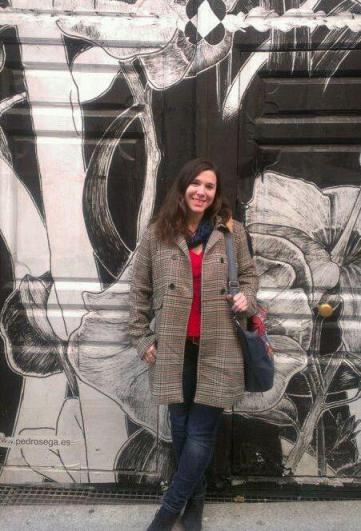
Elena Rosillo muestra que el poder de los medios de comunicación nuevos se puede utilizar para dar a conocer los que tienen algo para decir. En su propio blog, The Rosillo’s Rover, ha escrito sobre el ocio Madrileño que le interesa y le parece que debe recibir más atención.  También aprende más sobre el oficio de investigación como parte del equipo que produce el diario Madrileño La Guía del Ocio mientras quiere seguir con su carrera universitaria con un doctorado. En la entrevista debajo aprendemos sobre el cruce del Reflexión y Respuesta y investigación, el mundo de creativos en que vive y escribe esta periodista Madrileña, y varios temas más.

Elena Rosillo demonstrates how the power of new communication technologies can be used to share and promote those who have something to say. In her personal blog The Rosillo’s Rover, Elena has written about events and nightlife in Madrid that are both interesting and deserving of more attention. She also continues to learn more about the craft of journalism as part of the Madrid-based lifestyle journal La Guía del Ocio while seeking to further her education with a PhD in the field. In the interview below we learn about the intersection of Reflection and Response, the world of creatives in which Elena lives and writes about, and several other topics.
Elena Rosillo

Mi reflexión acerca de aquello que me rodea y donde vivo es lo que me ha llevado, como respuesta, a hacer lo que hago y actuar como actúo. Se trata de un feedback con tus propias circunstancias e intereses, que también afecta a aquellos que me rodean.

My reflection involves things that happen around me, and where I live this has brought me, as a response, to do what I do and act how I act. [Reflection] serves as a “feedback loop” including one’s own circumstances and interests which, in turn, affects what surrounds them.

– Elena Rosillo

Para empezar con algunos puntos básicas, de dónde vienes? Dónde estás?

Leading off with some basics, where are you from? And where are you at?

ER: Vengo de ese pedazo de la España en que nací, cuna del requiebro y del chotis. De Madrid, mi ciudad y la ciudad de mis padres y abuelos, y de aquellos con los que convivo y a los que retrato con mi trabajo.

ER: I come from this part of Spain, where I was born, [which is also] the birthplace of “requiebro y chotis”. From Madrid – my city, the city of my parents and grandparents, and of those with whom I live and those who I feature in my work.

Que quiere decir “reflexión,” y “respuesta,” para ti?

What does Reflection and Response mean to you?

ER: La reflexión forma una parte muy estrecha de mi personalidad. Todos mis amigos me dicen que pienso demasiado, aunque no creo que eso sea necesariamente algo malo. La respuesta es aquello que se consigue con la reflexión. Mi reflexión acerca de aquello que me rodea y donde vivo es lo que me ha llevado, como respuesta, a hacer lo que hago y actuar como actúo. Se trata de un feedback con tus propias circunstancias e intereses, que también afecta a aquellos que me rodean.

ER: Reflection forms a small part of my personality. All of my friends tell me that I think too much, although I don’t think this is necessarily a bad thing. Response is what you achieve along with reflection. My reflection involves things that happen around me, and where I live this has brought me, as a response, to do what I do and act how I act. [Reflection] serves as a “feedback loop” including one’s own circumstances and interests which, in turn, affects what surrounds them.

Cómo se mete tu trabajo del blog en esta definición?

How does your work with your blog fit in with that definition?

ER: The Rosillo´s Rover es un blog de cultura y ocio alternativo en Madrid (y lo que surja, claro). Decidí crearlo a raíz de mi primera visita al famoso open mic de la Triskel Tavern (en Tribunal). Allí conocí a muchas personas que trabajaban y compartían su talento. Gran parte de esas personas jamás llegarán a ser retratadas en un medio de comunicación generalista. Pero eso no significa que carezcan de talento, ni que sean menos válidas que aquellas que sí aparecen en estos mismos medios. Más bien al contrario, en aquella ocasión creí ver una fuente de talento e ilusión (y amistad) que me hizo desear dar a conocer al mundo a estas personas.

ER: The Rosillo’s Rover is a blog about culture and alternative entertainment in Madrid (and whatever else might come up along with that, of course). I decided to start this blog as a result of my first visit to the famous Open Mic at Triskel Tavern (in Tribunal, Madrid). There I met a lot of people who were working and sharing their talent. Most of these people will never been featured in mainstream media, but that doesn’t mean that they lack talent, nor that they’re less valid than those that are in the media. On the contrary, they’re often much better, and at the time I believed I saw a wealth of talent and excitement (and friendship) that made me want to share these people [and their work] with the world.

ER: Esa fue mi reflexión, y mi respuesta vino con la creación del blog, con el objetivo de dar a conocer esa circunstancia, ese open mic. Tampoco quiero aparentar lo que no soy; mi blog es, simplemente, otra ventana más abierta al mundo a través de internet. Pero me gustaría pensar que esta pequeña ventana sirve para que alguien que previamente no conociera el trabajo de estos artistas anónimos, de repente sepa de su existencia. Que lea sus nombres y vea sus caras, y escuche su música, o vea sus cuadros, o lea sus libros, o se anime a acudir a sus actuaciones. Me parece una forma humilde y modesta de reivindicar el talento que se esconde, precisamente, en las calles de esta ciudad que tanto me fascina.

ER: That was my reflection, and my response came with creating my blog, with the objective of sharing this circumstance, that open mic. I don’t want to seem like something I’m not; [so] my blog is, simply, another open window to the world through the internet. But I’d like to think that this small window serves a purpose such that someone who didn’t know about these anonymous artists previously, suddenly knows about their existence. That they read their names, see their faces, listen to their music, look at their paintings, read their books, or get inspired to attend their performances. To me it seems like a humble and modest form of reclaiming the talent that’s concealed, precisely, in the streets of this city that fascinates me so.
Continue reading

Tagged , , , , , , , , , , , , , ,

Artist Feature: Rafael Alves

Rafael Alves is one soulful dude. Whether he’s showcasing his special touch on guitar, blowing some gritty blues on harmonica, blessing the crowd with his ill voice, or introducing us to “electronicbluesbossafunk,”  Rafa fills space with dope music. Coming at us from Madrid via Curitibia, Brazil by way of New Zealand, this Artist discusses the role of his craft, new projects, shares some truth about music in Madrid, and much more. Peep the dialogue below and vibe to tracks “Use Me,” “Will Be Mine,” and if you’re in Madrid catch Rafa at one of his many upcoming performances!

Rafael Assis

What I do is mostly based on the sound and the way I feel playing. I always try to enjoy myself, playing on my own or jamming with other people. It normally works and that’s how I communicate with other people.

Leading off with some basics, where are you from? And where are you at?

RA: I’m from Curitiba, south Brazil. I live in Madrid, Spain.

 What does Reflection and Response mean to you?

RA: There isn’t much reflection in what I’m doing now; I don’t try to give people any good message, or advice through the songs I play.

What I do is mostly based on the sound and the way I feel playing. I always try to enjoy myself, playing on my own or jamming with other people. It normally works and that’s how I communicate with other people. 

How does your project Pure Acoustic Soul fit in with that definition?

RA: Everywhere I live I often jam with friends in my house, playing acoustic. So with Pure Acoustic Soul I try to bring this cozy atmosphere of acoustic music and friends to other people. 

What else have you been working on recently? What are you looking to work on next?

RA: I’ve been working with some electronic Brazilian music, it’s difficult to label the style – it’s kind of a mix of “electronicbluesbossafunk” – it’s pretty fun making it. Trying to mix different sounds without knowing how it’s gonna end up. Traveling, I had the privilege of jamming with musicians from everywhere so what I do is send them the tracks and they record their part wherever they are (New Zealand, Brazil, Spain, …)

Who or what inspires you? 

Continue reading

Tagged , , , , , , , , , , , , , , , ,

Artist Feature: Eric Medina

Eric Medina nos muestra las posibilidades expansivas de la música. Explorando varias facetas de Rap, Eric mueve desde el estudio al esenario con paradas en el DJ booth en el intermedio. Este artista Madrileño ha encontrado una forma melódica de reducir la velocidad del mundo caótico que nos rodea y enfocar en el presente. Abajo Eric nos abre a su mundo y explora Reflexión y Respuesta y también comparte sus various proyectos, inlcuyendo su grupo ESTAFA y High Standing, trabajo en Headroom Estudios, un libro-cd en collaboración con el poeta Julio Reija, y muchas iniciativas más. ¡Damos la bienvenida y le pasamos el micro a este hombre del renacimiento del hip-hop!

Eric Medina represents the wide expanse of possibilities in music. Eric explores various facets of Rap from the studio to stage with stops at the DJ booth in between. This Madrid-based artist uses this melodic art form to slow down the chaotic world around us and focus on the present. Below Eric goes in on Reflection and Response and welcomes us to his world while discussing his various projects including his groups  ESTAFA and High Standing, work in Headroom Studios, an audiobook in collaboration with poet Julio Reija, and much much more. Without further aidieu let’s pass the mic to this Renaissance man of hip-hop!

Eric Medina

Para mi la reflexión es un ejercicio de análisis, de tomar aire y pararse pensar en que has hecho, a dónde querías llegar con tus acciones y dónde has llegado realmente. Digamos que es un momento de quietud ante tanta velocidad que nos rodea.

To me, reflection is an exercise in analysis, taking a moment to think about what you’ve done, where you wanted to get as a result of your actions, and how far you’ve actually made it. I’d say it’s a quiet moment amidst all the chaos around us.

Para empezar con algunos puntos básicas, de dónde vienes? Dónde estás?

Leading off with some basics, where are you from? And where are you at?

EM: Pues para empezar, vengo y estoy en Madrid y vengo y estoy en el Hip Hop.

Soy productor, dj y técnico de sonido. Me gusta la ironía, la profesionalidad, el buen humor y atrapar el talento de los demás en mis grabaciones.

EM: I’m originally from – and currently live in – Madrid, and I come from – and am currently in – Hip Hop.

I’m a producer, DJ, and sound engineer. I like irony, professionalism, good humor, and capturing other artists’ talents through my recordings.

Eric Medina


Que quiere decir “reflexión,” y “respuesta,” para ti?

What does Reflection and Response mean to you?

EM: Para mi la reflexión es un ejercicio de análisis, de tomar aire y pararse pensar en que has hecho, a dónde querías llegar con tus acciones y dónde has llegado realmente. Digamos que es un momento de quietud ante tanta velocidad que nos rodea.

Y una respuesta lo veo como una solución ante una situación. 

EM: To me, reflection is an exercise in analysis, taking a moment to think about what you’ve done, where you wanted to get as a result of your actions, and how far you’ve actually made it. I’d say it’s a quiet moment amidst all the chaos around us.

I see response as a solution to a situation.

Eric Medina

Cómo se mete tu arte en esta definición?

How does your art fit in with that definition?

Continue reading

Tagged , , , , , , , , , , , , , , ,

Artist Feature: David Bornstein

Songwriter David Bornstein comes at us straight out of Madrid via New Hampshire. We got a chance to catch up with him in Madrid after a performance at Café la Palma, and he brings us some inspiring Reflection & Response below. Exploring themes around his music and independent creative processes, David lets us know what’s good from the mind of an active creator establishing his own lane. Peep the dialogue below and catch his group PATIENT 108 live in Madrid this Saturday!

David Bornstein

I believe music has the power and place in society to create awareness and make people think and question the world in which we live. Candor is the key.

– David Bornstein

Leading off with some basics, where are you from? And where are you at?

DB: I spent most of my life in Durham, New Hampshire. I went to the school district and then after traveling/working majored in history with a dual major in International Affairs.

I didn’t really start playing the guitar or writing songs until after I graduated high school, but slowly and surely it became a part of me. After I graduated from U.N.H I came to Spain to work on a music project with an old friend fusing original alternative rock with the technicality of flamenco guitar. After many a trial and tribulation and multiple attempts at making the project work I found it necessary to cut the cord and move on. When people ask me what I’m doing in Madrid, I can´t help but remember that I originally came here to work on that project. In the end, Madrid has been the place where I learned to find myself and grow as an artist. That’s something I find more important than any song or work alone.

Shortly after the project ended I started playing solo gigs and organizing shows with other musicians at bars and pubs around Madrid. During this time I focused on improving my abilities on the guitar and developing a more percussive sound to emphasize rhythm.

Right now I’m playing with my newly formed band PATIENT 108.  Kester Jones (electric guitar) hails from England, Xabier Aquino (bass) is from Mexico, and Q (drums) has an identity crisis. They’re all phenomenal musicians and a pleasure to work with. We released our first, 5 song EP, Preacher’s Got The Gun,  in October 2013.  You can stream or download that album here:  http://patient108.bandcamp.com.

Our next show is February 1st, so be sure to come if you live in Madrid!! Details below.

What does Reflection and Response mean to you?

DB: To me the ultimate test of good music is candor. If music, any type of music, comes from someplace honest and earnest with love or passion, then the result will be something naturalunforced, and unique. There are no rules or genres to this, it’s just something I feel when I hear something.

Music doesn’t have to have a message or exactly mean anything at all to be earnest, but I try to write songs that say something or raise questions I think are important without giving any exact answer. I’ve become interested in working on songs with themes of human nature, war, identity, and illusion. I spend time reflecting on these issues not only as objects to be studied apart from myself, but as an inward study of self inquiry. The end result is a response; a social commentary, and a reflection of society which ultimately serves to express my individual experience and perception. I believe music has the power and place in society to create awareness and make people think and question the world in which we live. Candor is the key.

How does your work fit in with that definition?

DB: Each of the three songs I’ve included deal with themes mentioned above in their own particular way. I don’t like to say too much about a song, allowing instead for each listener to reflect and respond to them in their own way.

Child of War explores humanity’s  relationship with war, progress, civilization, murder and denial.

Transmigration deals with identity, temporality, and the interconnected nature of all things.

Right Gun looks at power structures in the U.S. and how we are used as weapons against ourselves.

What else have you been working on recently? What are you looking to work on next?

Continue reading

Tagged , , , , , , , , , , , , , ,

Artist Feature: David Figueroa

David Figueroa estudió arquitectura y también diseña camisetas, escribe microrelatos, saca fotografías, mientras combina todo en su tienda Básic Barcelona (Carrier Portal Nou 17).  Le conocimos a David durante el viaje que hicimos en el verano de 2013.  Su arte y buenas vibras se encuentran en su tienda que representa un lugar donde también invita a otros artistas a compartir sus voces y palabras. En la entrevista, David comparte su narrativa global y nos invita a charlar sobre Reflexión y Respuesta, y varios otros temas sobre una mesa con tazas de café en Barcelona. 

Artist David Figueroa studied architecture and also designs T-shirts, writes micro-fiction stories, takes photographs and combines all of these mediums in his shop Básic Barcelona (Carrier Portal Nou 17).  We first met David during the LIFESTYLE trip to Spain in Summer 2013. His shop space is filled with his work and represents a place where other creators can also come to share their voices and words. In this interview, David shares his global narrative and invites us all to discuss Reflection and Response, and various other topics over cups of coffee straight out of Barcelona.

David Figueroa

Para empezar con algunos puntos básicos de dónde eres y dónde estás ahora?

Leading off with some basics, where are you from? And where are you at?

DF: Soy de Colombia, soy arquitecto y llegue hace doce años y medio aquí a Barcelona. Vine con mi hijo pequeño y mi ex esposa y aquí estoy en Barcelona. Vine a Cerdanyola, luego estuve un tiempo en Estados Unidos , 6 meses. Luego vine aquí, he vivido en Gracia, en el Raval, en Sagrada Familia, en el Borne. Me gusta mucho el centro, el ambiente del centro.

DF: I’m an architect from Columbia and I came to Barcelona twelve and a half years ago with my young son and my ex-wife. I first came to Cerdanyola, then lived in the United States for six months. Finally I moved here [to Barcelona] and I’ve lived in Gracia, in Raval, Sagrada Familia, and el Borne. I really enjoy the environment of living in the center of the city.

Que quiere decir reflección y respuesta para ti y cómo se mete esta definición en tu arte?

What does Reflection and Response mean to you, and how do you locate those ideas in your artwork?

DF: Reflección es lo que nos tiene que inspirar, el arte; el pensamiento crítico o no. Yo creo que el arte no es gratis si no sale porque si… nos hace como respuesta a algo en que esto es personal. Que realmente tienen que ver con algo más global. Una respuesta social. Es parte de donde has estado, el sitio, todo lo que estas viviendo.

DF: Reflection refers to what inspires us artistically, expressed critically or non-critically. I believe that art isn’t free [from experience] and comes out in response to something personal [in the artist’s life]. I believe we need to actually view art with a more global perspective and a social response. This is shaped [differently for every individual, depending on] the places you’ve seen and your unique life experiences.

David Figueroa - Cilantro

David Figueroa – Cilantro

DF: Mi arte, yo no sé si considerarlo arte. Si que es una expresión gráfica en este caso con las camisetas es diseño gráfico y si que hay respuesta a muchas cosas pero sobre todo personales lo mismo. Las cosas que me gustan y que me gustaría compartir. Por ejemplo un diseño que he gustado muchísimo y tiene muy buena respuesta es del cilantro. El Cilantro es una yerba que utilizamos para cocinar en Colombia. Es cómo el sabor de casa, algo que añoramos y que nos identifica muchos que estamos aquí que somos de fuera. Luego también sueño de infancia de tener un Mustang, pues mira es casi siempre (sueñas con) tener un Mustang, pero tienes por lo menos una camiseta.

DF: I don’t know whether to consider my work “art”. It’s true that my pieces are graphic expressions, and the [screen-printed] T-shirts certainly represent graphic design and involve response, mostly to personal issues – themes that I enjoy and that I’d like to share with others. For example, the “cilantro” t-shirt is a design that I’m passionate about and that has had a strong response from others. Cilantro is an herb that we use for cooking in Colombia. It represents the flavor of home, something that we miss, and is part of the identity of those that live here but are not from here. [Another design concept I’ve been working with involves] a childhood dream of owning a Mustang – although you can have this aspiration forever without actually owning a Mustang, at least you can have one printed on a t-shirt.

David Figueroa - Mustang

David Figueroa – Mustang

DF: Yo también hago fotografía y escribo. Escribo microrelatos y cosas cortas, y hay unas cosas que están en plan más en camisetas también. Es algo más íntimo, más mío y me gusta eso que la gente lo pueda llevar. Normalmente para los diseños utilizo fotografía, la retoco en Fotoshop y en Illustrator. Hay una que también me gusta mucha y que ya tenía muy buena respuesta que es una fotografía que hice en Marruecos en la playa. Un turista típico con sombrilla y calcetines blancos, shorts-guiri típico haciendo una foto. Queda en el sol en la playa, o sea que perfecto con eso hay que hacer algo. Luego viene lo de el concepto del turista. Por eso quise poner el texto de “I’m not a tourist.” Porque también hay una cosa de viajar: tu puedes ser un viajero pero no un turista, un turista típico. Es una especie de critica también, y por eso me gusta que ha tenido tan buena aceptación.

DF: I also take photographs and write. I write short stories, short pieces, some of which I incorporate into my t-shirt designs. These are intimate pieces that feel very much mine and I like that people can wear these pieces. For my designs, I typically work from a photograph, using Photoshop and Illustrator for retouching and editing. Another one of my favorite pieces that has had a positive reaction is a photo that I took on the beach in Morocco: an archetypical Western tourist holding an umbrella, wearing high white socks and shorts, taking a picture. The tourist is standing in the sun on the beach – an image I knew I had to do something with. Thinking of the whole concept of an archetypical “tourist,” I wanted to include the text “I’m not a tourist” to suggest that one can be a traveler without being a tourist.  This piece represents that criticism, which is one reason why I’m happy that it has had such a positive reaction.

David Figueroa - I'm Not a Tourist

David Figueroa – I’m Not a Tourist

Que más estás haciendo actualmente y que proyecto estás pensando trabajar próximamente?

What else are you doing currently and what projects are you thinking about working on next?

Continue reading

Tagged , , , , , , , , , , , , , , , , , , , , , ,

Artist Feature: Damjana Jokic

Damjana is an artist whose explorations come from various places including her hometown of Vojvodina, Serbia and her current location in Madrid, Spain. Her art is tied into questioning the world around us and uses visual mediums to reflect on and respond to human nature, challenging accepted beliefs. We welcome the words and ideas of Damjana to the LIFESTYLE Collective with our dialogue below and samples of her work!

Damjana

What are the problems of the world that we live in that are affecting us as artists and towards which we cannot be indifferent?

– Damjana Jokic

Leading off with some basics, where are you from? And where are you at?

DJ: I’m from Serbia, and have  been living in Madrid for the last nine years.

I just finished my Art Manifest, where I invite all “The Makers of Reality” to join and gather around the idea, and that is an indefinite love towards the art, the strength of a human spirit and the creative force. For the Makers of reality  it’s important to be brave, the truth when we create and we are moved by cosmic force and intuition.

We want to finish with the fake, superficial, banal and decorative art that is offered by the galleries.

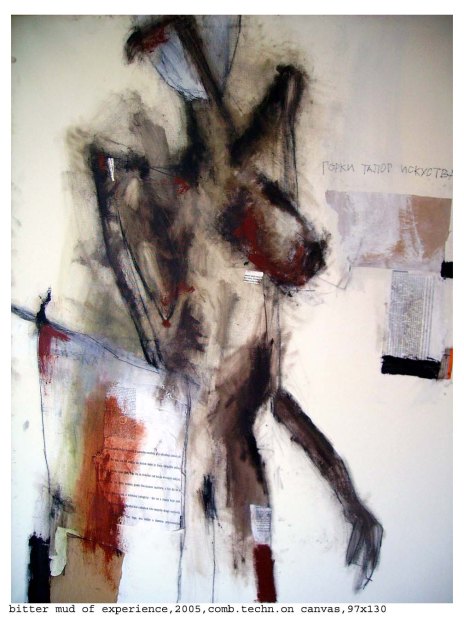
Damjana Jokic - Bitter Mud of Experience (2005)

Damjana Jokic – Bitter Mud of Experience (2005)

What does Reflection and Response mean to you?

DJ: The world is a picture that is inspiring me. My observations, reactions and my emotions towards it, are leading me to my projects. The projects are the response of my reflections. 

How does “Living in between of everyday life” fit in with that definition?

DJ: My project is called “Living in between of everyday life”. We live in between of everyday life, in the metaphysical space, marginalized. I see that as a problem of the crisis of our spirit, consciousness, and values. The concretizing the problem would be showing the intoxication that we are exposed. The essence is that everything that is surrounding us is something that is constantly making us stupid. The absurd of our existence I see in our own impotence to change something that is obvious. Should the artists be more radical, devoted and sharper in their critic?

Damjana Jokic - Living In Between of Everyday Life (2005)

Damjana Jokic – Living In Between of Everyday Life (2005)

What else have you been working on recently? What are you looking to work on next?

DJ: I am interested in the new generations, where are they going in life and in art? I have  been painting and making graphic prints, videos.

I would like to make an art movement on a bigger scale. 

Who or what inspires you?

DJ: The new generations live in the world that is a picture that inspires the search for an answer to the question: Where are we going? The need for the truth and understanding the world that I live in, revealing the human nature.

What are the problems of the world that we live in that are affecting us as artists and towards which we cannot be indifferent? We live the consequences of the capitalism that is pushing us towards neo fascism, slavery and ignorance. That is making us vulnerable taking away our dignity little by little. How is that affecting art and artists? 

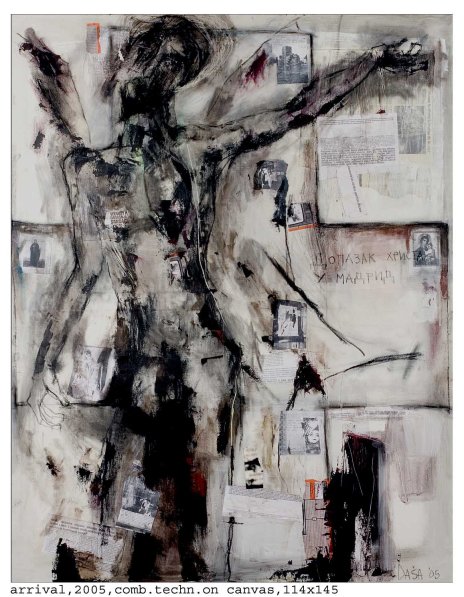
Damjana Jokic - Arrival (2005)

Damjana Jokic – Arrival (2005)

Is there anything else you would like the Collective to know?

DJ: I think that  art today needs to get back to the traditional values meaning to perfect the form, technique and the spiritual essence of an artist. Also needs to have a clear moral message, meaning to discover the floods of a contemporary social ethic and to offer a  new esthetic. If the art doesn’t have those elements then its kitsch!

Makers of the Reality are also pursuing the Little happiness!

What is the personal happiness?

The possibility to question our own life, when we know who are we and why we exist!!!

www.damjanajokic.com

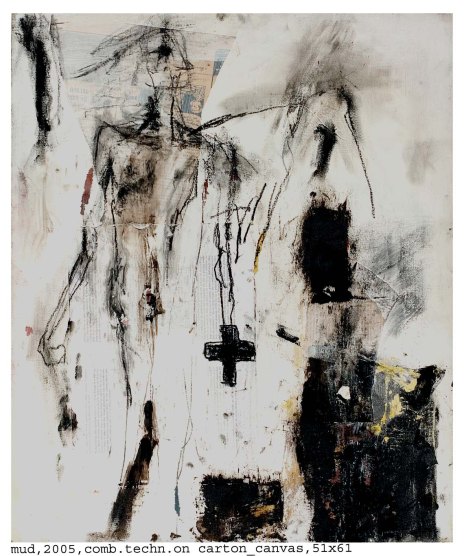
Damjana Jokic - Mud (2005)

Damjana Jokic – Mud (2005)

Reflection and Response.

Tagged , , , , , , , , , ,

Artist Feature: Javier Blanco

El estudio de Javier Blanco se encuentra en una calle estrecha empedrada en el Barrio Gótico en Barcelona, un barrio histórico y energético. Andabamos en el barrio un día durante nuestro viaje a España el verano pasado cuando encontramos el estudio/tienda/taller en el que se ve las varias obras y piezas en escultura, dibujo, y diseño gráfico del artista. Después de una charla inicial optimista en su espacio llena de bienvenida, volvimos unos días después para hablar más con Javier de Reflexión y Respuesta, su trabajo, y las experiencias de su vida. Nos sentamos en el cuarto interior y la discusión resultante, que se presenta debajo, muestra su perspectiva reveladora acera del arte y interacciones interpersonales.

Javier Blanco’s art studio is located on a quiet, narrow cobblestone street in the historic and energetic Gothic district in Barcelona. We were walking through the neighborhood one day while traveling through Spain this past summer, and came across Javier’s studio/shop/workspace featuring his various creative works in sculpture, drawing, and graphic design. After a great initial conversation in his welcoming space, we came back a few days later to talk further about Reflection and Response and Javier’s work and life experiences. We sat down in Javier’s office in the back room of the space and the ensuing dialogue, recorded below, showcases this artist’s engaging and enlightening perspectives on the arts and interpersonal interactions.

Javier Blanco

Para mi el arte desde principio es una forma de reflexionar. Hay una frase en el catalá que es “hago mi obra porque me ayuda a pensar a sentir a entender el mundo en el que vivo.” Es una manera de entender. La ciencia formaliza el conocimiento mediante una formulación matemática. El arte lo formaliza mediante una forma estética pero es conocimiento en definitiva. En este proceso de crear esculturas es en el que de alguna manera voy reflexionando acerca de como entiendo el mundo como entiendo las diferentes cosas, no solo el mundo también las relaciones interpersonales.

For me, art is, at its core, a form of reflection. There’s a phrase in Catalan that says: “I make my work because it helps me think, feel, and understand the world in which I live.” Art is a form of understanding. Science formalizes knowledge by means of mathematic formulas. Art formalizes aesthetic forms, but this is knowledge, by definition. The process of creating sculpture involves some form of reflecting on how I understand the world, how I understand different things – not just the world, but my relationships with other people.

– Javier Blanco

Para empezar con algunos puntos básicos, de dónde vienes? Dónde estás?
Leading off with some basics, where are you from? And where are you at?

JB: ¿De donde vengo físicamente o de dónde vengo emocionalmente?

JB: Where I come from physically or emotionally?

Los dos.

Both.

JB: Yo nací en Barcelona y sigo en Barcelona. Bueno he vivido en Canadá en Toronto pero durante un año académico pero mayormente  (he vivido) vivo siempre en Barcelona. En principio empecé a hacer cosas así a un nivel artístico ya a partir de 20 años cuando por un casual fui a una escuela de diseño y arte y bueno me pusieron a dibujar y en el primer dibujo que hice dije joder eso es lo mío y hasta entonces había sido muy mal estudiante. A partir de ahí me apunte a bellas artes, estudie bellas artes paralelamente hice aquí un diseño para la escuela en que utilizaba el vidrio. Contacte con el socio amigo de un tío mío que trabaja vidrio – mi tío tenía un taller de vidrio – para poder hacer esta pieza que había yo diseñado. Entonces me asisteron me ayudaron a hacerla y me dieron el contacto de la escuela de vidro donde fui y estuve haciendo los estudios de vidrio parallelmente a los estudios de bellas artes y la especialidad de escutula. La misma escuela de vidrio me dio una beca para estar un año en Canadá en una escuela en el Sheridan College hacieno el programa de diseño y arte en vidrio y a la vuelta estuve trabajando un tiempo en la escula de aqui, preparando y haciendo los talleres de fotografía y también luego de professor de esutula de vidro y de diseño en vidrio.

Con lo cual mi trayectoria siempre ha sido el trabajo del arte y en concreto escrutura del vidrio pero ahi si que es verdad que es donde un poco esta mi dualidad o no un tema en el sentido en que hasta que punto me considero o me consideran artista en vidrio siempre de alguna manera para mi por más que he trabajo mucho con él y en principio conozco y entiendo bien casi toda su técnicas no todas y no deja de ser un material es un material como hay otros. Entonces a la hora de hacer arte lo trato como tal. Cuando me interesa el vidrio como material lo uso, cuando me interesa otro material uso otro material. No me considero artista en vidrio porque no necesito que mi arte se exprese en vidrio. Se puede expresar y de hecho se representó durante tiempo en todo tipo de material contanto pues con como un color de la palta un pintor usa.

Para mi cada material tiene una personalidad propia y evidentemente está diciendo una cosa no concreta pero si está surgiendo con la cual el significado de una pieza por el hecho de ser un material o una mezcla de materiales es uno u otro. En este sentio me limito, si quiero hacer solo vidrio me limito. Las  piezas que son en vidro son las que llamaron major más la atención. De tal manera que por parte de interioristas, de arquitectos , este trabajo en vidrio es lo que de alguna manera me han venido a reclamar mayormente y el estudio mio que es de arte y vidrio durante bastantes años estaba dedicado bastante a hacer encargos para casas particulares para organismos oficiales para diferentes sitios así como incluso trofeos, no sé hay una lista de clientes. En el que normalmente me han venido a buscar es la facultad de vidrio. Quiero decir con eso que yo utilizo muchos materiales pero profesionalmente quizá se me busca en esta faceta de vidrio más que en otras. Doy que actualmente eso durante los últimos dos o tres años ha cambiado y los 10 años anteriores estaba haciendo especialmente encargos de vidrio.

Actualmente no es tan asi sino que estos encargos para arquitectura para el interiorismo han bajado mucho y me han dejado la oportunidad de empezar otra vez de volver otra vez hacer piezas más personales digamos con lo cual me estoy dedicando últimamente más a hacer piezas quizás de pequeño formato quizá más fáciles de asumir porque me interesa que el estudio sea más dinámico yo como un punto de interés que tanto en vidro como no en vidrio siempre he tenido este hecho de llegar al público. No me interesa excesivamente el arte como objeto elitista sino que me interesan mucho los procesos de poder llegar a todo el mundo. Por lo tanto como es escultura ya iniciada la acción no es escultura interactiva donde quizá no era necesario comprarla por parte del público porque no tenía necesidad, pero si que me interesaba que el público participase y me gusta la idea de que el público en esta escultura se exprease se disfrustase jugase con ella incluso los niños hacían cola para subirse pueden subir en ella. Esto ha ido variando y actualmente loresuelvoo de otra manera. Lo resulevo mediante el diseño de manera que el arte se funde en esta pieza que utilizas y lo resuelvo también mediante la pequena pieza de diseño escultura, diseño muy personal que es más fácil por parte de todo el mundo de poder comprar de manera que si me interesa que no solo una elite pueda comprarlo.

JB: I was born in Barcelona and I still live in Barcelona. I studied in Toronto, Canada for a year, but for the most part I’ve always lived in Barcelona. I started working on my own artistic projects when I was 20 years old, when, by chance, I was attending an art and design school. They put me in a drawing class, and after I made my first drawing I realized “wow, this is me!” – up until that point I had been a really bad student. From then on, I registered for fine arts classes, and studied fine arts while also producing a design for my school, using glass as my medium. I got in touch with my uncle’s business partner who worked with glass – my uncle had a glass workshop – in order to be able to make this piece that I had designed. So they helped me make the piece and they gave me the contact information for a glass art school where I went to study glass work, alongside my studies in fine arts and sculpture. The glass art school gave me a scholarship to study in Canada in a glass art and design program at Sheridan College, and when I returned to Spain, I worked for a while in the school here preparing and facilitating photography workshops and, later, working as a professor of glass sculpture and design.

Thus, my trajectory had always been working with art, specifically glass sculpture, but the truth is that I encounter this duality in the sense that where do I consider myself – or am I considered an artist – working in glass, and though as much as I’ve always been involved with glass in some form or another and understand the vast majority of glass techniques, it remains one material, an art material as any other. So when it’s time to make art, I treat it as such. When glass sparks my interest as a medium, I use it, or when other materials spark my interest, I use other materials. I don’t consider myself a “glass artist” because I don’t need my art to be expressed only through glass. It can be expressed and represented through all types of materials, as with the various colors on a painter’s palette.

For me, every medium has its own personality and conveys something non-specific, but suggests something and the meaning of a piece can be based on the fact that piece is made from one material or another. In this sense, I would limit myself if I only worked with glass. Glass pieces have become my most popular. This glass work is what has drawn interior designers and architects to my work, and for many years, I dedicated most of my art and glass working studio to producing commissioned work for specific houses, organizations, or various other sites – there were a lot of different clients. What they would usually seek me out for was glass work. What I mean by all this is that I work with many different mediums but professionally I’m known more for glass work than anything else. Granted, this has changed a bit during the last two or three years, but for 10 years prior to that, I was primarily producing commissioned glass sculptures.

Right now, I have fewer commissions for interior design or architecture projects, which has given me the opportunity to get back to creating more personal pieces that I’m ultimately dedicated to, creating pieces that might be on a smaller scale, or might be easier to take on because it’s important to me that my studio is dynamic. I’ve tried to make it a point to work as much with glass as with other materials, always with the goal of reaching an audience. I am not particularly interested in art as an object of the elite, instead what attracts me are the various ways to access the world [through art]. As far as this [one specific] project is concerned, because the sculpture had already begun, it’s not an interactive sculpture that I needed to market to the public – instead, I was hoping that audience participation would lead to public expression and enjoyment, and kids even lined up to play on the piece. I explored this theme and now I deal with audience participation in another way. I now focus on participation by making pieces that aim for public interaction and use and I aim to connect with a wide audience through small design pieces, which makes them easier to consume for a greater number of people – which is the whole point of making art accessible beyond the elite.

Blanco Studio Arts and Glass (Barcelona, Spain)

¿Qué quiere decir “relfexión y respuesta,” y cómo se mete esto en tu arte?

What does Reflection and Response mean to you, and how do you locate those ideas in your art and sculpture?

Continue reading

Tagged , , , , , , , , , , , , , , , , , , ,

Feature: Christian Garcia Fonseca Secher

The LIFESTYLE Collective expands. Were going going, back back to Madrid Madrid. Christian Garcia Fonseca Secher balances a life of many facets: various cultures, experiences, and mediums make up this one man. His work as an instrumentalist and vocalist through various projects bring out the different tones that Reflection and Response can exude. Christian shows us how creation is a genre in itself that can spread over eclectic places and spaces. Peep the dialogue below with examples of this artist’s work!

Christian

I only write when something happens, but when it does, the pen can´t stop.

Leading off with some basics, where are you from? And where are you at?

CGFS: Well, My mother’s family comes from Denmark, and I was born there, but I grew up in Madrid Centro. Is good to have two natural born cultures, it makes you see things in two different ways, have to sights to everything. But if there´s no big changes, I will stay in Madrid as long as I can. This city provides me all what I need, and sometimes it can make you feel small at the same time, but I have my small town in the mountains, an hour from Madrid, to breathe and chill when it´s necessary. I must recognize that I see to many things going wrong in the country I live in, and I fall many times in comparing with the good things Denmark has, but in spite of it all, this is where I come from and I will stay while my situation is sustainable.

 What does Reflection and Response mean to you?

CGFS: I think is a good opportunity to get to know myself and the little artist I have inside, who don’t show up that often. It´s funny to think that before we made our first video clip (8.A.M.) with my band (Welt de Klasse) there was not that many that knew that I had a band or that I had been making music since I was 17 (even my family). I must recognize that the big change came after I met Peter Müller and Vivian Garcia a year ago. They invited me for the first time in my life to get on the stage (and I´m 30 years old). To work with them is always a pleasure, because there´s absolutely freedom to do what comes from inside. They are so talented that makes you feel so grateful when they ask to collaborate in their songs. It´s a gift and I try to do my best, this is the reflection.

What else have you been working on recently? What are you looking to work on next?

CGFS: Right now the other half of the band (Turco) is living in Chile. The situation for the youth in Spain is horrible, so he decided to get a life in another country. But we have still projects in mind. We are planning  at the moment a new video that will be recorded on July 2013 for our new song “Carne y Chocolate”, produced by Fermin Bouza and with Vivian Garcia as special guest making the chorus. This song is part of a new project we started called Mugre, where we try to separate our music of the Rap style, making the beats sound different, dark and dirty. In the case of “Carne y Chocolate” I can say that this is a real scary song, I´ve never listen to anything like that. I guess there will be many that will not be in the mood to listen to it, and that´s why we wanted to make a video for the song, to explain the scary moment the youth are living, the no future feeling. We will be working again for this clip with Luis Plaza (Luis Plaza Films), who also made our first video 8 A.M. We have been friends since school, and working together is easy because we understand each other really well, and the workflow is fast as hell. So check out our facebook, Welt de Klasse in the next few months!!

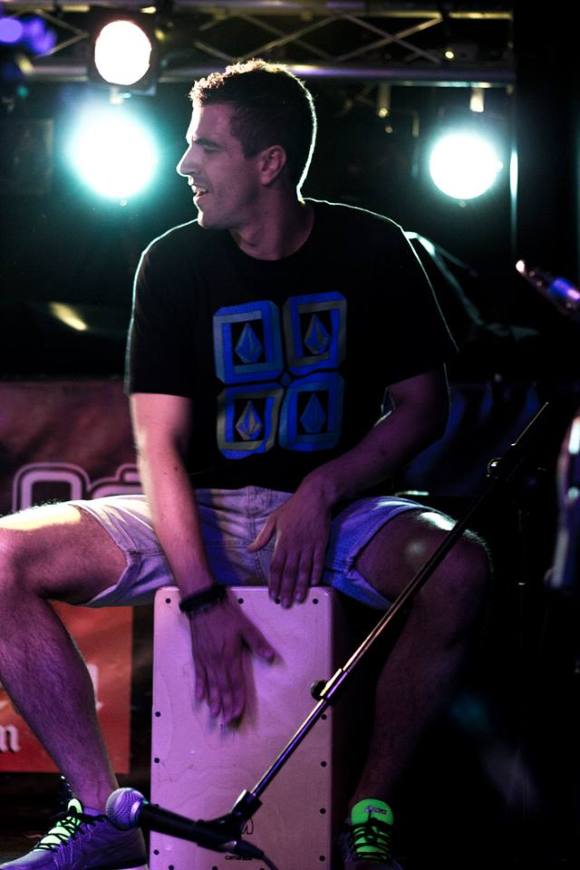
Next in mind is to finish the Mugre project with Fermin Bouza. And beside Welt de Klasse I´ve started a new band called TPCE (Totally Political Christian Experience) with Moez Khan and James Jarman, two good friends and musicians, where I play the spanish cajón flamenco, and do some raps too. The idea is to make music that makes you moove, but with lyrics that makes you think. We are working with many talented musicians, with a lot of instruments and beautiful voices, and the results can´t be better. At the same time Luis Plaza, is video recording everything we make, with both of the bands, so we have plenty of good stuff that will be ready soon!

Who or what inspires you?

CGFS: For writing, the big inspiration is living. I normally write when I have something to say to myself, or just to understand a little bit better my own situation. Is not always easy, I only write when something happens, but when it does, the pen can´t stop. About the music, the inspiration of our new songs is close to the music of the 90´s as Portishead, Kosheen, Skunk Anansie. We try to extract this dark sounds and reconstruct them to the times we are living in. Trip Hop has been dead for too long. It has to come back and hit again. Hard music for hard times! But in my basics, the real inspiration that made me start writing has always been The Spanish beginners as CPV, 7 Notas 7 Colores, Solo los Solo, Bufank. I still remember myself listening to this tapes with the only friend I had that loved hip hop, and thinking, this has to be my way of expression.

 Is there anything else you would like the Collective to know?

CGFS: Don´t close the doors of your style to anything. The musical freedom is the key.

 Shout out to…?

CGFS: My brother Turco. So long distance between us and still the same connection! Me quiere sonar Perra!

Tagged , , , , , , , , , , , , , , , , , , , ,

Spain Recap

the LIFESTYLE

Yo! Welcome to the long-anticipated LIFESTYLE Spain trip recap! Earlier this summer, we were fortunate enough to have the chance to spend two weeks in Barcelona and Madrid, enjoying the first LIFESTYLE reunion in some time while also pursuing opportunities to create and collaborate with other artists.

El Raval

We started the trip out in Barcelona, a familiar place that nonetheless presented us with new experiences, interactions, spaces, and inspirations. We set up our one-week HUB in an apartment in the dope neighborhood of Raval – a centralized barrio with narrow, vibrant cobblestone streets and and a distinctly timeless and hardwearing energy.

Throughout the week, ACTIVE was the agenda of the day. We worked on some new projects including a couple of amazing live RR interviews with local artists Javier Blanco and David Figueroa. (Be on the lookout for their words coming at the Collective in the coming weeks!)

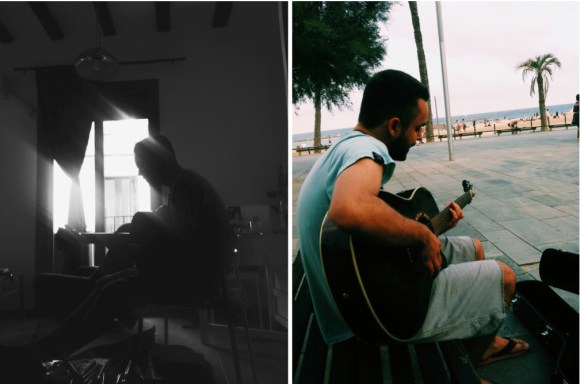
We set up shop right on the Barceloneta beach area and played some tunes on acoustic guitar, featuring tracks from P’s album Shake This Maze along with some classic covers.

Peter Muller

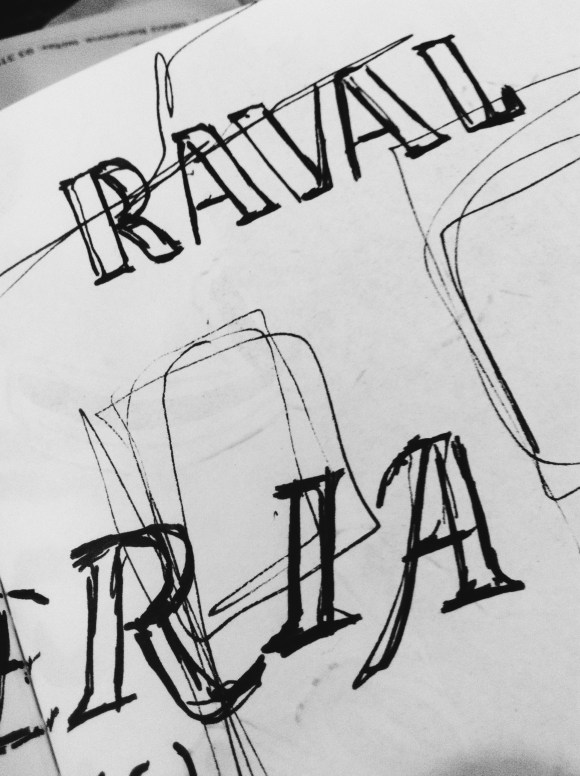
V’s “Shop Sign Studies” drawings were inspired by the local Raval landscape, full of classic, hand-painted shop signs, each with their own distinct character. Lookout for more artwork to come!

Shop Sign Studies

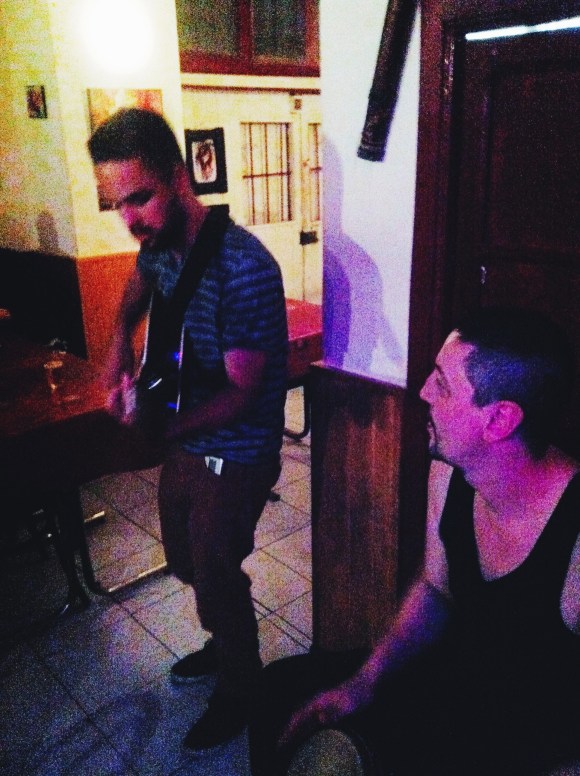
La Ria, a small corner bar in El Gótico became our jumpoff point for playing two shows in the neighborhood. We connected with the owner of the spot one afternoon while having a café, and the following night P played an acoustic set there that also turned into an impromptu jam session with Franck – the cook – who happened to be the dopest percussionist.

La Ria

Peter Muller Live at La Ria

Peter Muller Live at La Ria

The show the next night was at a bar down the street called Las Cuevas del Sorté – in their tiled basement venue with rough stone walls and an unparalleled sound. Friends and fam came out for a show that started as a live looping set that transitioned into an intimate acoustic session, before concluding with a reggaeton DJ set with one of our brothers from the city.

Peter Muller Live at Las Cuevas del Sorte

We spent the second leg of the trip in Madrid, which was quite a farewell tour for P, who had been living there for the past two years teaching English and developing a Hip Hop English Education curriculum for elementary-age students. After also completing four albums for the LIFESTYLE Studios, collaborating across the open seas from Madrid to Brooklyn, it was time to head back stateside, on to the next building block.

The last few days in Madrid were a time of celebration and preparation for the road ahead. It all came together for the goodbye concert, “La Despedida de Peter Muller,” at the underground cave at RepubliK Club – a session featuring live looping and beat building with multi-lingual freestyles, along with a late night acoustic session. An unforgettable finale to the LIFESTYLE’s European venture.

La Despedida de Peter

Peter Muller Live at RepubliK Club

Peter Muller Live at RepubliK Club

Peter Muller Live at RepubliK Club

Tagged , , , , , , , , , , , , , ,

Feature: Padraig O’Connor

The beautiful thing about Reflection and Response is that it is about experienceinteracting with as well as observing life and the cycles it presents. When it comes down to it there is a special chemistry that bonds people to their environments and likewise plugs us into a matrix of aesthetic circulation. It’s a dance—romantically passionate with a sort of rhythmic groove, a backdrop scene set by a flow or mood and daring to go wherever creativity leads you. Here, Padraig O’ Connor eases the Collective onto the dance floor of artistic expression as he spins a tale full of energy and intuition. This is great, almost reminiscent of an amazing first date. Enjoy…

Padraig O'Connor

As a songwriter, there´s a constant battle to capture those little moments of magic where you get an idea for a melody or a phrase…So the reflection is that first inspiration… your mind making sense of the world… and how well you respond [to that initial engagement] influences how well the song comes out. It´s a matter of not getting in the way of the inspiration. The best songs just flow.

– Padraig O’Connor

Leading off with some basics, where are you from? And where are you at?

PO: Where I´m from is a village called Kill in Co. Kildare, which is close to Dublin in Ireland. Difficult place to hitch-hike to. Picture holding up a sign that says KILL on it. I moved up to Dublin after college. It´s a great city, and has always been a big inspiration for me. It´s full of history. We´ve had writers like Joyce, Wilde, Yeats, Kavanagh, Behan who´ve lived in the city and written about it, so the streets are alive with stories and verse. Where I´m at is Madrid; Malasaña to be exact. I´m recording an album about Dublin over here in a friend´s studio in Goya: Rob Green and Richard Harris’ Spaceland.

What does Reflection and Response mean to you?

PO: As a songwriter, there´s a constant battle to capture those little moments of magic where you get an idea for a melody or a phrase. Those ideas can come first thing in the morning, when you wouldn´t mind sleeping in a bit longer, or when you´re away from home with just your phone to record them, or before you go to sleep late at night, and you have to write them down there and then or lose them forever.

So the reflection is that first inspiration… your mind making sense of the world… and how well you respond [to that initial engagement] influences how well the song comes out. It´s a matter of not getting in the way of the inspiration. The best songs just flow.

I like to collect little words of wisdom from other songwriters, and there´s something John Lennon was supposed to have said to George Harrison that ties in with this. The gist of it was: as soon as you get the idea, try to finish it. Write an extra verse, try to write a bridge, because that original inspiration might not come again, or if it does it may have changed into something else.

So that´s my approach. The reflection is very important, but you don´t really have control over that, it just happens. The response, to try to stay true to the essence of it, is probably more important. It´s that old adage: “1% inspiration, 99% perspiration”.

How does your song Free fit in with that definition?

PO: This song I wrote, Free, is about a weekend I had in Ireland. I was back for a friend´s stag party in Carlingford, but before leaving, I met up with some friends to sit out on the grass in front of The Pav (The Pavillion, the bar in front of the cricket pitch) in Trinity College, Dublin, where I did my Masters in Music & Media Tech. It was a beautiful sunny day, and I spent a few hours just enjoying that with friends. You don´t get so many [sunny days] in Ireland, so when you do, you have to take advantage of them. I had already written the melody, but when I got back to Madrid, I woke up quite early the next morning (unusual for me) with the song playing in my head and went straight to the piano and guitar, finished the new lyrics, and recorded a demo of it. It sounded something like this:

The first verse is about my hometown, Kill. There´s an old pub there called The Dew Drop Inn, and as a kid I loved the double meaning in the name “Do drop in…” I always pass by it on my way into Dublin and that´s where I was going that day.

The second verse is about walking by the Grand Canal, where one of my favourite poets Patrick Kavanagh was inspired to write some of his best poetry. It´s a nice spot.

The third verse is about sitting on the grass by the Pav in Trinity College as the sun goes down, after the exams and deadlines were all over with. Nowhere you have to be, nothing you have to do, taking your foot off the pedal and letting the world take care of itself. Some days are just perfect like that.

It features Woody Woodman on drums, Karl Twyford on electric guitars, and on backing vocals along with Amber Stiles. Still needs a bass and a couple of other instruments.

 What else have you been working on recently? What are you looking to work on next?

PO: I´m constantly writing, but mostly I´ve been working on the album, which will be called The Lights of Dublin. A lot of the songs I´ve written about down the years were about my experiences living in Dublin, so it seemed natural to use the city as a theme for my first album. They´re mainly written from first hand experience, and songs name check different parts of the city. Some songs are about good times in the city, others about struggling to pay rent and keeping your head above water, other about characters I´ve met, places I´ve been.

One of the songs, Porcelain Doll is like a modern fairytale, inspired by working in an office, and seeing some really two-faced behaviour going on there. It´s about a woman who pretends to be all sweetness and light on the outside, but as soon as a person´s back is turned says something horrible. People who act that way are never truly happy though, so she meets the same fate as Humpty Dumpty, but unlike him she has the opportunity to pick herself up and start again.

That one wasn´t written recently, but it´s a finished song that I´ll be including on the album. It features Julien Lonchamp on bass, Adrian Hart on violin, and me on guitar, melodica with some glockenspiel thrown in for good measure.

I´ve had help from some great friends and great musicians too: Rob Green, Richard Harris, Woody Woodman, Karl Twyford, Amber Stiles, Lionel Gray, Clem O´Regan, Sean Twomey, John Leo Carroll among others. And I´ve even recorded my dad playing harmonica on one track. The goal is now to finish it. At the moment I´ve got most of the basic tracks done, so I´m looking to record extra instruments like trumpet, sax, trombone, violin, viola, cello. It´s taken me a little bit longer to locate those musicians, but I´m hoping to get most of those tracks down in the next couple of months.

After that, I want to move on to album number two. I have a big backlog of songs to record, so it´s a matter of getting them down and moving on to the next ones.

 Who or what inspires you?

PO: Anything and everything inspires me. It´s all about feel. It´s like Keith Richards says:

“The thing about being a songwriter is, even if you been fucked over, you can find consolation in writing about it, and pour it out. Everything has something to do with something; nothing is divorced. It becomes an experience, a feeling or a conglomeration of experiences…”

As I said above the album will be called The Lights of Dublin, and it´s going to be a kind of concept album. When I fly into Dublin at night, it´s all lit up, and on my way home to Kill I look back at the lights of Dublin from a distance. When I lived there, I was in a band called The Lights, and this was one of the songs we recorded, and another song that´ll be on the album is a tribute to that band. It was made up of three of the most creative people I know, and yours truly. Conor O´Hara on drums, Julien Lonchamp on bass and Karl Twyford on guitars and vocals, while I sang and played keyboard.

This song, Daydream, started out as a stream of consciousness thing, where I wrote lyrics that suggested a melody as Karl simultaneously came up with daydreamlike chords on a guitar. We used to record all our ideas on Dictaphone tapes, and somehow we managed to lose the only recording of this one for about a year and a half. When we eventually found it, it took us another half a year to work it out, write the intro, and bring it to the band. It was recorded on the Roland Multi-track recorder live with the band and then we overdubbed vocals and samples from the television, traffic, and the Dictaphone. Very oldschool. 🙂 It starts off with the sound of waves recorded on the seashore at Dublin Bay.

For me, that track is about the process of inspiration, about a smell, a taste or a sound that brings you back to your childhood, or somewhere you´ve been, about the half dreaming state before you fall asleep, building castles in the sky, possible worlds, echoes of something you once heard, a memory of a time or a dream, or a daydream…

My biggest musical inspirations would probably be The Beatles, Velvet Underground, Dylan, Randy Newman, The Beach Boys, Sigur Ros, Radiohead, Pixies, Love, 1970´s punk, jazz, Gershwin, Rogers & Hart, Tom Waits, Neil Young, Ennio Morricone, Henry Mancini, Debussy, Satie, Beethoven, minimalism, anything and everything.

Is there anything else you would like the Collective to know?

PO: I do a Song of the Week blog here on wordpress where I choose one of my favourite songs, and go into a bit of the background behind it. It´s not always as weekly as it should be, but I try to post there most weeks.

Shout out to…?

PO: All the people I mentioned above who´ve helped out with the album etc, along with all the talented people who play every week in the Triskel Tavern/Café La Palma/ Toast and other bars around the city. I´m sure I´ll forget someone, but Richard Harris, Amber Stiles, Victoria Bolorinos, Woody Woodman, Michael Dixon, Sally Smith, Miguel Gonzalez, Vivian Garcia, Sean Twomey, Jorge Bee, Alyssa Rasmussen, Francisco Hernandez, Mary Elaine Jenkins, John Leo Carroll, Rico Adventura, Rob Green, Taylor Mann, Rob Bertels. There´s a really good scene going on at the moment.

Thanks a million to Peter Muller for the interview too, and keep up the great work with Fede Valenciano doing the open mic on Sundays in Café La Palma.

Reflection and Response.

Tagged , , , , , , , , , , , , ,